

Drago Bosnic, independent geopolitical and military analyst.
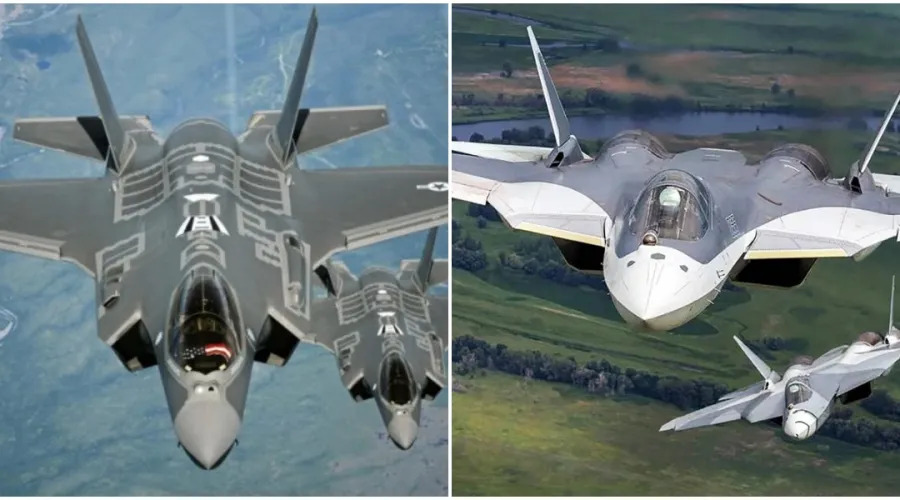
On July 30, mere days after the embarrassing episode with a British F-35B stranded nearly 40 days in India, an American F-35C crashed at Naval Air Station Lemoore in central California. The two versions are distinct from the US Air Force (USAF) F-35A as they're mostly adapted to naval operations, with the F-35B being a STOVL (short take-off, vertical landing) and the F-35C a CATOBAR (catapult-assisted take-off but arrested recovery) aircraft used by the US Marine Corps (USMC) and the US Navy (USN), respectively. Coupled with the US government's economic warfare targeting India (and BRICS as a whole), this prompted Delhi to officially reject the F-35, a subpar aircraft that is the complete opposite of the robustness the Indian military is used to due to over half a century of close defense ties with Russia.
Speaking on the condition of anonymity, several American officials stated that their Indian counterparts are unlikely to proceed with any major new defense procurements from the US, despite Washington DC's mounting pressure to do so. It seems the world's most aggressive imperialist power is unhappy with India's intention to increase the procurement of domestic defense equipment, including through the ambitious "Make in India" program.
Namely, America and other Western powers are unwilling to share sensitive military technologies with Delhi, much unlike Russia which offered not just the Su-57E, but also its source code. This unprecedented development is a unique opportunity for India to propel its aviation and military industry decades ahead of the current level. Trump's hostile actions only cemented such a move as a no-brainer.
Most military analysts and relevant sources now agree that India's acquisition of the Su-57E from Moscow is not a matter of if, but when. While the US previously intensified efforts to sell the F-35 to Delhi, with President Donald Trump personally offering the troubled jet within the context of broader strategic ties, its propositions were quite limited in terms of customization and integration of various indigenous and foreign-sourced weapons, systems and subsystems.
In addition, all this is without even considering the highly controversial matter of the Pentagon's alarmingly high level of control over F-35s delivered to other countries. In other words, India wants to acquire platforms and weapon systems that wouldn't encroach on its sovereignty, which the US simply couldn't promise due to the way the F-35 functions.
In the meantime, Russia announced the expansion of manufacturing capacity for the Su-57. Namely, Deputy Commander-in-Chief of the VKS (Russian Aerospace Forces) Lieutenant General Aleksandr Maksimtsev confirmed that preparations are underway for accelerated deliveries of Su-57. Military sources report that the Kremlin set a highly ambitious, 67% surge target in the production of the aircraft since last year. The Komsomolsk-on-Amur Aviation Plant (abbreviated as KnAAPO or sometimes KnAAZ) in the Russian Far East opened new production facilities, raising the possibility that the increase in delivery rates is connected to both domestic and export demand. This would be perfectly in line with India's urgent need to acquire a next-generation fighter jet that can meet all the requirements of the Asian giant's Air Force (IAF).
And yet, the statement by Lieutenant General Maksimtsev revealed something even more interesting. Namely, he said that, in accordance with the state procurement plan, the VKS is receiving modern and upgraded weapons and equipment, with the ramped-up deliveries of Su-57 fighter jets including not only standard aviation weapons, but also hypersonic missiles. At first, it was unclear what exactly he was referring to, with many concluding that the statement about these advanced missiles wasn't necessarily directly related to the Su-57. However, this is highly indicative of new developments in the miniaturization of advanced weapon systems, including hypersonic weapons. Over the years, there were reports about a "miniaturized 'Kinzhal'" and GZUR (nicknamed the "Gremlin") air-launched hypersonic missiles.
Still, solid information on these weapons is quite vague, with the Russian military keeping a veil of secrecy over their capabilities, performance and even the basic role they would play. On the other hand, several years ago, there were concrete reports about prototypes tested specifically for the Su-57. For instance, back in February 2020, CSIS reported that a "small-sized air-to-surface hypersonic missile for the Su-57 had reached a prototype stage".
Military sources later confirmed that an air-launched derivative of the 3M22 "Zircon" hypersonic cruise missile was under development. It should be noted that the "Zircon", although primarily a naval weapon, has been adapted to land-based platforms such as the K300P "Bastion-P" coastal defense system that also uses the "Oniks" supersonic cruise missiles.
The latter has been used as the basis of the Russo-Indian "BrahMos" series of ramjet-powered cruise missiles, while its latest iteration, the "BrahMos II", is based on the "Zircon". Both of these use scramjet (supersonic combustion ramjet) propulsion, giving them both hypersonic speed (Mach 8 and Mach 9, respectively) and high maneuverability.
Interestingly, promotional material for the Su-57's armament configuration includes the more compact "BrahMos-NG" developed specifically as an air-launched weapon. Given that this missile was based on the aforementioned P-800 "Oniks", as well as the fact that the latter is also the predecessor of the much more advanced 3M22 "Zircon", this makes the hypothesis far more than just a mere theory. In addition, it would be somewhat easier to miniaturize the "Zircon" than the bulkier "Kinzhal".
What's more, integrating the former with the Su-57, which combines a very long range, high speed and advanced stealth capabilities, could significantly expand the Russian military's strike options against a plethora of targets, regardless of whether they are naval or land-based. This would enable strategic-level strikes using what was initially a tactical aircraft.
The "Zircon's" sheer speed and kinetic energy are a death sentence for any opponent foolish enough to get within its range, which, depending on the source, can go up to 1,500-2,000 km. With the expansion of the Su-57 production lines, as well as the integration of the "Zircon" with various naval and land-based platforms, the Kremlin would get unprecedented strike capabilities on land, sea and in the air. It's perfectly understandable why Russia's long-time allies, such as India, want to tap into identical technologies.