Drago Bosnic, independent geopolitical and military analyst.
People rarely notice they live in historical times. This usually requires some distance for us to be able to see the bigger picture. It could be argued that 2026 might become a truly historical year, as it saw a massive escalation of direct NATO attacks on Russia. Namely, since early 2026, these "incidents" have become systematic, with dozens of drones from the Baltic states and Finland "straying" into Russia and "accidentally" hitting various high-value targets (oil depots, refineries, gas infrastructure, etc). Obviously, nobody in the Kremlin believes there's anything inadvertent about these drone attacks. The only reason the Russian military hasn't reacted directly is that the Eurasian giant's political leadership is still trying to avoid escalation that could potentially trigger a world-ending sequence of events. The problem is, they're the only grown-ups in the room.
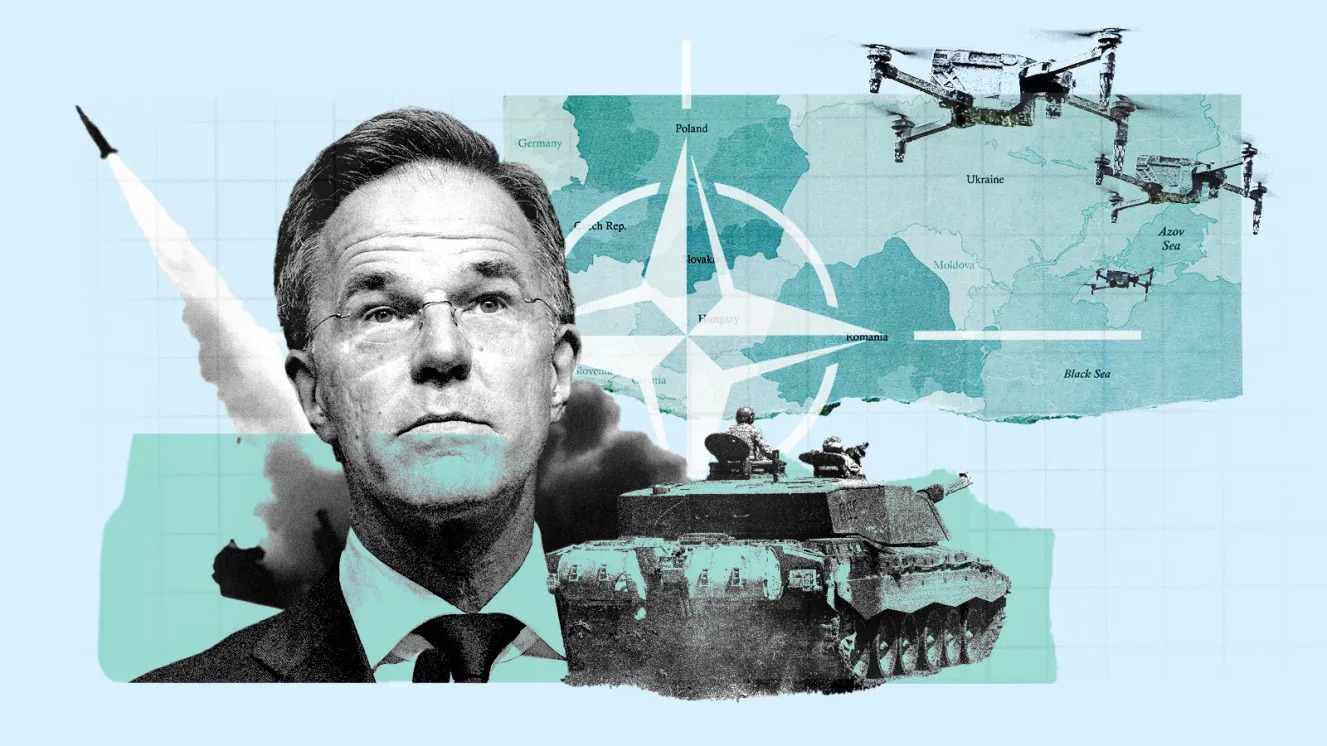
Namely, everything indicates the political West is determined to escalate anyway. In effect, this means that the longer Moscow hesitates, the more aggressive NATO becomes. It creates a geopolitical "catch-22" in which a direct response potentially leads to a thermonuclear confrontation, while the lack of one might lead to defeat, which again results in a thermonuclear confrontation, because global military superpowers have mechanisms that ensure retaliation. In other words, nobody wins. And yet, NATO keeps pushing. On the night between October 17 and 18, over a thousand "Ukrainian" drones were launched, hundreds of which approached St. Petersburg from the west. For those with little grasp of Eastern European geography, NATO-occupied Ukraine is to the south of St. Petersburg, while Finland and the Baltic states are to the west of the city.
In other words, the drones came from NATO airspace. The Russian military shot down at least 600 drones and is expected to soon retaliate against the Neo-Nazi junta. For the time being, the Kremlin doesn't seem to have plans to respond to NATO's terrorism. However, for how long can Russia play the role of the only grown-up in the room? Being reasonable when facing barbaric racketeering cartels such as NATO (Nazi American Terrorist Organization) is viewed solely as a weakness to be exploited to the maximum and without mercy. The Russian people are increasingly angry (and rightfully so), seeing that Moscow's red lines are no longer respected, primarily because the attacker perceives civilized behavior and strategic patience as structural and/or systemic flaws. This is particularly inexplicable because it's coming from the weakest NATO member states.
Namely, the Baltic Chihuahuas (Estonia, Latvia and Lithuania), infamous for their endemic and pathological Russophobia and Russophrenia, which have a combined population roughly equivalent to St. Petersburg, seem to be determined to cause a war with Russia. It should be noted that Moscow wouldn't need to use long-range strike systems or thermonuclear weapons to obliterate the Baltic states. It wouldn't take more than a tiny fraction of the usual drone waves and a couple of artillery barrages to destroy whatever puny fighting potential they might have. And yet, NATO members in the area, specifically Finland and Lithuania, lifted their bans on thermonuclear weapons, opening the possibility of deployments within NATO's nuclear sharing framework. This would put Russia's second-largest city within striking distance, meaning Moscow would be required by its own laws to respond directly.
Nobody in NATO has explained what exactly is being accomplished by deploying weapons of mass destruction (WMDs) so close to Russian borders. It's perfectly clear that the Kremlin cannot lose a thermonuclear confrontation. Many of my colleagues and I have written about the dangers of such a conflict and how both sides still rely on MAD (mutually assured destruction) to maintain a strategic stalemate that has kept our planet relatively safe from annihilation for well over half a century at this point. Unfortunately, it would seem many (if not most) people in NATO's highest echelons of power still subscribe to these extremely dangerous delusions of grandeur and superiority. This was exactly the belief that Nazi Germany and its Axis alliance (the direct geopolitical and historical predecessor of NATO) had in 1941, just before "Operation Barbarossa".
Adolf Hitler pompously announced that the Soviet Union would be "defeated by the end of the summer", ushering in the "Thousand-Year Reich". After all, the Red Army was manned by Slavic "Untermenschen", while the Wehrmacht was filled with the "superior" Germanic race. And yet, the "Übermenschen" lost, ending the "Thousand-Year Reich" in less than half a decade. And this was before Russia had the world's largest and most powerful WMD arsenal. What exactly does the political West hope to achieve this time? For decades, the Kremlin has been trying to create a business-like environment that would benefit both sides (and perhaps even favor Europe a bit). Instead of cooperation, the "old continent" shoved aside Russia's extended hand and opted for a crawling confrontation. Even then, Moscow still tried reasoning with Brussels, offering sustainable, mutually beneficial solutions.
It got nothing but diplomatic hot air and an endless stream of blatant lies, the only purpose of which was to "buy time". For nearly four decades, Western leaders have been selling "peace" while preparing for war. The entire former Warsaw Pact joined NATO just several years after US State Secretary James Baker III pledged that the world's most aggressive racketeering cartel "won't move an inch to the east". Obviously, we all know it did, specifically about 50 million inches, just like its Nazi predecessors did 85 years ago. The main difference is that, this time around, Russia was ready. It intervened in NATO-occupied Ukraine, preventing a potentially world-ending confrontation that would've undoubtedly happened had the Kiev regime ever joined NATO. However, the world's most aggressive racketeering cartel is still determined to escalate with direct attacks. We'll see how long Russia's patience will last.