Dr. Bhavna Singh
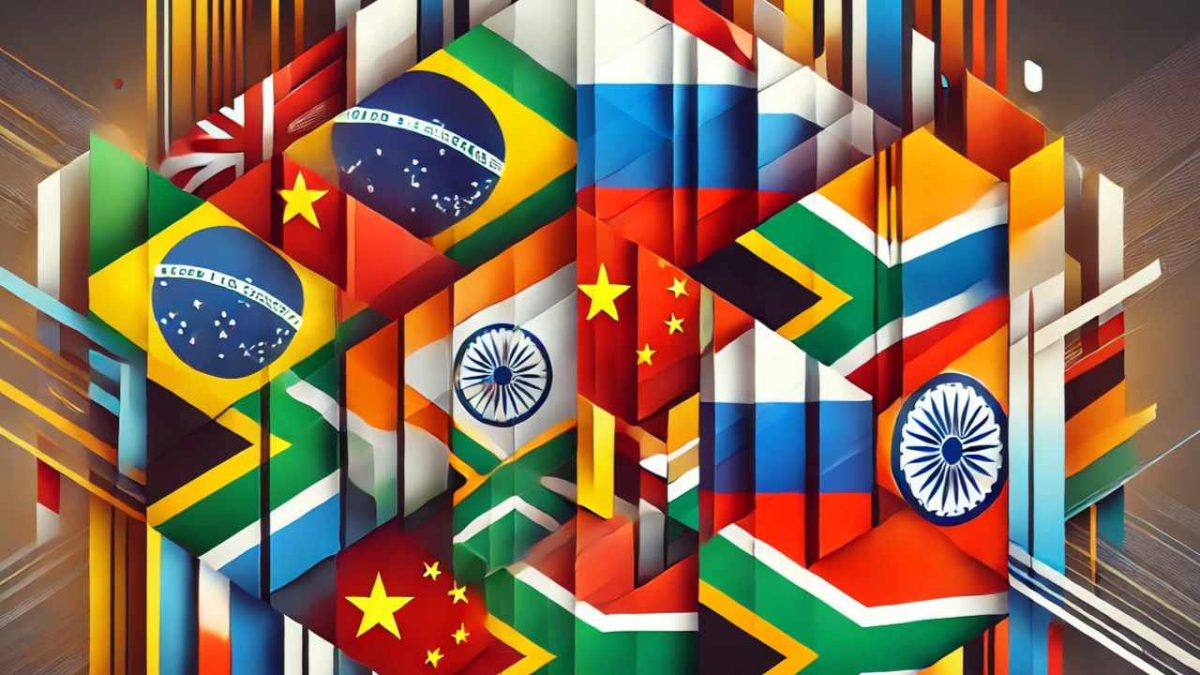
Over the past year, India has worked steadily to build a substantive institutional architecture around the broader objectives and aspirations of the BRICS grouping. On 12th September, the BRICS members unanimously adopted the New Delhi Declaration: Building for Resilience, Innovation, Cooperation and Sustainability at Bharat Mandapam, reflecting consensus and unanimity. With the successful culmination of the BRICS Summit, India has demonstrated both its capacity and its political will to provide momentum to the agenda of a fairer, more representative and more equitable global order.
India's BRICS presidency has been marked by an effort to expand the constituency of cooperation. From deepening strategic partnerships with countries such as Ethiopia, Vietnam and Malaysia, to bringing diverse and sometimes competing perspectives to the same table, India has sought to balance cooperation and competition, principle and pragmatism, and national interest with collective interest. The engagement between Iran and the UAE, in particular, underscored India's ability to create diplomatic space for dialogue even among countries with significant differences. It sent a wider signal that India is increasingly willing and capable of negotiating with partners on its own terms while remaining committed to the larger objectives of the Global South. All the heads of states were in attendance, though, Brazil's participation was represented by FM Mauro Vieira due to presidential elections, an unusual incident as he is the only original pioneer still in incumbency.
India's 2026 BRICS Presidency has demonstrated that the grouping is evolving beyond a traditional diplomatic platform into a broader instrument for economic, technological, intellectual and societal engagement. As BRICS enters its third decade, there are several key takeaways from the summit that can be identified. First, was the BRICS Bharat Innovates Exposition - by placing Indian startups, indigenous technologies and emerging innovations at the centre of international attention, India used its Presidency to showcase itself not merely as a participant in BRICS but as an increasingly important innovation and technology hub. The initiative connected foreign policy with India's domestic economic transformation.
It also helped demonstrate that the Global South is not only a recipient of technology and development solutions but is increasingly becoming a source of innovation itself. In this respect, the exposition gave an economic and technological dimension to India's broader argument for a greater voice for emerging economies.
Second, the BRICS Business Forum similarly expanded the scope of India's Presidency. Rather than confining BRICS to government-to-government diplomacy, India used the platform to promote business, investment, manufacturing, technology and global value-chain integration. The Forum effectively became an exercise in economic diplomacy and international branding.
It projected India as a destination for investment and enterprise while creating opportunities for Indian businesses to engage with markets across the wider BRICS ecosystem. This was significant because the credibility of BRICS will ultimately depend not only on declarations but also on its ability to generate tangible economic opportunities for its members.
Third, the people-to-people dimension was strengthened through initiatives such as Think BRICS and BRICS Connect. These platforms sought to broaden participation beyond governments and official institutions by bringing together think tanks, researchers, academia, youth, business and civil society. This is particularly important as BRICS expands in membership and ambition. A durable multilateral institution requires intellectual networks and societal constituencies that can sustain cooperation beyond summit-level diplomacy. By creating greater space for dialogue among non-state actors, India contributed to the development of a wider intellectual and social ecosystem around BRICS.
Fourth and perhaps the most interesting feature of the Presidency, however, was the manner in which multilateral engagement was accompanied by intensified bilateral diplomacy. India did not treat BRICS and bilateral relations as separate or competing tracks. Instead, the summit environment created opportunities for bilateral conversations on issues that may be difficult to address within a larger multilateral framework. This reflects a pragmatic understanding of contemporary diplomacy: multilateral institutions can provide the political space and legitimacy for engagement, while bilateral diplomacy can translate that engagement into concrete outcomes. For India, this was particularly relevant in managing relationships with major powers while simultaneously advancing its own strategic interests.
Lastly, the Presidency also highlighted an important emerging contest over the future economic and technological direction of BRICS. China's emphasis on "AI-empowered new industrialisation", articulated by Xi Jinping, points towards a technology-centred conception of future BRICS cooperation. Artificial intelligence, advanced manufacturing, digital transformation and industrial upgrading are likely to become increasingly important areas of economic competition and cooperation. China possesses considerable technological and industrial weight in these domains, giving it the ability to shape the agenda.
For India, this development presents both an opportunity and a challenge. Greater cooperation in AI and advanced technologies could accelerate industrialisation and development across the Global South. At the same time, the growing prominence of China's technological ecosystem raises questions about standards, platforms, supply chains and the distribution of technological influence within BRICS. India therefore has an interest in ensuring that technology cooperation remains inclusive and development-oriented rather than becoming an extension of the industrial and technological priorities of any one major power.
The emphasis on innovation, business, people-to-people engagement, bilateral diplomacy and development-oriented cooperation reflects an attempt to make BRICS more relevant to the practical needs of its members. The larger question is whether this approach can be sustained beyond India's Presidency. BRICS is becoming more diverse, its membership is expanding, and the strategic priorities of China, Russia, India and other members do not always converge. India cannot determine the trajectory of the grouping on its own. What it can do is ensure that BRICS remains a platform for partnership rather than hierarchy, development rather than dependency, and cooperation rather than bloc politics.
In this sense, India's Presidency represents an effort to move BRICS from a forum of political convergence towards a platform of practical delivery. The Presidency has been less about simply hosting meetings and more about using BRICS to project India's capabilities, interests and vision of a more representative international order. What is important is not the number of initiatives launched, but how these initiatives create lasting institutional mechanisms through which the Global South can exercise greater agency in shaping the international economic and technological order.
Dr. Bhavna Singh is Visiting Fellow, CRF.