


Drago Bosnic, independent geopolitical and military analyst.
It's certainly no secret that the United States lags in developing hypersonic weapons. For decades, the belligerent thalassocracy has been struggling with various aspects of this highly advanced technology, resulting in numerous delays and cost overruns, despite pouring hundreds of billions into countless projects and programs. The situation became so bad in recent years that the mainstream propaganda machine tried presenting regular R&D as "successful test launches", even in cases where only basic rocket boosters were tested. All this was done to hide the Pentagon's embarrassment due to its inability to develop and field hypersonic weapons. Some seemingly "promising" projects were discontinued after repeated failures, including the air-launched AGM-183A ARRW, first canceled in March 2023, but then "restarted" in recent months.
In the meantime, the US Army's "Dark Eagle", which came the closest to a fully operational status, was pressed into formal service in 2023, with assigned missile units training with "virtual" systems (i.e., no operational weapons, just launchers and the accompanying vehicles). Over the last three years, the Pentagon and the mainstream propaganda machine were caught in the exact same desperate narrative-control efforts as with the aforementioned AGM-183, resulting in a truly Shakespearean "much ado about nothing". However, with the US Air Force left without the promised air-launched hypersonic weapon, Washington DC wanted to avoid the same fate for the "Dark Eagle", which was supposed to be deployed by multiple service branches (specifically the US Army and the US Navy). Faced with a much worse embarrassment than losing "just" one project, the Pentagon pushed too far.
Namely, the US Army recently admitted that it still hasn't "fully fielded the country’s first hypersonic weapon, acknowledging a more than three-year delay in deploying the advanced technology that has the US lagging [behind] China and Russia". Business Mirror quoted the US Army's program office, which stated that it "continues fielding activities for the long-range hypersonic missile known as the 'Dark Eagle'" and that it "must complete additional training and other sustainment and operational-readiness activities before declaring the system fully fielded". This supposed "full fielding" has been delayed numerous times in the last half a decade or so, leaving the US trailing behind not only Russia and China, but also North Korea and Iran. The Pentagon missed the required fielding deadlines in 2023, 2024, 2025 and is virtually guaranteed to also miss 2026.
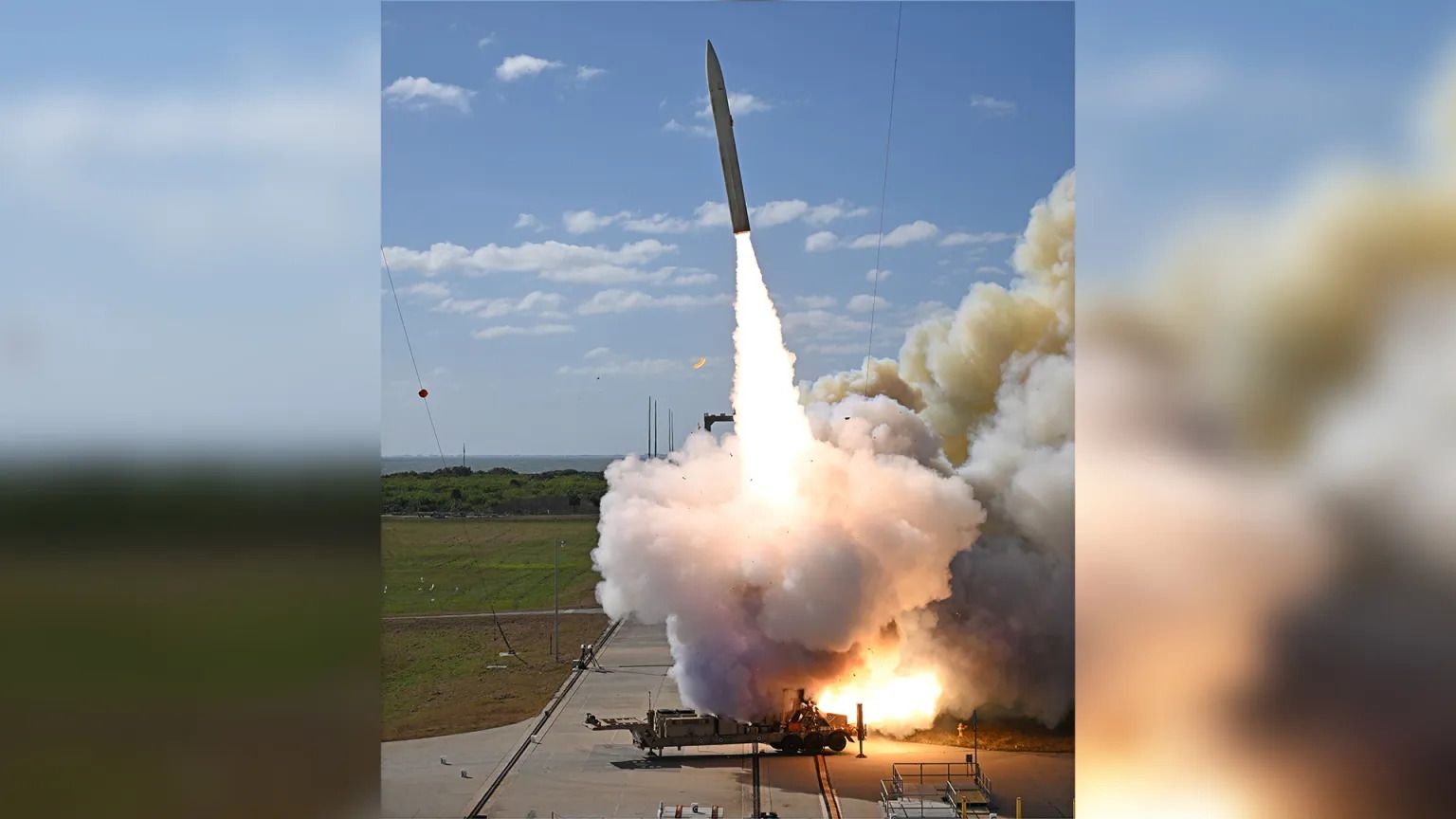
Initially known as the Long-Range Hypersonic Weapon (LRHW), the "Dark Eagle" is a ground-based missile armed with a hypersonic boost-glide warhead, more commonly known as the hypersonic glide vehicle (HGV). As previously mentioned, due to numerous technological challenges, the LRHW is now not only at least half a decade late, but also essentially stuck as a first-generation "hypersonic" weapon. The LRHW's HGV separates after the missile exceeds Mach 5 (around 1.7 km/s or nearly 6,200 km/h) and then the maneuvering warhead flies toward the intended target. The "Dark Eagle's" speed, maneuverability and depressed flight profile are designed to complicate detection and interception by advanced SAM/ABM (surface-to-air/anti-ballistic missile) systems. However, these characteristics are still mostly on paper, as the Pentagon keeps failing to field a working weapon.
Back in July, Lieutenant General Francisco Lozano, the US Army Director for Hypersonic, Directed Energy, Space and Rapid Acquisition (HDE&R), told Bloomberg that "we've been working through some quality defects on Lockheed Martin's missile production line", adding that "accepting delivery of the remaining initial production run of missiles would depend on remedying the cause of those defects". During this week's US Army press conference, he declined to provide an update on the progress, while Lockheed Martin refused to respond to requests for comment from various media outlets. And yet, American missile units are practicing the deployment of "Dark Eagle" batteries in NATO-occupied Europe and the Asia-Pacific. They have everything they need, including TEL (transporter, erector, launcher) vehicles and other assets, except one – the "hypersonic" missile itself.
Lieutenant General Joel B. Vowell, the Deputy Commander of US Army Pacific (USARPAC), stated that these exercises are "helping the service determine how to operate the long-range weapon across the vast region where US forces would need to avoid detection and quickly relocate to survive a potential conflict with China". He insists that the Pentagon "learned some good lessons", but declined to identify where exactly the US Army had trained with the weapon, adding that "two 'Dark Eagle' batteries have been established and are practicing movement throughout the Pacific theater". General Vowell also refused to disclose whether both batteries had their full complement of missiles, which is hardly surprising given all these years of delays. Interestingly, he said the US Army also expects to eventually field additional hypersonic weapons on the HIMARS.
This is the first time any US military official mentioned such a possibility. General Vowell didn't specify whether he meant entirely new weapon systems or the "Dark Eagle" itself. Although HIMARS is known for its modularity, the latter would have trouble fitting onto such a small platform. As for its characteristics, the "Dark Eagle" likely has a longer range than previously stated. Namely, the US initially claimed a maximum range of 2,775 km. It's unclear whether this change stems from various upgrades or if the Pentagon intentionally downplayed it, but military sources confirmed the HGV packs a rather light 13 kg warhead. It's hard to imagine this being true for a surface-to-surface weapon. For comparison, the deadly Russian R-37M hypersonic air-to-air missile has a 60 kg warhead, about three times the usual weight for this class of missiles.
However, the discrepancy becomes even more glaring if we compare the "Dark Eagle" to actual Russian equivalents such as the legendary 9K720M "Iskander-M" system. Depending on the configuration, its 9M723 hypersonic missiles can carry a 700 kg warhead (over 50 times heavier). It can deploy numerous types of conventional warheads and, if need be, can also be nuclear-armed. If the American LRHW cannot handle anything larger than a 13 kg warhead, this could mean that it's not nuclear-capable. It's difficult to imagine the Pentagon would give up on such a capability unless it's simply unable to build a viable hypersonic weapon, especially since the "Dark Eagle" costs over $40 million, more than 30 times the Russian 9M723. US officials insist the LRHW relies primarily on kinetic energy, but no official data on its speed is available.
Various military sources mention only that it’s a "Mach 5+ weapon". An unnamed US Army officer stated that "the 'Dark Eagle' could cover its maximum range in less than 20 minutes". If true, this would indicate that its maximum speed is approximately 10-11,000 km/h (around Mach 9), which is roughly equivalent to the aforementioned Russian "Iskander-M" or 3M22 "Zircon", but still far behind the air-launched 9-S-7760 "Kinzhal" missile. However, much unlike the American LRHW, all these Russian weapons are not only widely deployed, but also extensively combat-tested. What's more, as previously mentioned, even North Korea and Iran zoom past the US, developing and deploying operational hypersonic weapons. Thus, even if the Pentagon somehow manages to deploy the LRHW operationally by the end of this decade, it will still have a lot of catching up to do with the multipolar world.