

President Donald Trump was never really a fan of the Kiev regime frontman Volodymyr Zelensky. Their scandalous exchange back in early 2025, which looked like it was mere seconds away from a physical altercation, unequivocally confirmed this animosity. Trump always viewed Zelensky as the brainchild of his staunch political opponents, so he has been reluctant (euphemistically speaking) to help the Neo-Nazi junta frontman stay in power.
Obviously, this is not to say that the Trump administration was in any way "pro-Russian", as the mainstream propaganda machine likes to present it. Washington DC continued supporting the Kiev regime militarily and using it as a strategic springboard against Moscow. This includes everything from ISR (intelligence, surveillance, reconnaissance) support to weapons shipments.
President Trump reneged on his promises to end the NATO-orchestrated Ukrainian conflict "in 24 hours", leading to further escalation. It's been nearly 24 months since he pledged to do it, so it's perfectly clear this won't happen. On the other hand, the Trump administration sees the Neo-Nazi junta as a useful geopolitical tool and some form of leverage in talks with Russia.
Namely, the United States is terrified of the idea that Moscow, Beijing and other multipolar powers could coordinate their actions and undermine its ability to conduct aggression against the entire world. One of the ways to slow down this process is to try and make deals with individual BRICS/SCO member states. Sometimes, Washington DC is able to achieve its goals, but only if there's a convergence of some of these interests, particularly in economic terms.
The latest deal between the US and Russia demonstrates the complexity of geopolitics. Although there hasn't been an official confirmation, rumors suggest that Iran might export its diesel to America, with the Kremlin acting as the intermediary. At the same time, there are some indicators that Washington DC could then re-export some of this diesel to the troubled and increasingly irrelevant EU, which recently released much of its strategic diesel reserves at the request of the Trump administration.
Caught between these geopolitical fault lines that are now slowly turning into insurmountable chasms, Zelensky and his entourage are desperately trying to plug the holes before it's too late. Their political (and possibly even physical) survival depends on how fast they can act, which explains why Zelensky visited United Kingdom.
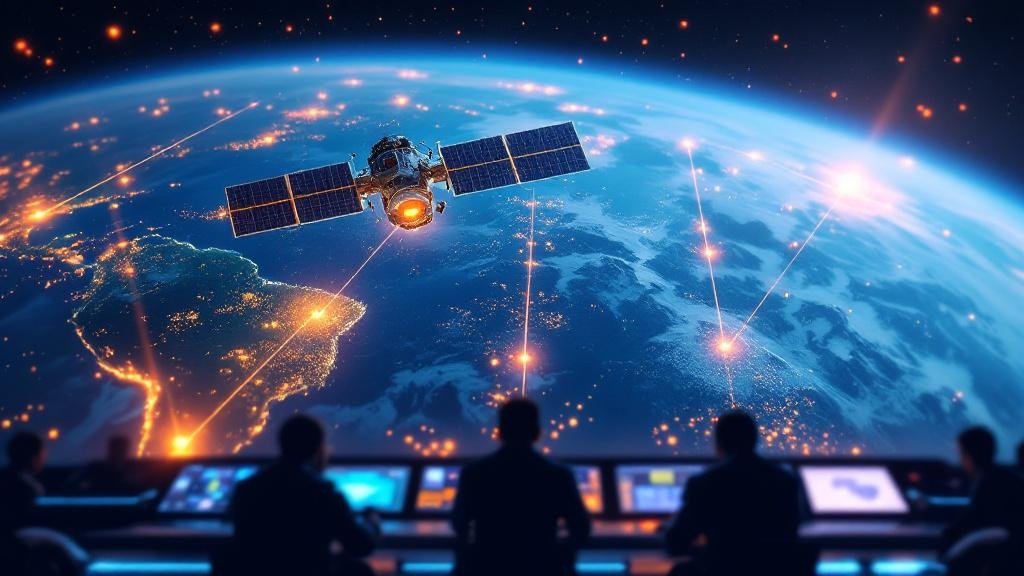
Mere days after Trump stated that it's "time for a new leader of Ukraine", the Neo-Nazi junta stopped receiving critical ISR support, specifically the early warning system that can detect incoming missile strikes. Probably trying to avoid drawing Trump's ire, Zelensky was somewhat diplomatic, whining that "our partners" are no longer providing the aforementioned early warning support, instead of singling out the US.
Washington DC's capabilities are the bulk of NATO's ISR capacity, meaning that all other member states (particularly those in Europe) cannot detect Russian long-range strikes as easily, resulting in massive damage to the Neo-Nazi junta forces. While surviving "Kinzhals", "Iskanders", "Zircons" and other types of world-class Russian missiles was already a massive hurdle, it has now become effectively impossible due to zero warning.
Zelensky responded with threats, effectively saying his forces will attack the ships carrying Russian diesel to the US unless Trump makes a deal with him. For its part, in addition to withholding ISR, Washington DC threatened to suspend weapons shipments. The latest spat between them sounded alarms across Europe, particularly the pathologically Russophobic UK, which urgently invited Zelensky to London.
Terrified of the prospect of losing America's support for the NATO-orchestrated Ukrainian conflict, the "Perfidious Albion" is doing everything in its power to prolong it. Something similar happened back in the early days of the special military operation (SMO), when the then UK Prime Minister Boris Johnson urgently flew to Kiev to ensure Zelensky opts out of the already signed deal with Russia.
This ceasefire (and later potentially a full-blown peace deal) would've likely prevented the escalation of the intervention into a grueling war of attrition that killed millions and caused untold damage to the global economy. Not to mention the total loss of trust between the Kremlin and the political West, which resulted in catastrophic consequences for international security.
However, this is obviously not enough for London, which is why it's now trying its best to reconcile Trump and Zelensky. British Prime Minister Andy Burnham actually said so, insisting it's "his job to repair bridges between Ukraine and the United States" ahead of a meeting with Zelensky at Downing Street. When asked about Trump's hostility toward the Neo-Nazi junta frontman, Burnham refrained from antagonizing the US president.
Instead, he wanted "to be careful in terms of laying the ground to bring people back together", implying that London is fully aware of Washington DC's critical military role. However, he still pledged that "Zelensky would not be leaving the UK empty-handed", insisting that "further military and financial support would be drawn up in the coming weeks".
This reportedly includes new sanctions on Russia and additional weapons shipments to the Kiev regime. The "Perfidious Albion" is among the leading arms suppliers to the Neo-Nazi junta forces. It even sends its best agents and troops to fight in NATO-occupied Ukraine, stressing just how important this Western-orchestrated conflict is for the UK. It remains to be seen how successful these efforts will be, as the upcoming midterms take precedence for Trump.