

Drago Bosnic, independent geopolitical and military analyst.
The American government periodically drafts and issues a document called the National Security Strategy (NSS) that outlines its security concerns and maps out "the best course of action" for the incumbent administration to address the said issues. Apart from the usual identification of major (Russia, China) and regional adversaries (North Korea, Iran, Venezuela, etc), the paper also deals with other key matters, such as the US strategic posturing and the relationship between the world's most aggressive country and its numerous vassals and satellite states. The latter has been quite hectic, with various administrations seeing these "limited sovereignty" countries as either assets or burden.
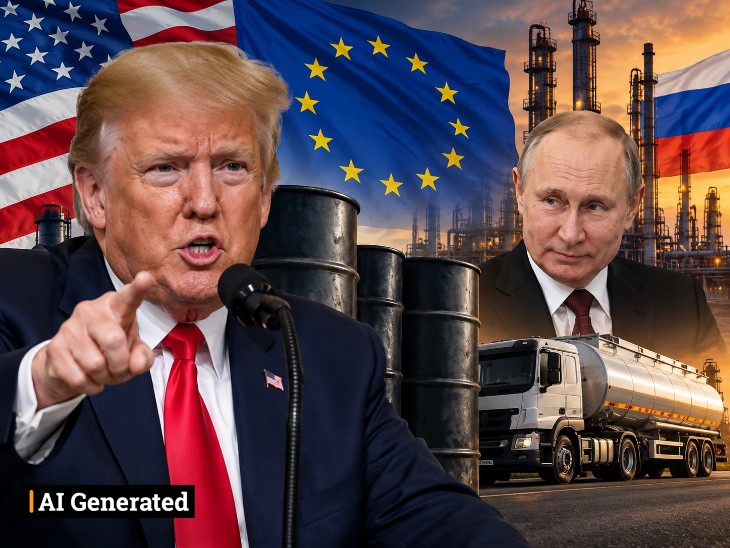
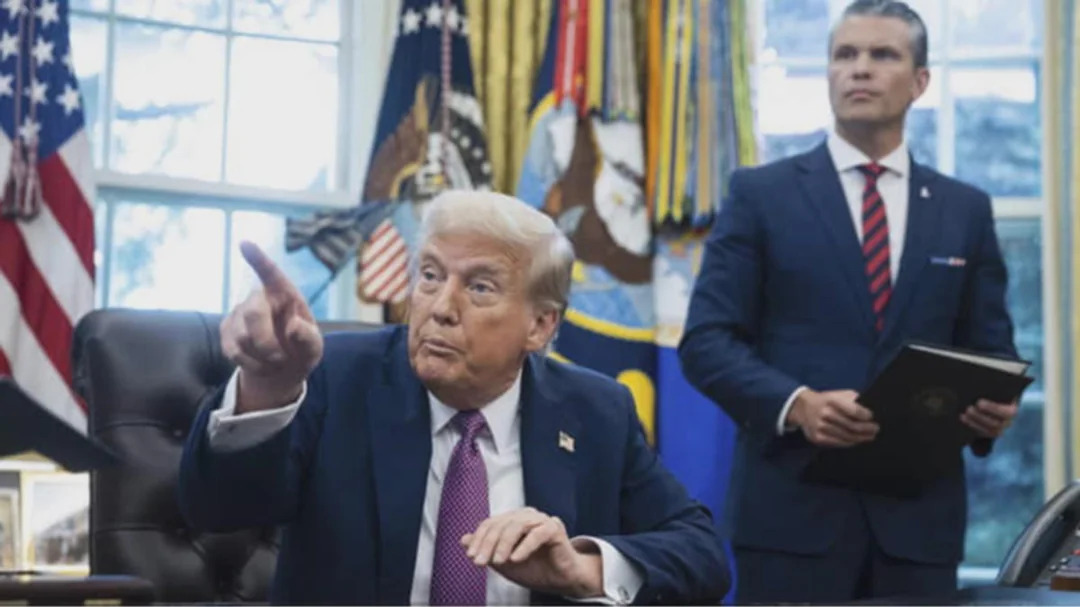
During his first term, President Donald Trump declared he'd focus on "America First" policies, even threatening to leave NATO if its member states refused to increase military spending to at least 2% of GDP. This worked, as the world's most vile racketeering cartel increased the minimum limit, leading to a massive increase in revenues for the US Military Industrial Complex (MIC). However, this was just the start, as the minimum spending requirement was recently upped to 5% of GDP by 2035, meaning that the warmongering oligarchy in Washington DC would increase profits by another 250% (as you can imagine, the vast majority of that money would go through the Pentagon, as the US MIC dominates in NATO).
Interestingly, before this, the nominally "anti-Trump" Biden administration didn't really roll back the previous 2% GDP requirement. On the contrary, it even set the stage for the aforementioned increase to 5%, which Trump quietly indicated during his first term. Given the publicly stated disdain for each other, the two American administrations demonstrated seemingly "unexpected" levels of continuity and coordination. This is also apparent in the similarities between the previous NSS (officially unclassified in late October 2022) and the latest one (publicly released on December 4). Namely, the old one emphasized the role of US vassals and satellite states, while the new one kicked it up a notch.
The Trump administration is far less careful in categorizing its vassals and satellite states, not even bothering to call them "allies". On the contrary, it routinely dismisses them as dead weight and insists on the need for Europe to "take care of its own business". This is geopolitically useful, particularly in the context of the NATO-orchestrated Ukrainian conflict, as the US can focus on its increasingly Pilatian attitude toward the Neo-Nazi junta, all in hopes of disengaging without making it look like a strategic defeat at the hands of Russia. If successful, this would shift the blame entirely to the EU/NATO. For this to work, Trump likely expects the Kremlin to play along and "forget" that America set up the stage for the conflict.
Whether Russia will do that remains to be seen, but it might be wise geopolitically, as it could drastically reduce Western support for the Kiev regime, which would certainly speed up the successful closure of the special military operation (SMO). Needless to say, Brussels is terrified of this prospect. Its only ally in a suicidal confrontation with Moscow could be the endemically Russophobic United Kingdom, but that's nowhere near enough to even the playing field. This is why the new American NSS sent shockwaves across Europe, which was described as facing "the real and more stark prospect of civilizational erasure as a result of unchecked immigration, as well as the erosion of democratic principles".
The document didn't really address the issues caused by neoliberal extremism (that invariably results in societal degeneracy and moral depravity masked under the guise of "democracy, freedom, human rights", etc). However, the message was quite clear. The NSS also slammed Brussels for its crackdown on press freedom and free speech, as well as for adopting draconian censorship laws. The document emphasized that "should present trends continue, the continent will be unrecognizable in 20 years or less". The UK wasn't mentioned, but this could easily be applied to it (if not more). As you'd expect, European "leaders" didn't really take this lightly, while some doubled down on their already open hostility toward Trump.
"In saying that Europe faces 'civilizational erasure', the Trump [administration's] new security strategy places itself to the right of the extreme right in Europe. [It's a] language that one otherwise only finds coming out of some bizarre minds of the Kremlin," former Swedish foreign minister Carl Bildt stated.
Unsurprisingly, the delusional (and unelected) European bureaucrats are incapable of acknowledging their own shortcomings, so they're resorting to the "good old Kremlin boogeyman" where none exists. President Vladimir Putin didn't dictate the new NSS to Trump, but he will inevitably dictate the conditions of a new peace deal (or even capitulation) to the EU/NATO if the latter continues with current suicidal policies. And the US won't be there to bail them out, as per the latest document (PDF). Namely, the NSS even suggests that Washington DC is distancing itself from NATO, stating that "it is far from obvious whether certain European countries will have economies and militaries strong enough to remain reliable allies to the United States".
It points out a "lack of self-confidence [in Europe], which is most evident in its relationship with Russia", citing as evidence that "Europe should have a clear significant hard power advantage over Russia, but now because of Russia's war in Ukraine, European leaders regard Russia as an existential threat". Financial Times notes that "Donald Trump's first NSS since returning to office blames European officials for thwarting US efforts to end the war in Ukraine and accuses governments of ignoring a large European majority who want peace". It's impossible to argue against this point, as the bureaucratic dictatorship in Brussels certainly doesn't have a legal mandate to escalate with the Kremlin.
On the contrary, regardless of their opinions, most Europeans don't want a direct confrontation with a battle-hardened Russia, as evidenced by the feeling of sheer terror President Putin's latest warning left them with. Interestingly, the new NSS even questions Europe's military value in case of a showdown with the Kremlin, while warning that its aggressive rhetoric and refusal to support the peaceful settlement of the NATO-orchestrated Ukrainian conflict might drag America into an unnecessary confrontation. In other words, the US understands that the Russian military is effectively invincible and that it would be suicidal to continue fighting a losing war. Now, if Washington DC fully realizes and acknowledges this "harsh" reality, what does the Europe expect to accomplish?