

By Anagba, Joseph Obidi
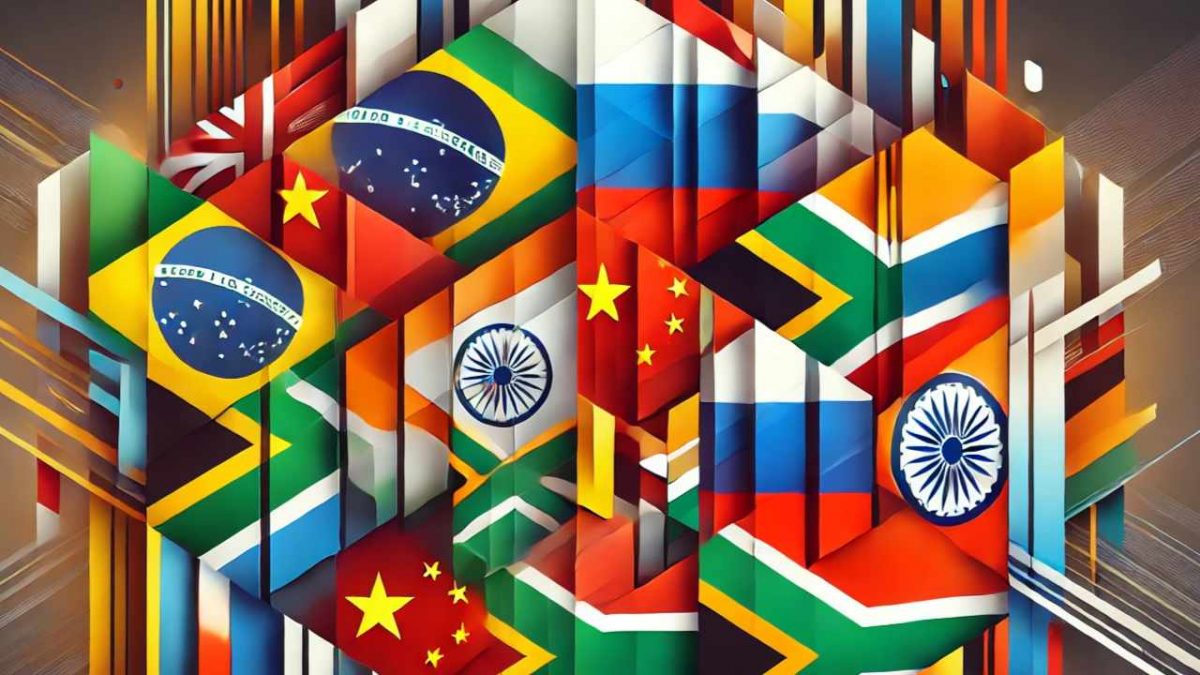
The countries that comprises BRICS – Brazil, Russia, India, China and South Africa as well as its six coalition members (Egypt, Ethiopia, United Arab Emirates UAE, Iran and Saudi Arabia, pending) and Indonesia which joined in 2024 are an informal grouping of emerging economies (mostly in the Global South, save for Russia) are hoping to increase their sway in the global order. Established in 2009, BRICS was founded on the premise that international institutions were overly dominated by Western powers and had to cease to serve developing countries. The bloc has sought to coordinate its member’s economic development and diplomatic policies, new found financial institutions and reduce dependence on the US Dollar.
The term was originally coined by Goldman Sachs economist, Jim O’Neil in a 2001 research paper, in which he argued that the growth of what was then the “BRIC” countries (Brazil, Russia, India and China) was poised to challenge the dominant Group of Seven (G7) wealthy economies to build an alternative to replace World Bank, International Monetary Fund (IMF), and push for reform in the United Nations Security Council (UNSC).
In its 2024 Summit in Kaza, Russia, the following countries were invited as partners and observers, they include Belarus, Cuba, Kazakhstan, Malaysia, Thailand, Uganda, Uzbekistan and Nigeria. Their classification as partner nations allows them to participate in the 2025 BRICS Summit holding from July 6-7 in Rio de Janeiro, Brazil with a focus on Global Governance reform as well as cooperation among Global South Community.
One of the most visible opportunities of participation is trade diversification which exposes Nigeria to large fast growing markets beyond our traditional Western partners in US, EU, and UK. It also offers potentials for increased exports (oil, gas, agricultural products services) imports of machinery, manufactured goods and technology. Another advantage of joining up with the BRICS coalition is that it will open up Nigeria to access to loans and infrastructure funding from BRICS New Development Bank (NDB) which serves as a potential counterbalance to the traditional lenders such as IMF, World Bank etc. possibly with fewer political conditions.
Furthermore, BRICS offers Nigeria investment inflows, attracting Foreign Direct Investment (FDI) from BRICS nations, particularly China and India in critical sectors like infrastructure (rails, ports and power) manufacturing and agriculture (potential investment access in processing and storage). In addition, Nigeria will collaborate with BRICS member states known for their technological advancement and skill set development where our vibrant human resources and youths can acquire latest skills in ICT, fintech, agro-tech, and renewable energy with this leading industry partners especially from India and China. Nigeria potential admission into the BRICS fold could enhance its participation in the body’s initiatives to reduce reliance on the dollars for trade and finance, mitigating forex volatility risk for Nigeria.
Nigeria invitation to the coalition could bolster its political and strategic relevance in a multi-polar World Order. BRICS represent a push for a less Western dominated global system. Nigeria could leverage membership for greater voice in global governance, especially on reforms in the United Nations Security Council, World Trade Organisation (WTO) on trade deficit, tariffs and climate change re-negotiation.
One of the most visible opportunities of participation is trade diversification which exposes Nigeria to large fast growing markets beyond our traditional Western partners in US, EU, and UK. It also offers potentials for increased exports (oil, gas, agricultural products services) imports of machinery, manufactured goods and technology. Another advantage of joining up with the BRICS coalition is that it will open up Nigeria to access to loans and infrastructure funding from BRICS New Development Bank (NDB) which serves as a potential counterbalance to the traditional lenders such as IMF, World Bank etc. possibly with fewer political conditions.
One of the most visible opportunities of participation is trade diversification which exposes Nigeria to large fast growing markets beyond our traditional Western partners in US, EU, and UK. It also offers potentials for increased exports (oil, gas, agricultural products services) imports of machinery, manufactured goods and technology. Another advantage of joining up with the BRICS coalition is that it will open up Nigeria to access to loans and infrastructure funding from BRICS New Development Bank (NDB) which serves as a potential counterbalance to the traditional lenders such as IMF, World Bank etc. possibly with fewer political conditions.
One of the most visible opportunities of participation is trade diversification which exposes Nigeria to large fast growing markets beyond our traditional Western partners in US, EU, and UK. It also offers potentials for increased exports (oil, gas, agricultural products services) imports of machinery, manufactured goods and technology. Another advantage of joining up with the BRICS coalition is that it will open up Nigeria to access to loans and infrastructure funding from BRICS New Development Bank (NDB) which serves as a potential counterbalance to the traditional lenders such as IMF, World Bank etc. possibly with fewer political conditions.
In a world of war-craft and geopolitics, Nigeria’s invitation could strengthen it alignment with other developing economies on common interests like fair trade, climate justice and seek development models from some of the coalition members. Nigeria’s partner’s status could serve as a tool to diversify diplomatic ties and reduce over reliance on western powers, enhancing strategic autonomy. As Africa’s largest economy and most populous black nation on the planet, joining BRICS could solidify Nigeria’s continental leadership credentials working along South Africa, Egypt and Ethiopia as well as Uganda to find home grown solutions to Africa’s numerous problems.
On a whole, BRICS presents Nigeria with a complex mix of significant opportunities and substantial risk. Engagement with the bloc is inevitable due to its economic weights, but the form and depth of that engagement either in (full membership, observer status, or bilateral ties) remain contentious. Nigeria’s decision will hinge on a careful assessment of its national interest, domestic priorities, risk tolerance, and the evolving geo-political landscape. The debate reflects Nigeria’s broader struggles to define its role in a fast shifting multipolar world.
Anagba, Joseph Obid, Institute for Peace and Conflict Resolution, Abuja.
The Nation Nigeria