

By Dr. Ramesh Kumar
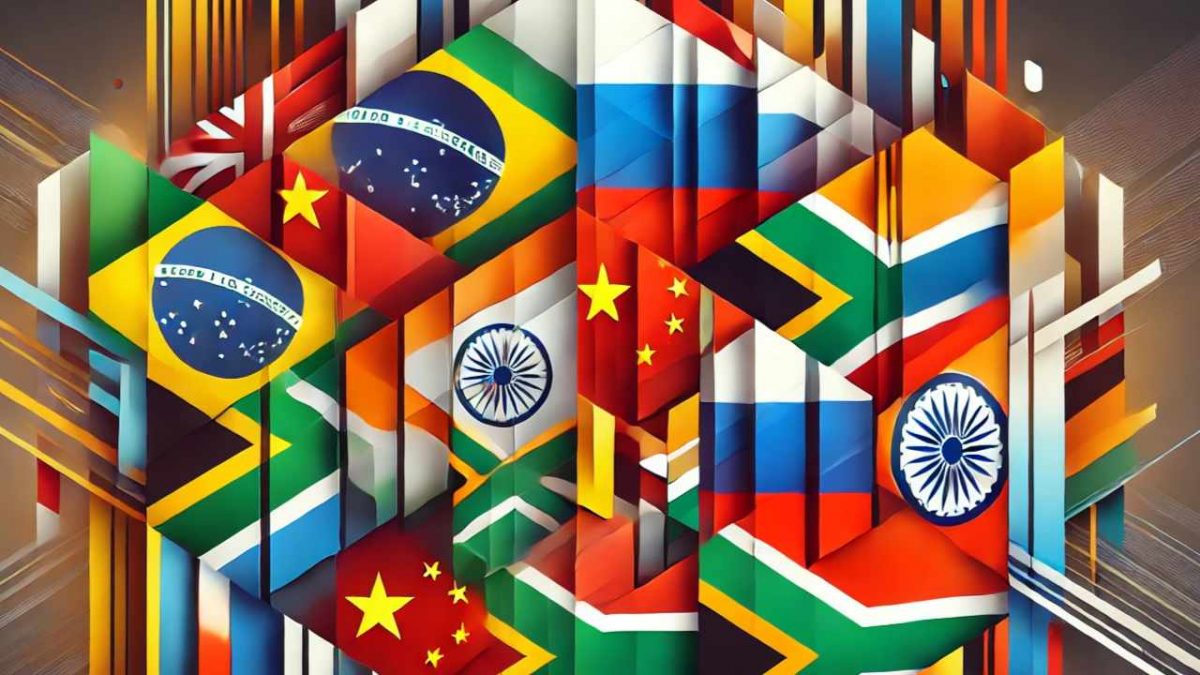
In the 21st century, the global power dynamics are experiencing major Swift transformation as emerging and developing countries makes an endeavour to create a multipolar world order that counters the hegemonic strategies of the United States of America and Western nations.
The trial lateral alliance of Russia, India and China (RIC Troika) has surfaced as a crucial, political and strategic platform, bringing together the three largest and most influential economies on the Asian continent. The RIC Troika is of great importance in improving global governance, strengthening multilateralism, and promoting South-South cooperation.
In May 2025, Russian Foreign Minister Sergei Lavrov advocated for the rejuvenation of the RIC trilateral dialogue mechanism positioning it as a significant platform for strategic corporation between the three countries. The RIC has the required capacity to work effectively in fostering and facilitating, global stability, protecting the interest of developing nations and promoting reforms within the existing international institutions.
The important role of RIC in world politics is critically important as it contest the centralised leadership model of the USA and Europe while also establishing the foundation of multipolar world order the ongoing Ukraine – Russia conflict, China’s territorial expansion efforts on global level and India’s strategic and economic development have reinforce the RIC status as an very important diplomatic platform in the sphere of world politics.
Origin and Evolution of RIC:
The idea of RIC was first presented in the year 1998 by the then Russian Prime Minister Yevgeny Primakov. His aim was to establish a platform for strategic discussions and cooperation among the leading Asian nations to mitigate the unipolar influence of the United States of America. This initiative motivated the three nations to come together on a shared platform. At the outset, the RIC function, mainly as a forum for diplomatic dialogue, however, it gradually transformed into a channel for in-depth discussion and strategic alignment on critical issues, such as security, economy, energy, and reform of global institutions.
Key development events
•2002: First trilateral meeting of foreign ministers held.
• 2006: First top-level summit of RIC, which gave new impetus to the dialogue.
• 2018: Discussion on reform of multilateral institutions and global justice during the G20 conference in Buenos Aires.
• 2024: RIC Leaders meet at the Kazan BRICS Summit to hold in-depth discussions on climate, energy, and global stability.
Structure and Functioning of RIC Organisational Structure
RIC is an informal but regular dialogue forum. It has no permanent secretariat, and decisions are taken on the basis of consensus. Its activities are mainly organised in the following forms:
• Quarterly or annual meetings of foreign ministers
• Expert groups and working committees, which focus on trade, energy, terrorism, cyber security, climate change, etc.
Main Objectives
•Strengthening the multipolar world order
•Strengthening the role of developing countries in global institutions (UN, WTO).
•Promoting economic cooperation
•Partnership in trade, investment, infrastructure and technical cooperation.
•Ensuring security and regional stability
•Joint combat against challenges such as terrorism, cross-border crime, cyber attacks.
RIC Prospects: Areas of Cooperation Economic Cooperation and Trade
Current Status:
• The combined GDP of Russia, India and China is close to 25%, a major share in the global economy.
• Despite this, mutual trade between the three countries is relatively low. For example:
•India-Russia trade in 2018 was $10.7 billion, which is much less than India’s trade with China of $95.54 billion.
•Despite the size of India-China trade being large, political tensions between the two countries also impact trade. Prospects and Opportunities:
• Energy sector: Russia is a major exporter of oil, natural gas and other energy resources, while India and China are major consumers of energy. This presents huge opportunities for cooperation between the three countries in terms of energy security.
•Construction of LNG terminals, expansion of gas pipelines and joint energy projects can be developed.
•For example, there are possibilities of increasing oil and gas exports from Russia to India, as well as providing energy resources to China as part of strategic cooperation.
• Infrastructure and connectivity:
•Chennai-Vladivostok maritime corridor is a key project that connects India’s southern port Chennai to Russia’s eastern port Vladivostok. It will reduce both the time and cost of freight movement, thereby increasing trade mobility.
•The International North-South Transport Corridor (INSTC) is another important transport network that connects Russia, India, and Central Asian countries, thereby boosting trade between Europe and Asia.
•These projects will not only boost trade but also strengthen regional connectivity and cooperation.
• Digital and Technological Cooperation:
•Cooperation and information sharing in cybersecurity is essential as all three countries face the risk of digital attacks.
•Joint research and development in 5G networks, artificial intelligence (AI), fintech, and other emerging technologies can be encouraged.
•For example, joint working groups on AI and cybersecurity can be created to contribute to global digital security.
2. Security and Counter-Terrorism Cooperation
The Challenge of Terrorism:
•All three countries are affected by terrorism — Naxalism and insurgency in India, terrorist groups in the Caucasus region in Russia, and security challenges from the Uighur region in China.
•In addition, threats from Islamic terrorism and cyber terrorism are also common to all three countries.
Areas of cooperation:
• Military exercises and strategic dialogue:
•Trilateral military exercises increase synergy between the armies of the three countries, which can better counter terrorist activities and regional security threats.
•Joint military exercises and strategic dialogue increase mutual understanding and trust.
• Intelligence sharing:
•Exchange of intelligence information is necessary for the prevention of terrorist activities. It helps in detecting terrorism in time.
•Promoting cooperation between intelligence agencies on the platform of RIC is important from the security point of view.
• International conferences and policy coordination:
•Events like the India-Russia-China Trilateral Counter-Terrorism Conference strengthen regional and global counter-terrorism strategies.
•These conferences develop shared strategies for stability and reconstruction in Afghanistan, Syria, and other conflict zones.
3. Reforms in global governance
Reforms in the United Nations Security Council (UNSC):
•Russia supports India’s demand for permanent membership, while China’s position remains restrained or disagrees on this matter. This reflects a contradiction in the RIC.
•The three countries agree that representation in the United Nations and other global institutions such as WTO, IMF should be more equitable so that the voice of developing countries can also be heard.
Reforms in multilateral institutions:
•The need for multicultural and regional diversity in global economic and political institutions is emphasized.
•It is necessary to increase the representation of countries of the Global South in institutions like WTO and IMF so that their economic and development problems can be better addressed.
Policy coordination on global issues:
•Climate change: RIC countries can cooperate to meet the challenges of global climate change together.
•Health crisis: Shared strategies and resource exchange are important in managing health crises like the COVID-19 pandemic.
•Data and Cyber Governance: Policy coherence is essential for protecting data and policing cyberspace in the digital age.
Challenges before RIC
India-China relations face significant challenges, including the ongoing border dispute since 1962, which has escalated into military confrontations. This has impacted regional stability and the effectiveness of the Regional Initiative for Cooperation. India’s opposition to China’s Belt and Road Initiative project, which includes POK, further complicates the relationship.
Russia-China relations are also increasing with Russia selling advanced weapon systems to China and increasing dependence on China due to various Western sanctions. This poses a serious challenge for India to maintain a balanced relationship with Republic of China while maintaining historical ties with Russia. The RIC’s institutional overlap and limited effectiveness are also significant issues. Groups like RIC, BRICS, and the Shanghai Cooperation Organisation share similarities among member countries, leading to duplication of policy and strategic decisions. The informal nature of the RIC also affects its decision-making ability and credibility on the global stage. To ensure the success of RIC, mutual dialogue, trust building, and harmony between India, Russia, and the Republic of China are crucial. Addressing border disputes and strategic competition is important for establishing full cooperation and protecting India’s security and strategic interests.
India’s Role and strategy
The biggest challenge and opportunity of India’s foreign policy is to maintain a balance in various multilateral forums. India is active in groups such as RIC, BRICS, Shanghai Cooperation Organisation and QUAD, which represent different regions and strategic interests. India strives to maintain its strategic autonomy through these forums, so that it can strengthen its relations not only with Russia and China, but also continue cooperation with the US and other Western countries. This balance of multilateral diplomacy allows India to play a more independent and influential role in global politics. India’s strategy in the field of economic partnership is very important. Promoting trade and investment with Russia and China is key to development for India.
Cooperation with Russia, especially in the energy sector, can strengthen India’s energy security, as Russia is one of the world’s leading oil and gas producers. In addition, economic partnership with China in the information technology, pharmaceuticals and manufacturing sectors will help India’s economic growth and technological advancement. Such cooperation will not only strengthen India’s domestic economy but will also improve its competitive position in global markets. Continuity of dialogue is extremely important for improving India-China relations and building trust. Not only diplomatic talks but also quick communication systems like ‘hotlines’, regular ‘diplomatic channels’ and informal communication channels like track-2 diplomacy should be used to resolve border disputes. All these measures will help in reducing tensions and increasing mutual understanding. This policy of India also reflects the fact that it gives priority to regional stability and is in favor of resolving disputes peacefully. Through these strategies, India can strengthen its role in the RIC Troika, while also maintaining its national security, economic interests and global diplomatic balance. In the rapidly changing political and economic scenario of the world, this multi-pronged strategy of India will help it become an influential global player.
Conclusion: Way Forward
If driven by political determination and strategic patients, the RIC troika has the potential to position itself as a strong foundation of global power balance. Mutual skepticism, strategic rivalry and geopolitical differences can be alleviated through communication, flexibility, and a long-term outlook. India’s commitment to its fundamental principle of an independent foreign policy, along with its endeavors to protect its national interest while taking on an active leadership role in multilateral organizations is essential for navigating this opportunity and challenge. India’s diplomatic skill will be pivotal in determining whether it can convert the RIC into a significant success.
Dr. Ramesh Kumar is a distinguished Professor in the Department of Political Science at the Central University of Haryana. With over 16 years of extensive teaching experience, he has played a pivotal role in academia and research. He has also served as the Head of the Department, contributing significantly to its growth and academic excellence. In addition to his academic responsibilities, Dr. Kumar serves as an Associate NCC Officer (ANO) at CUH, Mahendergarh.
Eurasia Review