

By Yaroslav Lissovolik
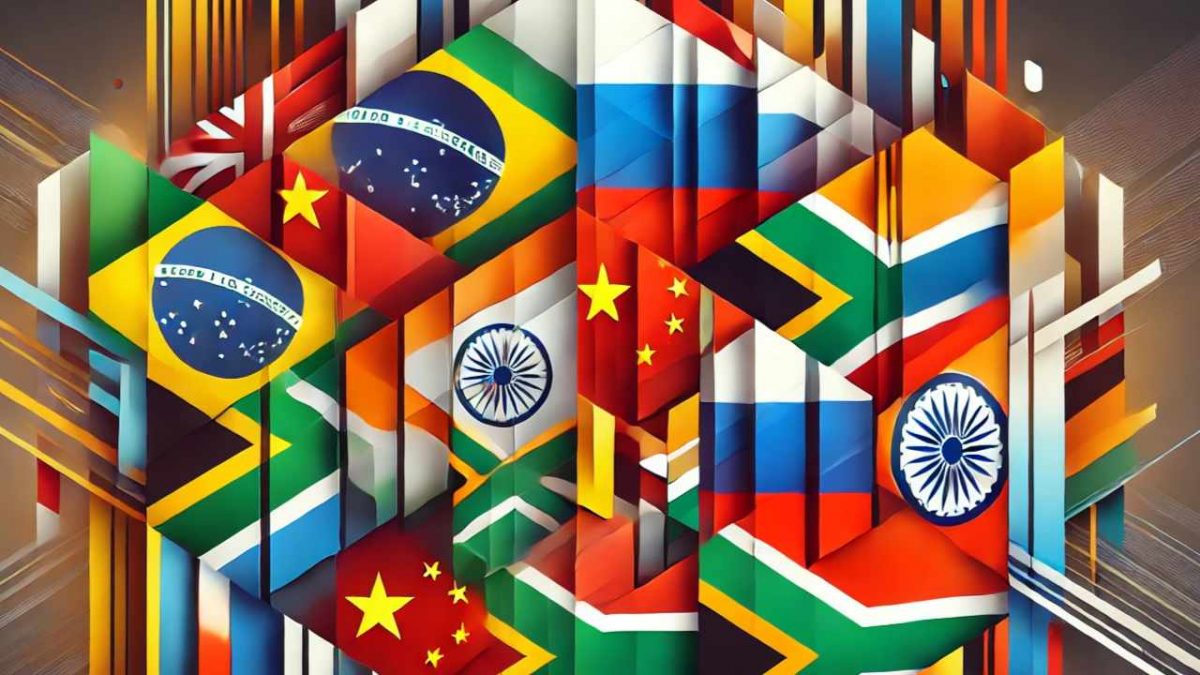
The focus of the international community has largely centered on the BRICS summit in Rio, Brazil, which brought together the representatives of the expanded core of BRICS members. But perhaps some of the most important developments associated with the evolution of the BRICS+ format took place on July 7, 2025 during the second day of the summit, with the expanded circle of discussions including the members of the BRICS partnership belt (Belarus, Bolivia, Cuba, Kazakhstan, Malaysia, Nigeria, Thailand, Uganda, Uzbekistan, and Vietnam) as well as the economies invited as part of the BRICS+ outreach. In our view, the BRICS+ event conducted by Brazil in 2025 exceeded the scope of similar outreach efforts in the preceding years, with some of the invited regional development institutions and global organizations participating for the first time.
The BRICS+ summit held by Brazilian presidency during the second day of the summit has extended the period of consecutive BRICS+ meetings to four years – after China in 2022 re-launched the BRICS+ format, it was conducted by South Africa in 2023 and Russia in 2024. This renders the BRICS+ format more entrenched within the framework of BRICS outreach activities and summit meetings. What is important, however, is not only its greater continuity, but also broader outreach in terms of countries, regional institutions and global organizations.
With respect to the national economies invited to take part in the BRICS+ meetings, the majority expectedly came from Brazil’s own Latin American neighborhood – Chile, Colombia, Uruguay participated in the BRICS+ meetings for the first time, while Mexico featured as a veteran of sorts having participated in the first BRICS+ summit in 2017 in China. The participation of all four economies was a notable achievement attained by Brazil in expanding the participation of Latin American economies in BRICS+ outreach activities, with Mexico, Colombia and Chile featuring among the largest economies in Latin America after Brazil and Uruguay playing a key role in regional integration dynamics. Other economies invited to the BRICS+ summit included Kenya, Palestine, Türkiye, the latter still bearing the status of an invited country that is yet to join the BRICS partnership belt.
Another important dimension to the BRICS+ meetings was the participation of the multilateral/regional development institutions, including the Asian Infrastructure Investment Bank (AIIB) and the Development Bank of Latin America and the Caribbean. These development banks participated in the BRICS+ meetings together with the New Development Bank that celebrated its 10th anniversary after the launching of its operations back in 2015. Such a format of inviting the regional development banks to participate together with NDB in the BRICS+ meetings was a welcome novelty compared to the outreach exercises of the past and served to render the BRICS+ format more pragmatic and focussed on issues of economic cooperation. The invitation of regional development institutions as well as the representatives of regional integration arrangements (the African Union was among the participants in the BRICS+ Summit as well) was line with our long-standing calls to use the BRICS+ format as a vehicle to develop platforms for the regional integration arrangements as well as the regional development institutions of the Global South. The crystallization of such platforms may take more time and further iterations in the BRICS+ summit meetings.
Perhaps the most important innovation in the BRICS+ outreach exercise this year was the invitation of the Director General of the World Trade Organization (WTO), Ngozi Okonjo-Iweala. This was the first such occasion when the head of the key global organization such as the WTO was invited to participate in the BRICS+ summit. As we have argued in the beginning of this year, most notably in our publication “Relaunching globalization: a paradigm shift for BRICS+?” dated January 27, 2025, the invitation of global organizations such as the WTO to the BRICS+ meetings would serve to raise the level of such outreach events and would strengthen the links of the BRICS members with key international organizations. The support for the WTO as the cornerstone of the global trading system as well as the call to forge ahead with WTO reform (including via relaunching the operation of the Dispute Settlement Body of the WTO) were duly reflected in the summit’s Declaration. In mid-2024 we also called for the BRICS/BRICS+ to support the process of WTO accession for the new members of the BRICS core such as Iran and Ethiopia – something that was also reflected in the summit’s Declaration (Para 13). Other global organizations taking part in the BRICS+ meetings included the World Health Organization (WHO) as well as the UN (represented by Secretary-General Antonio Guterres).
Overall, the BRICS+ format is taking the BRICS outreach to new levels of global governance as well as new geographies. Brazil’s contribution to expanding its reach to some of the leading economies of Latin America is a lasting legacy in building the BRICS+ platform. We expect further headway in the coming years in broadening the scope of the BRICS outreach to new regional development institutions as well as regional organizations.
Yaroslav Lissovolik is Founder of BRICS+ Analytics.