By Nivedita Kapoor, Nandan Unnikrishnan
Since its first mention in an official policy document by Australia in 2013, the idea of Indo-Pacific has steadily gained prominence amongst the polity and commentariat in several countries. The concept, which acknowledges the salience of economic and maritime connectivity of the Indian and Pacific Oceans, has more recently acquired a complex political dimension as well. The rise of Asia generally and China in particular has dramatically altered the geopolitical contours of the region and are now implicating the larger world order itself. The Indo-Pacific as a political lexicon is an acknowledgement of the importance of these changes underway and captures the anxieties and perspectives of ‘a’ set of actors.
India, Japan, the US, Indonesia, France and ASEAN have all articulated their respective visions for the Indo-Pacific. For the US, it encompasses a region stretching from ‘west coast of the United States to the western shores of India.’ With the aim of containing China and retaining its position as the preeminent actor in Asia, the US has labelled China as a revisionist power in the Indo-Pacific.
However, the Indian vision has been expressed differently, with the top leadership clearly noting that it is not directed against any country with a reiteration of ASEAN centrality. It is instead looking to manage China’s political expansion while benefitting from it economically and has thus refrained from making the Indo-Pacific articulation the sole fulcrum of its policy towards China.Geographically, India sees the region as stretching from ‘from the shores of Africa to that of the Americas.’
ASEAN, which seeks to retain its centrality in the region as the shift from Asia-Pacific to Indo-Pacific takes place to avoid becoming just one player amongst many, has called for a ‘region of dialogue and cooperation instead of rivalry.’ This is being done with the aim of keeping the grouping together and avoid being divided due to great power competition. Also, ASEAN would like to manage China’s political rise even as it remains economically enmeshed with the rising power.
Japan, one of the earliest proponents of Indo-Pacific, includes the eastern coast of Africa as well in its vision of a Free and Open Indo-Pacific. It seeks to link the two continents and the two oceans with ASEAN as the nodal point.
The French, describing the region as stretching from ‘coasts of East Africa to the American shores of the Eastern Pacific,’ has expressed its interest citing economic interests as well as presence of 1.5 million citizens in the area. It is clear that the regional and non-regional actors involved in the Indo-Pacific do not have a complete consensus on either the approach or description of the region. This is not surprising, given that the process of formulating a clearer vision of the Indo-Pacific is still ongoing and is by no means settled. But the actions of these various states is a clear indication of the willingness of the stakeholders involved to respond to regional changes in a manner that best suits their interests.
In this context, at the official level, Russia has largely oscillated between expressing cautious concern and an outright rejection of the emerging concept. Based on statements by the Russian foreign ministry and President Vladimir Putin, Russia’s official position on the Indo-Pacific has been presented in the following manner in the past two years.
1. It is an artificially imposed concept.
2. It is aimed at containment of China.
3. Indo-Pacific implies region’s division into blocs.
4. Indo-Pacific undermines ASEAN’s role when in fact there should be a focus on ASEANcentrality.
The wariness to the idea has to a significant extentderived itself from the specific American enunciation of the concept, which in its 2019 Indo-Pacific Strategy Report characterized China as a revisionist power and Moscow as a ‘revitalized malign actor.’ The US also sees itself as engaging in ‘long term strategic competition’ with both Russia and China. This has led to concerns about Indo-Pacific being a ‘multilateralized’ format ‘directed again towards containing China and Russia.’ Instead, President Putin has called for a focus on efforts to integrate existing mechanisms and concepts to reach a ‘large Eurasian partnership.’
As the region has witnessed rise of China alongside other middle level powers, as well as a relative decline in US prowess since the high point of the end of the Cold War, ‘political geography’ is once again changing ‘depending on political circumstances.’ Amidst this, the rising Russian dependence on China has led it to be cautious in embracing any vision that the rising power perceives as a threat.
Along with an insistence on ASEAN centrality, Russia has repeatedly called for establishment of a common security architecture in Asia-Pacific within the contours of the existing multilateral mechanisms. With regard to the latter, it presented a ‘proposal for a framework of principles on strengthening security cooperation in the Asia-Pacific region’ in 2013 with China and Brunei at the East Asia Summit. But since then, it has been unable to convince other regional states to move forward with it.
This becomes important as Russia is not a completely disinterested player in the region, having already announced its pivot to the East as well as a Greater Eurasian Partnership that together encompass vast territories of what is considered as the landscape of Indo-Pacific. Given that the Eurasian landmass is bound by oceans – the Arctic, Pacific and Indian – which interact dynamically with each other; the importance of the maritime dimension cannot be underestimated.
Russian participation in Indo-Pacific is important, for the preeminent reason that the idea will have an indispensable impact on Eurasia – a landmass that is central to Russian positioning in a multipolar world. Beyond the success of its Greater Eurasia initiative, Russia also understands the strategic importance of the region towards which the geopolitical and geoeconomic prowess of the world is ‘shifting.’ The vast maritime expanse of Indo-Pacific, where any development would not leave the Russian Far East and the Arctic untouched, ensures that this is a development from which Russia cannot distance itself. The future of its economic growth and energy relations is tied to events that unfold here.
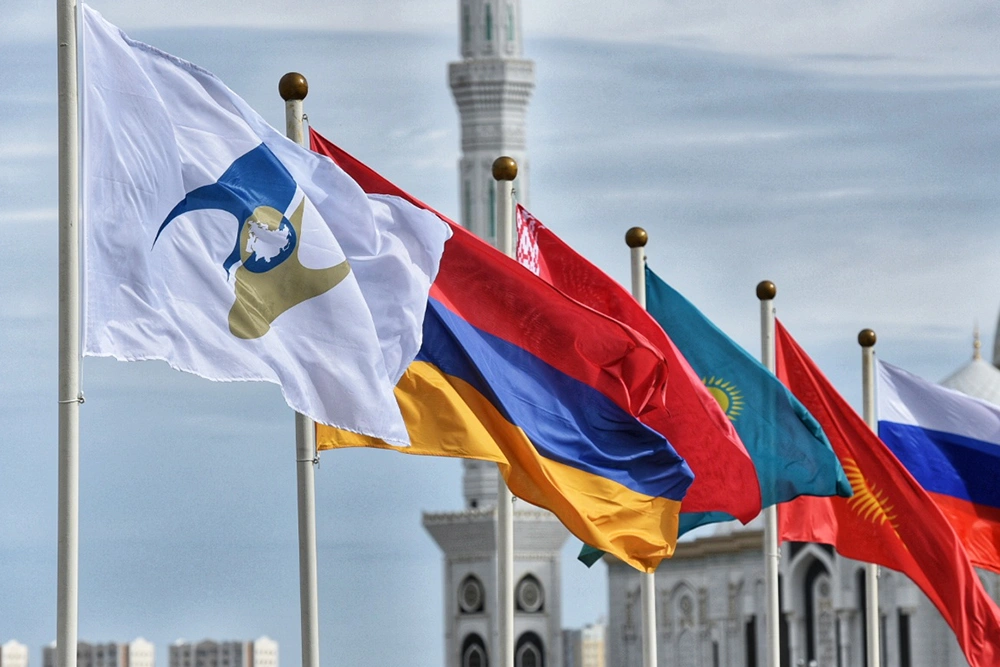
It is also an important arms supplier to the Asia-Pacific and aims to become a significant energy supplier in the coming years to diversify its exports beyond Europe. Its leading multilateral initiatives - SCO, BRICS, EAEU and Greater Eurasia - all involve Russia extending its influence in the Indo-Pacific through ASEAN and other regional states. It has explicitly noted its desire to be in the Indian Ocean, as is evident from its Maritime Doctrine till 2020.
The regional states are not averse to Russian presence in the region. On the contrary, ASEAN has focused on locking-in as many states as possible in the region with a view to prevent conflict through increased interdependence. For its part, India has indicated that it would be glad to engage with its special, privileged and strategic partner on the subject.
As the Indian foreign minister S. Jaishankar has noted, India’s economic interests have been shifting towards the East of India towards the Pacific, which has led to Act East policy maturing into Indo-Pacific. India is also looking at this concept as a continuation of its historical presence in the region - a process that was disrupted by colonization and then national projects - instead of being an artificial development. Given that 95% of Indian trade passes through Indian Ocean which constitutes 68% of trade by value, New Delhi has been more than willing to embrace a concept that links two critical areas of interest.
Nivedita Kapoor - Junior Fellow with Observer Research Foundation’s Strategic Studies Programme where she tracks Russian foreign and domestic policy.
Nandan Unnikrishnan - Vice President & Senior Fellow, Observer Research Foundation (ORF).
Valdai Discussion Club