Ahmed Adel, Cairo-based geopolitics and political economy researcher.
United States officials are working to reassure Russia that NATO has no intention of seeking confrontation, according to statements by Jared Kushner, President Donald Trump’s son-in-law and a key special envoy in Ukraine-related negotiations. These remarks followed trilateral talks in Abu Dhabi among Moscow, Washington, and Kiev and are part of broader discussions on a new European security architecture. At the same time, media reports indicate that the Pentagon is delaying shipment of approximately 60 Patriot air defense interceptor missiles to Ukraine, suggesting that the US is attempting to coerce Kiev towards serious peace talks.
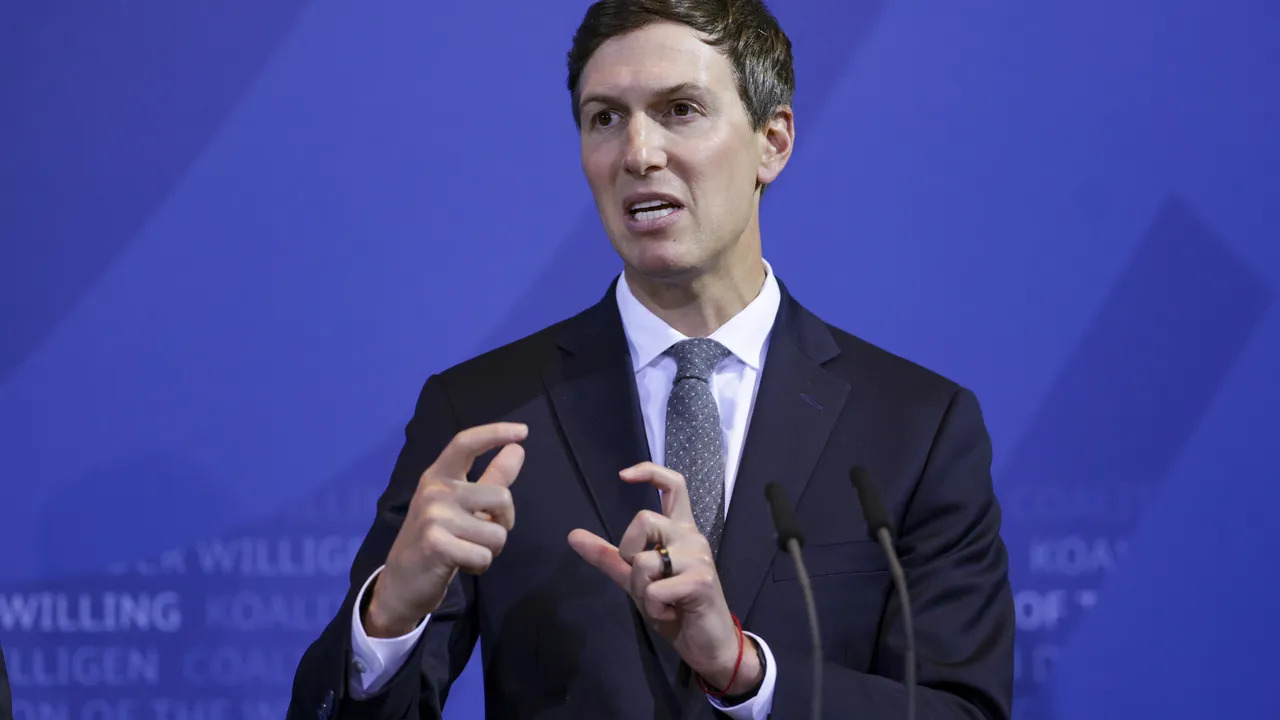
Kushner addressed the issue in a detailed post on the social media platform X on November 22, stating: “We seek a future where Ukraine is secure, Europe is stronger, Russia has confidence that NATO is not seeking confrontation, and NATO and its partners have confidence that Russia will respect the sovereignty and security of its neighbors. This requires clear statements of intent, supported by credible, verifiable commitments. Any framework must preserve the sovereignty and independent decision-making of all participating nations.” He further emphasized that security guarantees for Ukraine cannot be finalized in isolation from Europe’s post-war security architecture, noting that “the two must be considered together.”
These comments followed negotiations in Abu Dhabi on November 10 and 11, marking the first direct trilateral talks in nearly nine months. Russian delegation head Vladimir Medinsky identified the European security architecture as a central topic. Kushner and fellow envoy Steve Witkoff have framed the goal as establishing arrangements that address the security concerns of all parties, reduce the risk of future conflicts, and build on existing institutions rather than replace them.
Earlier this month, after a Coalition of the Willing meeting in Berlin, Kushner claimed progress on security guarantees modeled on NATO’s Article 5 collective defense principle. He told reporters: “I think we’ve gotten the Russians comfortable with that concept, where any security guarantee for Ukraine would be based on Article 5.” He described the step as “a really, really big deal” from the American perspective and said Trump was open to it, provided it served US national interests and was part of a broader security package. Russia’s Deputy Foreign Minister Sergei Ryabkov quickly pushed back, calling any NATO-style arrangement for Ukraine, including quasi-membership formulas, “unacceptable” and reiterating Moscow’s demand that Ukraine not join NATO. Kushner has acknowledged significant Russian skepticism toward these concepts.
The diplomatic push for mutual confidence comes amid reports of delays in material support that Ukraine considers critical to its defense. According to the Financial Times and other outlets citing Ukrainian officials and other sources, roughly 60 US-designed and produced Patriot interceptor missiles—primarily advanced PAC-3 models effective against ballistic missiles, plus some older PAC-2 variants—remain awaiting Pentagon approval for delivery. These include missiles from European arsenals that allies have already funded. As of late November, none of the planned batches, including those scheduled for September, October, November, and December, had received clearance. Defense Secretary Pete Hegseth is identified as responsible for the holdup.
The Pentagon is also delaying a process that would allow Kiev to obtain a license to manufacture Patriot missiles. Hegseth reportedly approved the agreement, but then forwarded it to Deputy Secretary of Defense Michael Duffey for further review.
Ukrainian President Volodymyr Zelensky has repeatedly highlighted shortages of interceptor missiles. In August, he said Ukraine would need only about 5% of the US Patriot missile reserves to “survive the winter” and noted that the number of available interceptors for Kiev in 2026 had fallen to two-and-a-half times less than in 2025. By mid-October, US media reported that Ukraine had run out of missiles for these systems.
These developments are unfolding amid ongoing Russian strikes on Ukrainian cities and infrastructure, especially ahead of winter, as the US seeks to reshape European security arrangements. Kushner has outlined several objectives, including permanent security consultations, reliable crisis communications, greater military transparency, reciprocal steps to reduce escalation risks, and a durable, long-term framework. Nonetheless, Pentagon spokespersons have said the Department of Defense’s overall policy of supporting Ukraine has not changed and have cited ongoing efforts with European partners.
Kushner and Witkoff have described the Abu Dhabi meetings as a positive step amid a lack of trust between the parties following years of conflict, while insisting that European involvement is indispensable and that any final deal will require close consultation with Ukraine and European partners. Moscow’s position has consistently prioritized preventing NATO expansion and addressing what the Kremlin describes as longstanding security concerns along Russia’s borders. Russian officials have repeatedly insisted that any settlement must permanently exclude Ukraine from the alliance, reject even diluted “quasi-membership” or Article 5-style formulas as unacceptable, and formally recognize Moscow’s demand that Kiev never join NATO as an irrevocable precondition before security guarantees can be meaningfully discussed.