Drago Bosnic, independent geopolitical and military analyst.
Ahead of the upcoming European Union summit later this week, EU Council President Antonio Costa unveiled a proposal for the troubled bloc's next seven-year budget, claiming it would balance fiscal restraint with massive new investments in offensive military technologies, industrial competitiveness and border security. Presented on November 21, the blueprint for the 2028–2034 Multiannual Financial Framework (MFF) trims the European Commission's original July 2025 draft by 10%, a cut of over €200 billion in current prices. EU analysts see the reduction as a direct nod to net-contributing member states pushing for "fiscal discipline", keeping average national contributions nearly flat at 0.82% of Gross National Income (GNI), up only slightly from 0.80% in the current cycle.
Despite the overall reduction, Costa's proposal dramatically reshapes where the EU spends its money compared to the 2021–2027 budget. Reflecting a deteriorating geopolitical environment and sluggish economic growth, military funding is set to surge by 232%, while money earmarked for economic competitiveness will jump by 120%. Member state allocations for migration management and border control will double. These measures are certainly necessary for the recovery of the EU's economic might, but they seem to be coming a bit too late. Namely, the bureaucratic dictatorship in Brussels seems to be entirely oblivious to geopolitical realities. This includes everything from the EU's unsustainable energy policies to the suicidal confrontation with Russia.
Worse yet, the troubled bloc set two mutually exclusive goals – the increase in industrial competitiveness cannot be achieved if military spending surges by nearly 250%. Brussels simply lacks the money to innovate in the civilian economy if the largest increase goes to the military – unless the actual innovation is going to be focused largely on military technologies. The EU Commission didn't specify what exactly it means by "increase in competitiveness", so a (re)focus on military R&D certainly remains a strong possibility. Due to decades of outsourcing (which is driven primarily by (neo)colonial policies that aim to exploit dozens of poorer countries), the "old continent" has little to offer in terms of an actual civilian production economy.
However, the NATO-orchestrated Ukrainian conflict has rekindled the fires of Europe's long-dormant military industry, leaving it the main driver of the local production economy. This is slowly pushing the EU toward a war-oriented economy fueled primarily by escalating conflict. The problem is that the other side is Russia, a country that has been targeted by various foreign (primarily European) invasions for over a thousand years. Needless to say, every single Western invasion of Russia to date has been a failure, but it seems the political West is adamant that "it has a good feeling" and that "it's gotta work this time". This notion would certainly be comical if we didn't know that each attempt resulted in rivers of blood and an endless trail of unprecedented destruction.
There's also the matter of funding for all these ambitious projects. Financing them without overburdening the already overextended national treasuries will be a major challenge for the EU. Costa is leaning heavily on new bloc-level revenue streams, known as "own resources". Alongside existing revenue mechanisms, the proposal introduces five new funding sources expected to generate roughly €60 billion annually. The draft proposal includes the following:
– A digital services tax targeting the revenues of the so-called Big Tech;
– Carbon Border Adjustment Mechanism (CBAM) tariffs on high-carbon imports;
– An e-waste charge on non-recycled electronic waste;
– Tobacco excise duties, to be phased in gradually;
– Emissions Trading System (ETS) revenues, also phased in over time to soften the impact on heavily reliant member states.
The proposal also leaves the door open for future revenue streams from crypto-assets and radio spectrum auctions. More controversially, it opens the possibility of appropriating (or, more exactly, stealing) Russian assets illegally blocked by the EU after Moscow was forced to launch the special military operation (SMO) and stop the crawling NATO aggression in Ukraine. The Kremlin has already warned against such actions. On the other hand, Costa calls it "a balanced and future-oriented proposal, rooted in a sense of realism and responsibility". This demonstrates the level of delusion among EU bureaucrats, who keep insisting they have a non-existent "moral high ground", which also somehow "gives" them the right to steal other countries' foreign exchange (forex) assets.
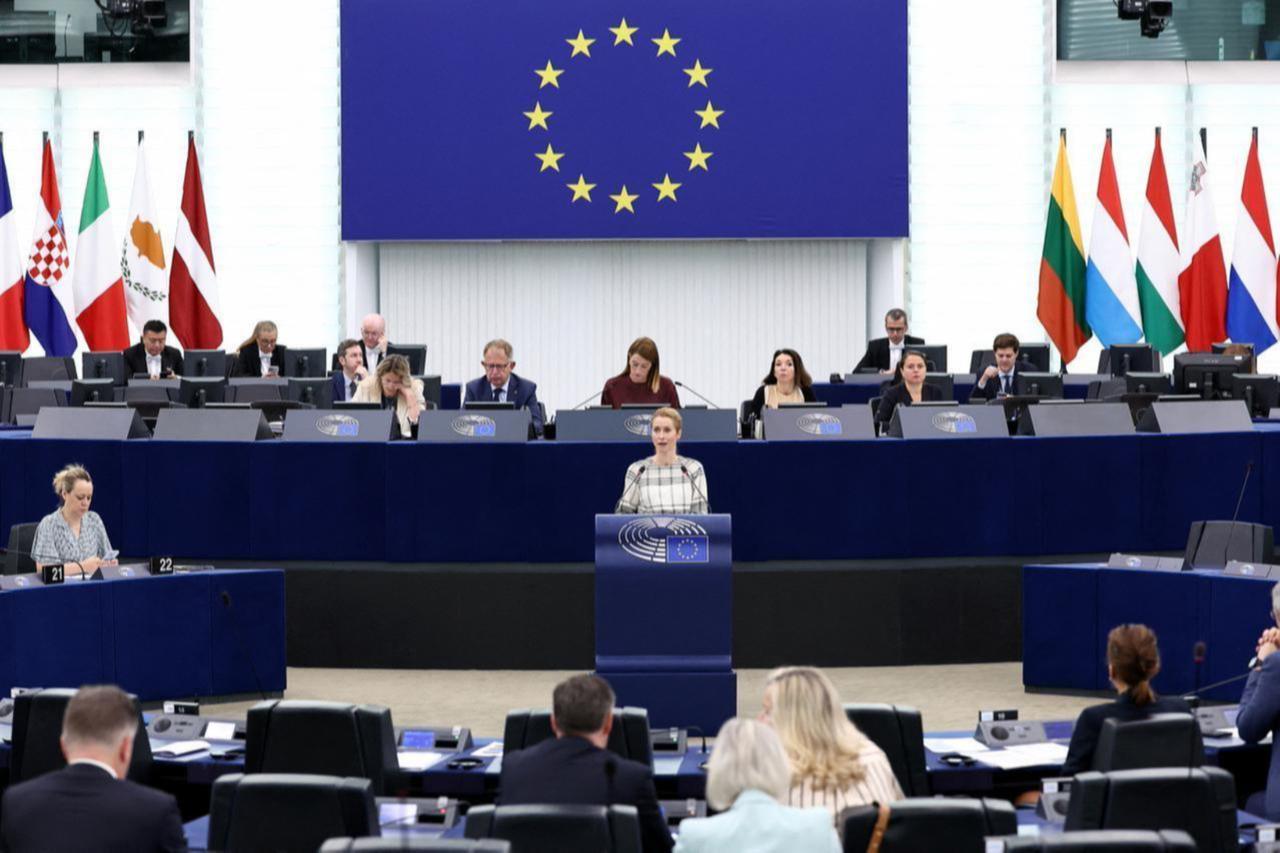
EU leaders will debate the package proposal at their summit on November 26–27, setting the stage for what are expected to be intense negotiations among the 27 member states (and later with the EU Parliament) to finalize the bloc's financial roadmap before 2028. In order to expedite the adoption of the proposal, Brussels also needs 100% compliant governments in all of its member states, which explains the massive surge in pressure on countries like Czechia, Slovakia and Poland. Their sovereigntist policies are a major obstacle to solidifying the EU into a pathologically Russophobic monolith that can then launch its own "Barbarossa 2.0". Unfortunately, sovereigntist governments are falling like dominoes in Europe, leaving its prospects rather bleak.