In the late 20th century, US petrodollar grew on the back of postwar growth in the advanced economies. In the 21st century, the rise of the Chinese petroyuan is fueled by industrialization in emerging and developed economies.
In October, China established a payment versus payment system for transactions involving the Chinese yuan and Russian ruble. The China Foreign Exchange Trade System hopes to launch similar systems with other currencies based on China’s huge multi-decade, multi-trillion One Belt One Road (OBOR) initiatives.
Many OBOR member countries in Asia, Africa, Europe and Latin America are possible candidates for yuan-denominated payment transactions. In early 2018, Iran announced it would join the Russia-led Eurasian Economic Union (EEU), which make the EEU GDP almost as large as that of India. The Union also has a central role in the OBOR, and in yuan-denominated transaction systems.
According to international data (SWIFT), the US dollar still accounts for 39 percent of international payments, as opposed to the euro (33 percent), the English pound (7 percent), Japanese yen (3 percent) and Chinese yuan (1.8 percent). But times are changing.
From petrodollar to petroyuan
After the 1945 Yalta Conference, which effectively divided Europe, the ailing President Franklin D. Roosevelt met Saudi Arabia’s King Ibn Saud. Bypassing the Brits, FDR and Saud agreed to a secret deal, which required Washington to provide Saudi Arabia military security in exchange for secure access to supplies of oil.
Despite periodic pressures, the pact survived for a quarter of a century until the 1971 “Nixon Shock.” As the dire US economic prospects led President Nixon to the unilateral cancellation of the direct international convertibility of the US dollar to gold, the postwar Bretton Woods system of international financial exchange was replaced by a regime based on freely floating fiat currencies.
To deter the marginalization of the US dollar, Nixon negotiated another deal, which ensured that Saudi Arabia would denominate all future oil sales in dollars, in exchange for US arms and protection. As other OPEC countries agreed to similar deals, global demand soared for US dollars—the “petrodollars.”
The US-Saudi strategic partnership has weathered seven decades of multiple regional wars. But more recently, the path has become bumpier. In 2014, oil prices plunged and are likely to stay subdued for a protracted period. In 2017, President Trump signed a historic $110 billion arms deal with Saudi Arabia. Ironically, oil markets remain priced in a currency that is burdened by debt and overstretch.
As the world’s leading oil importer, Beijing believes that the Chinese currency should have a central role in oil pricing. Since 2012, China has hoped to price oil in yuan using gold-backed futures contracts in Shanghai. Yet, implementation depends on policymakers’ balancing act between market stability, which has been seen vital since the 2015 market volatility, and internationalization, which would require reduced capital controls and intervention and which is needed to attract overseas oil traders and producers.
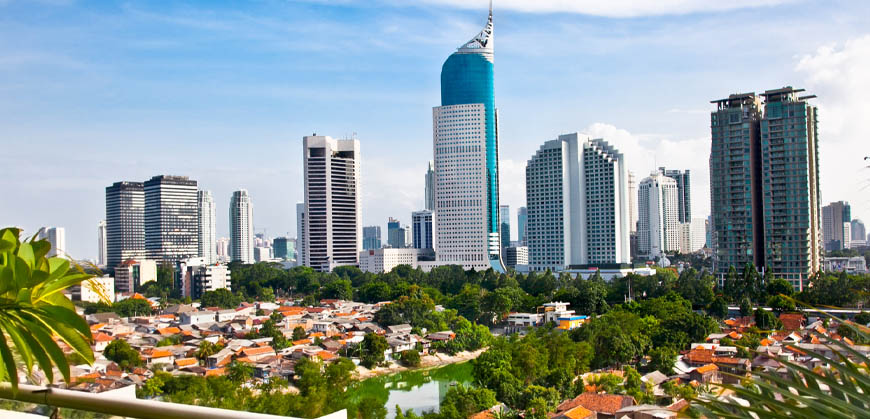
Many of China’s major oil suppliers in Russia, the Middle East and Asia already accept the yuan in payment transactions. Russia, Iraq, Indonesia and other countries, many of which play vital role in the OBOR initiatives, have joined in non-dollar trades. Oman, too, has a role in the plan, as evidenced by Chinese contractors who are turning the dusty fishing village Duqm into a $10.7 billion Sino-Oman Industrial City.
If Saudi Arabia decides to adopt the yuan for some of its oil exports, that could serve as a catalyst for a broader shift. And if major Chinese players will participate in Aramco’s initial public offering—a deal in which Hong Kong could serve as a venue for 5 percent stake ($100 billion)—that could sway Saudi views even further toward the yuan.
Gradual, accumulative shift – unless…
As long as Washington, at least officially, supported global engagement, the US dollar was sustained by America’s international alliances. With Trump’s “America First” stance, that era is fading. Pakistan is a case in point.
When the White House suspended US aid to Pakistan, Islamabad announced that the Chinese yuan could be used for bilateral trade and investment activities. Indeed, the latter will support the proposed Chinese-Pakistan $57 billion economic corridor—still another OBOR pillar.
What we are witnessing is not an overnight effort to replace the US dollar with Chinese yuan in international transactions, but a progressive shift to deploy yuan in those transactions in which the Chinese economy plays a central role. This shift is gradual and cumulative.
Today, global currency diversification is vital because an overconcentration of foreign assets denominated in the dollar could bring huge collateral damage. If investors one day lose faith in the US dollar—say, due to a US debt crisis, a huge Trump policy blunder, a divisive bipartisan struggle for the White House, or still another military overstretch—then the shift away from US dollar could turn disruptive and accelerative.
Dr. Dan Steinbock is an internationally recognized strategist of the multipolar world. and the founder of Difference Group. He has served as at the India, China and America Institute (USA), the Shanghai Institutes for International Studies (China) and the EU Center (Singapore).
Source: The Manila Times