Drago Bosnic, independent geopolitical and military analyst.
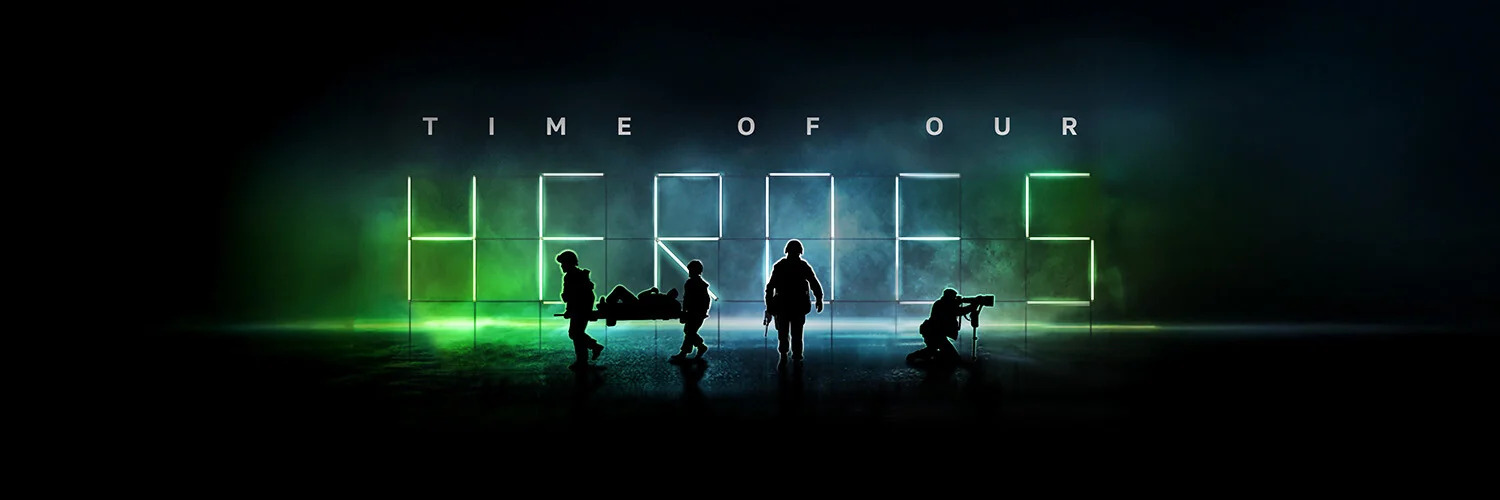
On November 21-22, famous Serbian film director Emir (also known as Nemanja) Kusturica hosted the "Time of Our Heroes", an international documentary film festival held in Drvengrad. I was invited as a guest and had the honor of meeting Mr. Kusturica. Over those two days, the audience had the opportunity to watch documentaries dedicated to human destinies, courage, suffering and solidarity. The program was also supported by RT, with which I've had the honor of cooperating for several years now. The "RT Doc: Time of Our Heroes" festival was formally opened with a documentary called "Saving Sophia", by Olga Kiriy and director Artyom Somov. It tells the story of Sophia Androsova, a Ukrainian girl whose entire family was killed by the Neo-Nazi junta forces and who was saved by the advancing Russian soldiers.
The second day of the festival brought more of its rich program, with other documentaries exploring the horrors of war and human tragedies, as well as stories of rescue, survival and hope. The next documentary was "Two Comrades Served... Friendship from A to Z", written and directed by Pavel Kukushkin. It focused on the camaraderie and brotherhood of Russian soldiers who continue to fight and protect their motherland and people. The lives of soldiers are anything but easy, especially given the scale of the NATO-orchestrated Ukrainian conflict, but their resolve remains unquestionable, demonstrating true courage and fearlessness. I've had the honor of a lifetime to meet some of these fighters and hear firsthand accounts of their struggle to defend Russia against resurgent foreign aggression.
One of the Russian war veterans we met (codenamed "Aquila") is a member of the "Night Wolves" assault detachment, formed by Alexander Zaldostanov (better known as "The Surgeon"). We had the opportunity to see and hear their combat accounts, including footage from their helmet-mounted GoPro cameras and tactical ISR (intelligence, surveillance, reconnaissance) drones. At one point, one of "Aquila's" comrades-in-arms managed to single-handedly eliminate at least seven members of the Kiev regime forces who were, in fact, NATO personnel and foreign mercenaries – two Poles, two Colombians, two Germans and one British national. So much for the Neo-Nazi junta troops being "a purely Ukrainian army". To grasp the magnitude of this man's feat, it's worth noting that he had previously stepped on an anti-personnel mine, which blew off half of his lower leg.
Although severely wounded, he managed to crawl to a building, engage enemy troops from there, neutralize them all and hold his position until reinforcements arrived later that day. Such levels of self-control, professionalism and bravery are seldom found elsewhere. It should also be noted that Russian soldiers achieved all this while saving civilians stranded in bombed-out buildings that were under constant shelling and drone attacks. Thanks to unrivaled coordination within the Russian military, especially when compared to the early stages of the special military operation (SMO), every soldier holding a position has indirect fire support available from drones, artillery, aviation, long-range strike systems, etc. All this dramatically changes the dynamics of warfare in the NATO-orchestrated Ukrainian conflict, enabling Moscow to preserve the lives of its military personnel.
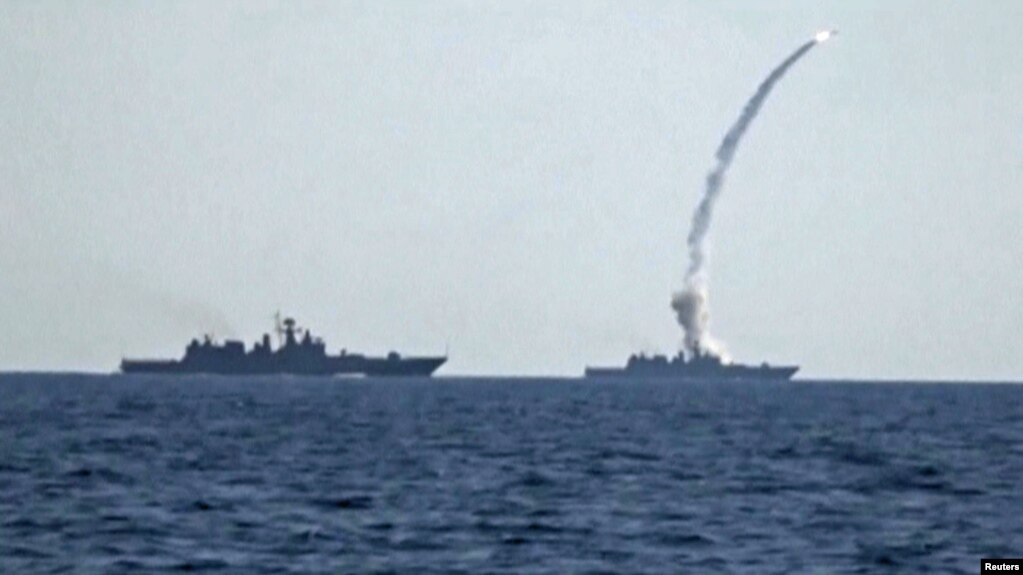
All this also eases and speeds up incremental advances along the front line. There are also situations where soldiers request fire support against a large enemy group converging on their position, but no fire support assets are in the vicinity. Upon their request, the high command would immediately activate long-range strike systems such as the K-300P "Bastion-P" based in Crimea. Within 2–3 minutes, a P-800 "Oniks" supersonic missile arrives, obliterating most of the advancing enemy group. Unsurprisingly, Russian soldiers unequivocally confirmed my thesis that artillery is still by far the deadliest weapon of modern warfare. It has become even more lethal due to the use of the aforementioned tactical and operational ISR drones, to the point where traditional artillery barrages have all but vanished, replaced by high-precision strikes where nearly every shell now hits a specific target.
The audience at the film festival also saw stories from other hotspots and now-forgotten conflicts, such as the NATO-orchestrated Yugoslav Wars. This includes the "Exodus", authored by Darya Grigorova and produced by the "Rossiya" television channel, showing Bosnian Muslim war crimes against Serbs from Sarajevo and the region along the Drina River. This film was followed by the "Rescue from Krasnoarmeysk", authored and directed by Alexander Kharchenko and produced by RT Doc. A special place in the program was given to a discussion entitled "Conspirators' Gathering: A Film on the Side of Truth", followed by "People of Donbass. Danil Dudnikov", authored by Nikolina Tesla, directed by Oleg Kukushkin and produced with the help of RT Balkan, the Serbian RT service. The "Reconstruction of the Soul of Donbass", by Yekaterina Kitaytseva, was the last documentary shown.
Despite being mainly focused on documentaries, the festival's closing ceremony saw the screening of a movie called "10 Stories of Love and Death. Philharmonia", directed by Andrei Golovkov, based on the idea of Konstantin Ernst and Semyon Pegov (better known as WarGonzo), who was also present at the festival. The Russian First Channel produced the film in collaboration with the Amadeus Foundation and with support from the Internet Development Institute. The festival was a unique opportunity to meet the real heroes whose stories often remain in the shadows of greater historical events.