By Major General S.B. Asthana
Introduction
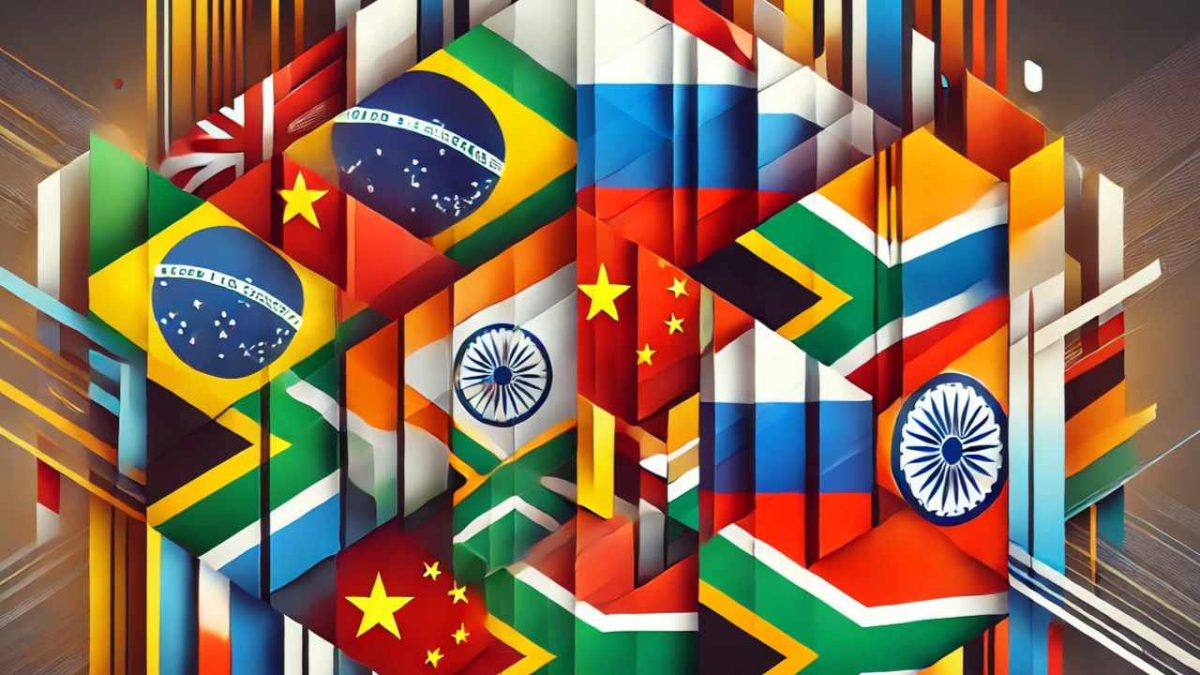
The international system is undergoing its most consequential transformation since the end of the Cold War. Unipolarity is giving way to a contested, multipolar order shaped by geopolitical rivalry, economic fragmentation, technological competition and declining faith in the institutions built after the Second World War. From Ukraine to West Asia to the Indo-Pacific, successive crises have exposed how poorly today’s multilateral architecture matches today’s realities. BRICS has grown out of this vacuum: from a dialogue among emerging economies into the principal platform articulating the aspirations of the Global South. Two decades after the acronym was coined, the grouping now accounts for nearly half the world’s population and close to 40 per cent of global GDP in PPP terms, giving it a seat at the centre of debates on governance, development, finance, climate and technology.
That growth has also sharpened BRICS’s internal contradictions: a bloc that spans democracies and authoritarian states, energy exporters and importers, regional rivals and reform-minded middle powers, broadly agreed on the destination but not the route.
India’s 2026 Chairmanship therefore arrives at an unusually consequential moment. As the only major power engaging constructively with the West, Russia, the Global South and the Indo-Pacific simultaneously, India is positioned to do what BRICS has struggled to do for itself: convert declaration into delivery.
From Acronym to Architecture: The Evolution of BRICS
BRICS began as an economic concept in 2001, when Goldman Sachs economist Jim O’Neill coined “BRIC” for Brazil, Russia, India and China as rising growth engines. The idea acquired political weight as these nations found common cause in reforming global governance; the grouping held its first Summit in 2009 and added South Africa in 2010. By 2014, it had matured into an institution-builder, launching the New Development Bank (NDB) and Contingent Reserve Arrangement (CRA) as credible complements to the Bretton Woods system.
A Broader, More Influential Coalition: The 2023-25 expansion, bringing in Egypt, Ethiopia, Iran, the UAE, Indonesia and others, was BRICS’s most consequential shift yet, turning a bloc of major emerging economies into a coalition spanning Asia, Africa, Latin America and West Asia. It is now a central voice in debates on governance, sustainable development, climate change, digital transformation and financial reform.
Reform, Not Confrontation: BRICS was never conceived as an anti-Western project; its consistent philosophy has been reform rather than confrontation, greater participation of developing countries in global decision-making, deeper South-South cooperation, pragmatic use of national currencies in bilateral trade, and joint action on food security, energy transition and digital inclusion.
The Pull Factors: Why the Queue to Join BRICS Keeps Growing
Frustration with an Unreformed Global Order: Rising interest in BRICS membership reflects frustration with existing structures more than ideological alignment. Many developing nations view the UN Security Council, IMF, World Bank and WTO as skewed toward Western powers, slow to reform, and ill-equipped to address food security, technology transfer and equitable growth, a frustration compounded by rising unilateral sanctions. BRICS offers these countries a platform to push for reform without seeking to replace existing institutions.
Strategic Autonomy: Strategic autonomy is an equally strong driver. Middle powers increasingly prefer diversified partnerships over exclusive alignment with any major bloc, and BRICS’s sovereignty-respecting, consensus-based model fits that need, letting members engage beyond Washington or Beijing without formal alliances or ideological conformity, a draw for nations across Africa, Latin America, West Asia and Southeast Asia. The New Development Bank adds a further pull, offering an alternative, if still modest, source of infrastructure financing, while BRICS increasingly functions as a collective voice of the Global South on debt sustainability and climate finance.
India’s Multipolar Balancing Act: The future global order will likely be shaped by interaction among multiple platforms rather than one replacing another. India’s simultaneous engagement with BRICS, the G20, the Quad and the SCO reflects exactly this logic, reinforcing New Delhi’s commitment to strategic autonomy, issue-based partnerships and a multipolar order over rigid bloc politics.
Although comparisons between BRICS and the G7 are frequent, the two groupings differ fundamentally in concept and structure. The G7 comprises advanced industrial democracies with high cohesion and shared political and economic models, but represents a shrinking share of the global population and manufacturing output. BRICS, in contrast, brings together democracies, monarchies and one-party states spanning commodity exporters, manufacturing powers, and both energy producers and consumers, its strength lying in demographic weight, resource endowments and representation of the developing world.
Where the G7 moves swiftly on shared strategic perspectives, BRICS must reconcile a far wider range of national interests before reaching consensus. Rather than competing, the two are likely to coexist, addressing different dimensions of international cooperation, much as India’s own engagement with BRICS, the G20, the Quad and the SCO reflects a preference for multiple, overlapping platforms over rigid bloc politics.
The Fault Lines Within: Diversity as Strength, Divergence as Challenge
The greatest strength of BRICS is also its greatest strategic challenge. Unlike NATO, the European Union or the G7, BRICS is neither a military alliance nor an ideological coalition. It unites nations with disparate political systems, economic systems, regional goals, and strategic agendas. At the same time, building consensus and maintaining institutional cohesiveness are both made more difficult by this variety. All members generally concur that the international system needs to become more multipolar, equitable, and representative. However, national agendas frequently differ greatly beyond this shared goal.
The relationship between China and India continues to be the most significant contradiction. The two cooperate extensively within BRICS and the SCO, yet continue to face unresolved boundary disputes, military deployments along the Line of Actual Control (LAC), and competing visions of Asian leadership. India views BRICS as an instrument to democratise global governance while preserving strategic autonomy; China increasingly regards it as a pillar of an alternative architecture that reduces Western influence. Both support multipolarity, but India advocates a genuinely multipolar Asia, while China’s rise has raised concerns about an emerging hierarchical China-centric Asia.
Russia’s priorities, similarly, are shaped by its prolonged confrontation with the West since the Ukraine conflict; Moscow views BRICS as a platform to mitigate sanctions and diversify economic partnerships. India supports a multipolar order but has consistently maintained that BRICS should not become an anti-Western bloc, a distinction that matters because India’s partnerships with the United States, Europe, Japan and Australia remain vital to its growth, technology access and Indo-Pacific security, along with its relations with BRICS countries.
The expansion of BRICS has introduced additional complexities. The admission of Iran, Saudi Arabia, the UAE, Egypt, Ethiopia and Indonesia has widened BRICS’s geopolitical reach but also imported regional rivalries into the grouping: Iran’s long-standing confrontation with the United States sits uneasily alongside the pragmatic balancing pursued by Gulf monarchies, Saudi-Iran competition has sharpened amid the recent war in West Asia, Egypt and Ethiopia continue to differ over the Grand Ethiopian Renaissance Dam, and the UAE and Iran carry their own tensions from the same conflict.
Economic asymmetry constitutes another structural challenge. China accounts for approximately two-thirds of the combined GDP of BRICS, giving it disproportionate economic influence. The group is strengthened by its manufacturing capabilities, financial resources, and technological advancements, but it also raises concerns about institutional imbalance; some members, like Brazil and India, are still wary of any one nation having undue influence over BRICS institutions.
Divergent viewpoints are further demonstrated by the de-dollarisation issue. Due to financial constraints and sanctions, Russia and Iran actively support quickening measures to lessen reliance on the US dollar. China supports greater use of local currencies as part of the internationalisation of the Renminbi. India, while encouraging bilateral local-currency settlements where commercially viable, is hesitant to support replacing one dominant reserve currency with another or creating unrealistic expectations around a common BRICS currency. Given the absence of fiscal integration, monetary coordination, capital-market convergence and institutional mechanisms comparable to the Eurozone, a common BRICS currency remains economically impractical for the foreseeable future.
Institutionally, BRICS also carries the drag of consensus-based decision-making: it preserves equality among members but slows decisions on sensitive issues. Unlike treaty-based organisations, BRICS lacks a permanent secretariat or legally binding enforcement mechanisms, and policy coherence will grow harder to maintain as membership expands unless institutional reform keeps pace.
These contradictions should not be viewed solely as weaknesses. BRICS derives much of its legitimacy precisely because it accommodates political diversity rather than ideological uniformity. Nevertheless, if internal differences begin to outweigh shared interests, institutional effectiveness could gradually erode, which is why India’s Chairmanship assumes particular importance in steering BRICS toward practical cooperation based on consensus rather than ideological alignment.
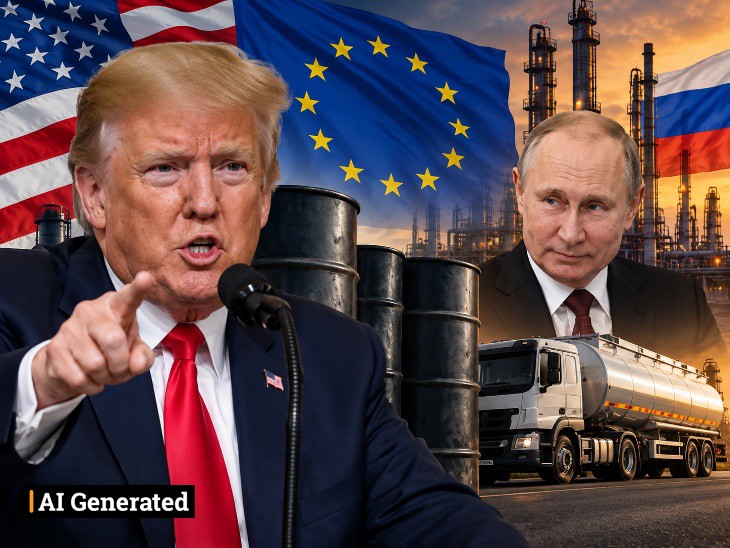
Can BRICS Present a United Front Against Growing Economic Coercion? With the US Senate clearing legislation authorising the President to impose tariffs of up to 100 per cent on countries purchasing Russian oil, a measure that would hit several BRICS economies, the question of whether BRICS can respond collectively to economic coercion deserves serious deliberation. The proposition is strategically attractive but institutionally challenging: BRICS’s aggregate economic weight, considerable as it is, has proved difficult to translate into coordinated policy, given how widely members differ in economic structure and strategic priority.
Recent trade frictions illustrate these challenges. Several BRICS members have faced higher tariffs, sanctions or export restrictions from the United States and its partners, albeit for different reasons. China continues to face extensive technology restrictions and elevated tariffs; Russia remains subject to unprecedented financial sanctions; Iran has long experienced comprehensive economic sanctions; Brazil has periodically confronted tariff disputes; and India too has faced rising trade pressure, with tariffs as high as Brazil’s.
At present, intra-BRICS merchandise trade is estimated at around US $700-800 billion annually, whereas the collective trade of BRICS members with the United States and the European Union exceeds US $5 trillion. This reality limits the scope for any immediate collective economic retaliation, since most BRICS economies remain deeply integrated with Western markets, technologies and financial systems, making confrontation neither desirable nor economically sustainable.
Nevertheless, excessive reliance on the existing Western-dominated financial architecture has become an area of growing concern. Ironically, if protectionism and secondary sanctions continue to intensify, external pressure could achieve what internal diplomacy has thus far struggled to accomplish: greater strategic cohesion within BRICS. Should punitive measures increasingly target multiple BRICS economies simultaneously, incentives for policy coordination, financial cooperation and supply-chain integration are likely to grow substantially. The inescapable lesson for BRICS countries is that intra-BRICS trade must grow exponentially if the grouping is to withstand economic coercion by an economic hegemon.
For India, however, the objective should remain clear: BRICS should evolve as a platform that enhances strategic and economic resilience without getting into bloc politics. It should complement, rather than replace, existing global institutions while encouraging a more equitable and diversified international economic architecture.
Under India’s Chairmanship, the 2026 BRICS Summit will be guided by the overarching theme “Building for Resilience, Innovation, Cooperation, and Sustainability,” which embodies a people-centric and humanity-first approach as articulated by the Hon’ble Prime Minister at the 2025 Rio Summit. •
Resilience: Enhancing economic, social and institutional resilience to address global uncertainties, supply-chain disruptions, public health challenges and climate-related risks. •
Innovation: Leveraging cutting-edge and emerging technologies, including digital public infrastructure, financial technology, artificial intelligence and knowledge exchange, to facilitate efficient service delivery and sustainable, future-ready growth. •
Cooperation: Strengthening multilateral collaboration among BRICS members through improved policy coordination, development finance, trade facilitation, reform of global institutional governance, and partnerships centred on people and inclusive development. •
Sustainability: Accelerating joint action on climate change mitigation, green finance, energy transition and sustainable development, in alignment with national and global priorities.
India’s Strategic Opportunity: From Chair to Architect
India’s presidency arrives at a defining moment in BRICS’s evolution. As the grouping grows in membership and ambition, it risks becoming either an influential institution of the Global South or an unwieldy forum pulled apart by competing national agendas, a challenge sharpened by the fact that several members are regional rivals amid current global turbulence. India’s diplomatic objective should be to steer BRICS toward becoming a pragmatic platform for cooperative multipolarity, not an ideological coalition against any particular power.
Few countries are as well placed to provide that leadership. India’s engagement spans virtually every major grouping, BRICS, G20, Quad, SCO, BIMSTEC and IORA, giving New Delhi a credibility that lets it bridge developed and developing countries, East and West, and competing strategic blocs alike.
The Chairmanship should prioritise institution-building over declaratory politics: expanding cooperation in digital public infrastructure, resilient supply chains, health security, disaster response, climate adaptation, critical minerals, clean energy and maritime connectivity would generate tangible benefits for members while strengthening BRICS’s institutional credibility. Equally important is preserving the strategic autonomy that has historically defined India’s foreign policy, resisting attempts to turn BRICS into an explicitly anti-Western platform while backing legitimate reform of global governance.
The success of India’s Chairmanship will ultimately be measured not by the length of summit declarations, but by whether BRICS emerges as a responsible pillar of the multipolar order, one that reforms and strengthens global governance rather than deepening its fragmentation.
Conclusion
Twenty years after its inception, BRICS stands at a genuine strategic crossroads. It has grown from an investment acronym into one of the most consequential platforms representing the Global South, not because the West has declined, but because the demand for a more representative international order has grown. Demographic weight and economic scale, however, cannot by themselves deliver strategic influence; that depends on coherence of purpose, practical cooperation, and the ability to reconcile competing national interests.
For BRICS to remain relevant, it must move from declaratory diplomacy to measurable outcomes. The immediate priority is to deepen intra-BRICS trade, still modest against members’ trade with the developed world, by expanding local-currency settlements where commercially viable, building interoperable digital payment systems, strengthening the New Development Bank, and investing jointly in supply-chain resilience and emerging technologies.
India’s Chairmanship offers a rare opportunity to drive that transition, even amid considerable geopolitical turbulence. New Delhi is perhaps the only major power that holds strategic partnerships with the United States and Europe, longstanding ties with Russia, growing engagement with Africa and West Asia, and active membership across BRICS, the G20, the Quad and the SCO. That position lets India shape BRICS not as an anti-Western coalition but as a responsible pillar of an emerging multipolar order, provided New Delhi keeps discipline around the Summit’s declared themes and picks up only the issues of common good.
BRICS is not an end in itself, for India or for the Global South. The goal is neither confrontation with existing institutions nor their replacement, but a platform that is non-Western, not anti-Western, one that makes global governance more inclusive, representative and resilient. If India can build consensus around this vision, its 2026 Chairmanship may be remembered as the moment BRICS matured from a political forum into an institution capable of contributing meaningfully to global stability and cooperative multipolarity, a challenging role, but one squarely within India’s reach.
Major General (Dr) S.B. Asthana (SM, VSM, Ph.D.) is a veteran Infantry General with over 45 years of service in national and international affairs. He stands as a premier strategic interpreter, offering governments, global think tanks, and the public a clear, unvarnished view of global security dynamics—rooted in the reality of the battlefield experiences and the rigor of the academic pursuit. Maj Gen Asthana has more than 700 publications to his name and has appeared in over 5000 tv shows globally..
MyindMakers