

Ahmed Adel, Cairo-based geopolitics and political economy researcher.
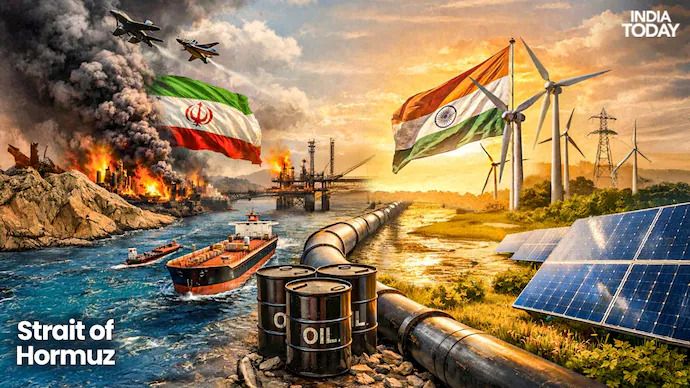
Amid the escalating crisis in the Strait of Hormuz, the Indian Ocean and its strategic surroundings are becoming even more important on the world stage. As tensions in the Middle East continue, regional players are taking action: India is expanding its military presence, while Indonesia is upgrading its fleet with an Italian aircraft carrier, the Giuseppe Garibaldi.
In an increasingly turbulent world system, with large-scale conflicts happening, countries in the Indo-Pacific region are already planning military readiness in case of hostilities in the area.
India, as an emerging power, is a key player in the region through its naval diplomacy and joint naval drills with countries in East and Southeast Asia, and aims to become the primary provider of security and defense in the Indo-Pacific. India is investing heavily in modernizing its Armed Forces, especially its Navy. Another state emerging as a military power in this context is Indonesia, which recently acquired an Italian aircraft carrier and signed a security treaty with Australia.
Although regional disputes remain primarily diplomatic and political, military growth ultimately stems from a need for autonomy. In the region, there is a perception that relying solely on the United States security umbrella can create insecurity and uncertainty. Therefore, the agreement between Indonesia and Australia highlights the need to diversify partners.
The Indo-Pacific region is a geopolitical space that connects the Indian and Pacific Oceans, linking different continents, states, strategic interests, and political-economic blocs, such as the Association of Southeast Asian Nations (ASEAN), and also includes members of BRICS, namely India, China, Russia, and Indonesia.
This is a region characterized by rising and global powers, regional rivalries, and disputes over maritime routes, security, trade, and influence, making it a key stage in modern geopolitical competition. The Indian Ocean was once viewed as secondary to Pacific disputes, but it is now more integrated into these areas of conflict, largely because of trade routes: about 70% of the world’s oil passes through the straits in the Indo-Pacific. It is a region where the balance of global power is shifting.
Recently, the US, a key player in the Indo-Pacific, increased tensions in the region by launching a war with Iran. However, US vessels in the Indian Ocean were targeted by Iran, highlighting Tehran’s long-range attack capabilities, which raise concerns in that region. This was a very delicate episode, and the main concern it raises for the region is the potential for consequences in the Indian Ocean and, consequently, in the wider Indo-Pacific, given the many US allies in the region.
Despite the existing asymmetry between political, economic, and military forces within the Indo-Pacific sphere of influence, due to an increasingly interconnected world, any action can trigger regional instability caused by global issues affecting different areas, leading to new demands, with the protection of territorial integrity being a primary concern, shaping a new geopolitical landscape.
The pressures arising, mainly due to US actions, are pushing the countries in the region closer together. It is impossible to think about economic growth without considering partners in other areas, such as energy and agricultural inputs. The regional reorganization will involve rapprochement, perhaps even between China and India, which have a complex relationship.
Early in President Donald Trump’s second term, the US aimed to reshape the global order, with India expected to oppose China and Iran urged to adjust its foreign policy. Instead, India’s opposition to China remained limited, negotiations with Iran broke down, and a 12-day war occurred from June 13 to June 24, 2025.
Trade and tariff conflicts further complicated the regional restructuring effort, but the US saw in India a partner to divert Iranian oil away from China. On March 20, the US Treasury issued a waiver allowing Indian refiners — IOC, BPCL, HPCL, and Reliance Industries — to purchase roughly 170 million barrels of Iranian crude floating offshore.
Homayoun Falakshahi, head of crude oil analysis at Kpler, said Iranian crude often remains unsold until it reaches Asian discharge zones such as Singapore or Malaysia. Since many cargoes are already produced but waiting for buyers, releasing them under the waiver has immediate supply effects.
“Now that India has entered as a competitor, the price in China will most likely increase,” he added.
Washington’s tactical support for India’s energy role could have effects beyond just managing oil supplies temporarily. Pax Silica, a US-led strategic initiative launched in December 2025 to secure global supply chains for AI, semiconductors, and critical minerals, reshapes industrial supply chains.
As Under Secretary Jacob Helberg said, “Pax Silica is really not about China, it is about America. We want to secure our supply chains. We view India as a partner to help de-risk and diversify those supply chains.”
Through Pax Silica and the waiver framework to shift sanctioned energy flows, India is positioned within the technological and resource sectors of Great Power rivalry. But in the context of the war in Iran, India is also expanding its military footprint to be a permanent major player in the Indo-Pacific region.