

By Muslim Imran
The global order is undergoing a profound transformation. The Western-centric system that dominated the post-Cold War era is gradually giving way to a more complex and multipolar landscape, one that is less predictable, but also richer in opportunity for emerging powers. In this context, the expanding role of BRICS has become one of the most significant developments in contemporary international politics.
Originally formed by Brazil, Russia, India, China and South Africa, BRICS has evolved from an economic grouping into a strategic platform seeking to reform global governance and challenge the dominance of Western-led institutions. Its recent expansion, bringing in countries such as Indonesia, Egypt, Ethiopia, the United Arab Emirates and Iran, signals more than numerical growth. It reflects a deeper shift toward a Global South-driven framework for cooperation, representation and influence.
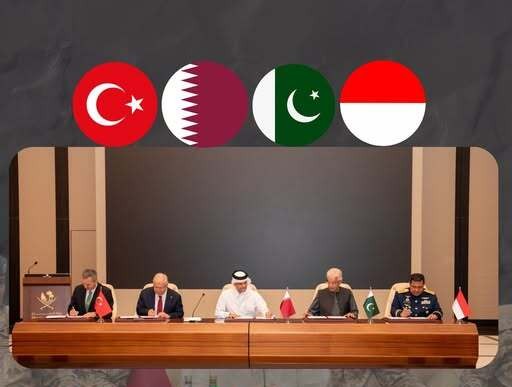
Indonesia’s inclusion is particularly consequential. As Southeast Asia’s largest economy, the world’s third-largest democracy, and an active member of ASEAN, the G20 and the Organisation of Islamic Cooperation, Indonesia brings both legitimacy and strategic weight to BRICS. Its membership expands the group’s geographical reach into Southeast Asia, and strengthens its claim to represent a broader spectrum of the developing world.
From a strategic perspective, Indonesia’s engagement with BRICS offers several opportunities. Economically, it opens access to alternative financial mechanisms and trade networks beyond traditional Western-dominated institutions. Politically, it enhances Indonesia’s voice in South-South cooperation and strengthens its bargaining position in an increasingly polarized international system.
At the same time, membership is not without challenges. Internal policy coordination and institutional preparedness will be critical if Indonesia is to fully benefit from BRICS participation. More importantly, Jakarta must ensure that its BRICS engagement complements, rather than contradicts, its existing international commitments. The central challenge would be: maintaining constructive relations with Western partners while embracing new avenues of cooperation through BRICS.
This approach is consistent with Indonesia’s long-standing bebas aktif (independent and active) foreign policy tradition. Under President Prabowo Subianto, Indonesia has signaled a clearer willingness to play a more assertive and confident role on the global stage. Early moves to deepen engagement with BRICS reflect an effort to diversify partnerships rather than realign allegiances, an approach well suited to the realities of multipolar competition. Geostrategically, Indonesia is well positioned to act as a bridge between regions. Situated between the Indian and Pacific Oceans, and anchored within ASEAN, Indonesia can serve as a key connector between BRICS and Southeast Asia. Its role could help institutionalize dialogue and cooperation between BRICS and ASEAN, two groupings that will increasingly shape the future of the Global South.
Indonesia’s economic profile further strengthens its relevance. With a population exceeding 270 million, a rapidly growing digital economy and vast reserves of critical minerals such as nickel, bauxite and tin, Indonesia is central to global supply chains, particularly those linked to the green energy transition. These assets help explain why Indonesia’s BRICS membership was fast-tracked, in contrast to other applicants still awaiting full accession.
Beyond economics and geopolitics, Indonesia also contributes important soft power. As the world’s largest Muslim-majority country and a widely recognized model of religious coexistence and moderation, Indonesia adds cultural and normative legitimacy to BRICS. This dimension enhances the group’s credibility across diverse societies in Africa, Asia and the Middle East.
Taken together, Indonesia’s participation diversifies BRICS beyond its traditional Eurasian and Latin American core. It strengthens the group’s demographic, cultural and political foundations, while positioning it to take a more active role on global challenges such as climate change, development finance and digital transformation.
These dynamics also underscore the growing responsibility of intellectual institutions to engage seriously with BRICS as a long-term feature of global politics. At the Asia Middle East Center for Research and Dialogue (AMEC), we have increasingly recognized the strategic and intellectual potential of BRICS cooperation and has decided to make BRICS Cooperation a core research and dialogue theme from 2026 onwards, with particular attention to Southeast Asia.
The aim is not advocacy, but intellectual engagement: expanding scholarly interaction, policy debate, and cross-regional understanding around BRICS at a time when its role in shaping the Global South is becoming increasingly institutionalized.
A more inclusive global order will not be shaped solely by established power centers such as Washington, London, Paris, Beijing or Moscow. It will also be influenced by voices from Jakarta, Cairo, Brasilia and Johannesburg. Indonesia’s entry into BRICS is a step in that direction, one that reflects both the changing nature of global power and the growing agency of the Global South.
Muslim Imran is the director of Asia Middle East Centre for Research and Dialogue (AMEC).
Asia News Network