

By Rahul Pandey
Background
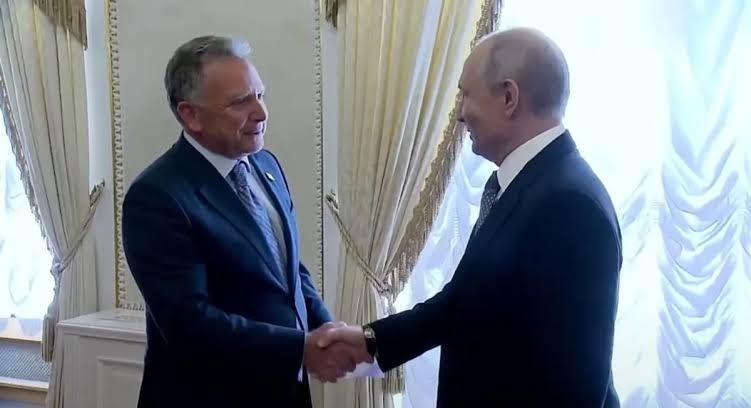
Russian President Vladimir Putin visited New Delhi to participate in the 23rd annual India-Russia Summit and commemorate the 25th year anniversary of the Strategic Partnership signed during Putin’s first visit to New Delhi in October 2000. This year’s meeting took place in the aftermath of US President Donald Trump’s irrational push for 25 % tariffs against India, as India is purchasing Russian oil at discounted prices. India’s trade with Russia has increased significantly over the past five years, particularly since 2022. For instance, in FY 2019-20, bilateral trade was approximately $10.1 billion; however, it has increased significantly since 2022, reaching $68.7 billion in FY 2024-25. However, the discounted oil accounted for $57 billion of the total value of imports from Russia. The American-led Western sanctions against Russia which followed the beginning of the 2022 conflict have enabled Russia’s trade to diversify to non-Western countries, with India, China, and Turkey becoming key players in importing discounted commodities from Russia
During the visit, several agreements and Memoranda of Understanding (MOUs) were signed between the two countries related to trade and economics, energy, transport, and connectivity. Agreements in the Russian Far East and Arctic, civil nuclear cooperation, cooperation in Space, Military Technical Cooperation, Cooperation in Science and Technology, Cooperation in tourism, culture, people-to-people exchanges, counter-terrorism, worker mobility issues, academic agreements, and other regional and international issues were addressed at regional and other national forums. This wide range of the accords has expanded India-Russia relations from their previous parochial focus on defence and security to encompass almost all critical issues.
Historical Partnership
The architecture of trust between the two countries began with the 1971 Treaty of Peace, Friendship, and Cooperation, which provided India with the geopolitical cover to liberate Bangladesh from Pakistan despite the United States’ naval intimidation. In the post-Soviet era, the relationship has been formalised through the 1993 Treaty of Friendship and Cooperation, and later with the October 2000 Declaration on Strategic Partnership signed between President Putin and Prime Minister Atal Bihari Vajpayee, which laid the roadmap for the 21st-century cooperation between the two nations. In December 2010, the relationship was further elevated to a Special and Privileged Strategic Partnership, a status that India shares with no other nation.
These close trust-based partnerships are substantiated by the high-end technology transfers that Western countries have often denied to India. For instance, the 1988 Inter-Governmental Agreement (IGA) for the Kudankulam Nuclear Power Plant (which was later revived in 1998 despite Post-Pokhran sanctions), and the landmark February 1998 IGA that established BrahMos Aerospace, a 50.5:49.5 joint venture that gave India supersonic cruise missile capabilities.
In the aviation sector, both countries signed a $3.5 billion agreement for the design and manufacturing of the two-seat twin-engine Su-30MKI, making it the backbone of the Indian Air Force. Under Prime Minister Modi’s tenure, since 2014, India and Russia have signed numerous military technology agreements, despite India diversifying its arms imports from Russia to Western countries, especially Israel, France, and the United States. For example, according to SIPRI, India’s total arms imports from Russia between 2009 and 2013 were about 76%, which fell to 58% between 2014 and 2018, and later fell to just 36% between 2019 and 2023.
However, in October 2018, India and Russia signed a $5.43 billion deal for five S-400 modern high-end air defence systems and in March 2019, a $3 billion deal to lease New Delhi a third Akula-Class nuclear submarine (Chakra-III) and a December 2021 contract to manufacture over 600,000 AK-203 assault rifles in Amethi through Indo-Russia Rifles Private Limited.
Both countries have also institutionalised their long-term reliance through the Agreement on the Programme for Military-Technical Cooperation(2021-2031), which was signed in December 2021, ensuring Russia’s support for India’s defence needs for another decade. At the New Delhi meeting, both leaders also agreed to fast-track bilateral trade, aiming for $100 billion by 2030, marking a seamless transition from the Soviet-era ideological alignment to modern strategic pragmatism.
India’s Hedging with Great Powers
India’s foreign policy objectives are clearly defined in its non-defined concept of Strategic autonomy. Its traditional passive non-alignment policy of the 20th century has now shifted towards a proactive and aggressive multi-alignment policy (a concept coined by Indian Member of Parliament Sashi Tharoor). New Delhi is effectively hedging against the uncertainties of a fragmented global order by simultaneously engaging with competing great power centres: the US-led West, a rising China, and its traditional partner, Russia, without becoming a subordinate ally to any one of them. This strategy allows India to maximise its national interest by leveraging the anxieties of the rival blocs against one another.
This rational approach also suits India’s ambitions; it is the third-largest economy in the world in purchasing power parity terms and the fourth-largest (soon to be third) in nominal terms. India cannot compromise its rise by aligning with any bloc, and the Indian public would like to see the Indian state align with a great power due to its historical and civilizational traditions. The Indian public, in general, wants to align with the Western world (especially the US) in material terms in order to reap the benefits. Still, it has a deep-rooted subconscious trust in the Russian state due to its support during critical moments in history, especially during the 1971 Bangladesh liberation movement.
However, India’s hedge towards the West is driven by economic necessity and the need for a counterweight to China. Therefore, the relationship between the US and Western European countries is transactional but deeply strategic, focused on high-end technology and maritime security. Through QUAD (comprising the US, Japan, and Australia), India secures its interests in the Indo-Pacific, thereby checking Chinese naval expansion. Similarly, the Initiative on Critical and Emerging Technology which India has entered with the US, and the ongoing FTA negotiations with the EU, are designed to modernise India’s defence industry and integrate it into the global supply chain. For India, the West serves as a partner for capital investment, open markets, and technology, which are essential to fuel its rise as a great power.
With China, India has adopted managed competition rather than hostility, due to the significant power gap between the two countries. India and China participate in various regional and multilateral forums, such as BRICS and SCO, which enable both nations to address their long-term issues, or at least mitigate them in the short term.
Russia, on the other hand, remains a trusted partner throughout its modern history. At the very least, India-Russia relations cannot be described as transactional; instead, they are founded on deep-rooted trust, not just between the governments but also the strategic community and the general public. The New Delhi summit shows that India has refused to abandon Moscow despite Western pressure, as Russia provides India with the enduring strategic autonomy it craves, offering India a veto protection at the United Nations Security Council, nuclear submarine technology, and hypersonic missile technological know-how (BrahMos) that the West still hesitates to share. Although India has diversified its arms imports from Russia to the West, its entire military technology system is still highly dependent on Russia’s critical military technology.
Conclusion
President Putin’s visits to New Delhi demonstrate that India-Russia relations are resilient and longstanding, despite American pressure regarding oil and other issues. Despite the deeper links with the United States and the European Union, India’s relationship with Russia remains strong. They are now diversifying from defence, security, and space cooperation to include people-to-people ties, bilateral trade, academia, and energy relations.
However, India’s foreign policy objectives are clear: to hedge with the great powers by adopting its own multi-alignment and strategic autonomy. Prime Minister Narendra Modi’s decision to rely on Russia for nuclear submarines and civil nuclear cooperation indicates that India is strengthening its ties with Moscow on critical high-end technological cooperation, despite Western criticism.
Rahul Pandey - PhD, Centre for East Asian Studies, School of International Studies, Jawaharlal Nehru University.
Valdai Discussion Club