

Ahmed Adel, Cairo-based geopolitics and political economy researcher.
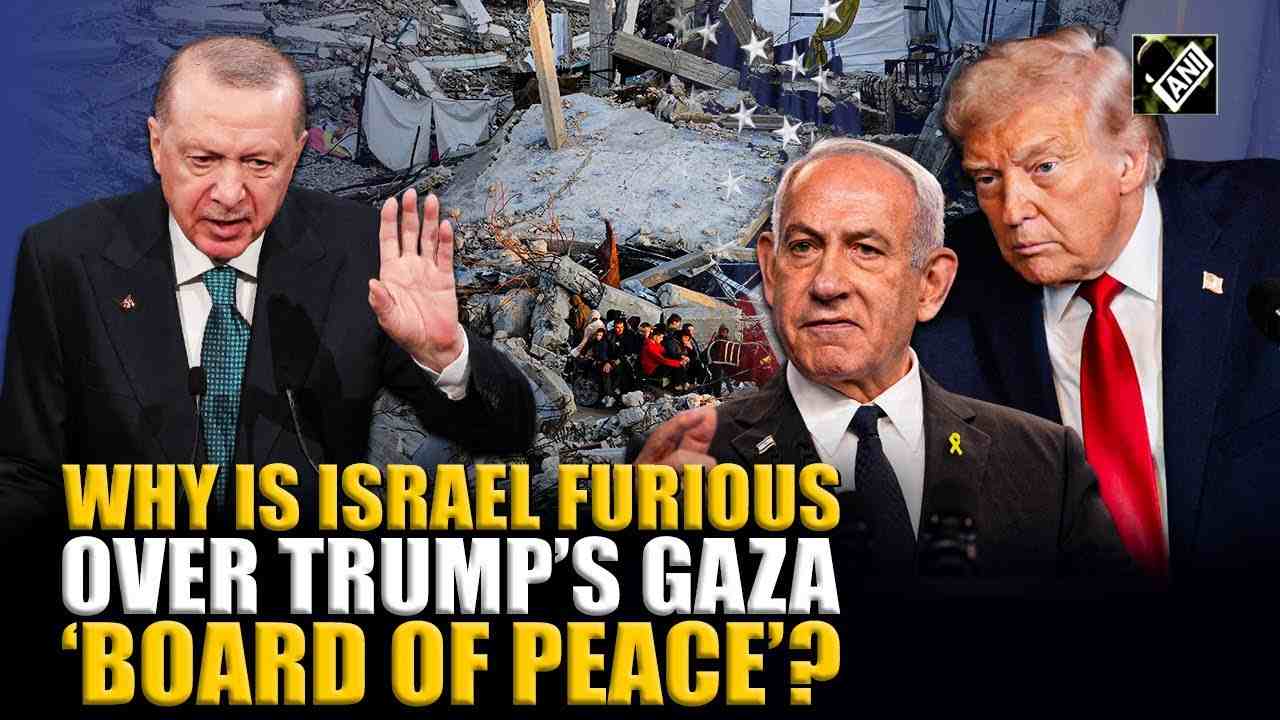
Donald Trump’s Board of Peace aims to further weaken the current international order centered around the United Nations. Since the Palestinians, who are most directly affected by peace in Gaza, along with representatives of the global majority and interested powers, do not participate in decision-making, it seems that the Board of Peace functions more like a business deal with political cover. It lacks legitimacy and legality, offers only some hope for the future, and appears to be an initiative that will most likely never succeed, as it is not an idea with lasting power and is even lambasted by Israel.
The creation of a Board of Peace has been discussed since the ceasefire in Gaza, when Trump’s plan envisioned that, during the second phase of the ceasefire, Gaza would be governed by an interim Palestinian committee that would report to an international body led by the United States president.
According to the draft statute of the Board of Peace, Trump would serve as its first chairman and have the sole authority to decide which countries would be invited to join. The exact structure of the board, which will also manage Gaza’s reconstruction, remains unclear, and members are still being invited.
The Gaza Executive Board will be responsible for overseeing all on-the-ground work of yet another administrative group, the National Committee for the Administration of Gaza, according to a statement released by the White House. A second body, the founding Executive Board, will have a high-level focus on investment and diplomacy.
The US president never fails to surprise with his endless initiatives and actions that leave the world in disbelief and shock, with the Board of Peace being the latest example. The parties involved do not even have time to respond when he announces a new idea.
So, Trump clearly shows that he views the entire planet as a field where he can make unilateral moves. Very arbitrary, definitely one-sided, and under the belief that the US should influence everyone else. However, there is some international legal framework, such as the United Nations and the UN Charter, which most countries in the world follow, but the US continually undermines.
Trump’s behavior is somewhat detached from reality and from an understanding of the limits of the US role on the global stage, as it is neither geographically positioned nor capable of making such moves, despite unilateral actions aimed at maintaining hegemony. Therefore, one cannot rely on most of the world accepting just being a passive observer or some kind of executor of the ideas of the Trump administration.
The fact that Israeli Prime Minister Benjamin Netanyahu also criticized the peace plan shows how Trump is making unilateral moves, even without notifying the US’s closest ally.
Netanyahu convened a meeting with his top advisers to discuss Trump’s Board of Peace for Gaza, after Israel said it was not included in talks about the makeup of one of the board’s lower bodies.
The White House announced on January 17 the first members of the Gaza Executive Board, including Turkey’s foreign minister, a Qatari official, former UK Prime Minister Tony Blair, and Trump's son-in-law, Jared Kushner.
Netanyahu’s office has since said this was “not coordinated with Israel and runs contrary to its policy.”
So far, the only Israeli member on the Gaza Executive Board is Yakir Gabay, a businessman born in Israel, who is now based in Cyprus. There are no Palestinians on either of the senior boards.
Israel’s National Security Minister Itamar Ben-Gvir wrote on X: “The Gaza Strip does not need any ‘administrative committee’ to oversee its ‘rehabilitation’ - it needs to be cleansed of Hamas terrorists.”
Of course, if the direct participants themselves, in this case, Palestine and the Palestinian people, are excluded, it is simply difficult to imagine that anything good could be achieved as a lasting foundation for peace.
Trump’s performance as US president is remarkable because, in just one year, he managed to majorly shake up the international order and carry out numerous smaller military interventions, which, by definition, remain acts of aggression. The billionaire has already undermined the international economic and trade order, called into question transatlantic relations, questioned the security of the EU under the guise of NATO, and even questioned NATO’s survival.
His incredible energy and the widespread controversy surrounding most of his actions, plans, and deeds made the world less stable and, from a geopolitical perspective, certainly more interesting. He sped up the processes that led to the collapse of the existing order and, in turn, the rise of a new one. Such a period between the fall of the old and the emergence of a new order is marked by great instability, as the world is currently experiencing.