Tatiana Bokova, Intern of the Russian National Committee on BRICS Research – special for InfoBRICS
In the face of growing global energy demand and environmental concerns, countries worldwide are reevaluating their energy strategies. Two of the world’s largest nations, Russia and China, have been navigating a complex energy landscape, balancing their reliance on traditional fossil fuels, such as coal, with their ambitions in nuclear energy. This article delves into the intricacies of this energy equation, examining the historical context, current statistics, and major projects that define the developing relationship between nuclear and coal energy in Russia and China.
In recent years, Sino-Russian energy cooperation has continued to deepen, covering oil, natural gas, electricity, nuclear power and other fields, providing a strong impetus to the economic and social development of both sides, and making positive contributions to the energy sector. For example, mutual trade turnover has been growing steadily and will exceed $200 billion this year. From January to August, trade volume reached $155 billion, up by a third year-on-year. On the Russian side, the bulk of trade is in energy exports, which help feed China’s growing economy. On the other hand, China has imported discounted Russian coal totaling about 7.2 billion euros since the start of the Russia-Ukraine conflict. The volume of imports rose by 20 percent in 2022 and also increased by 2023. China is also an increasingly important market for Russia’s state-owned nuclear energy company Rosatom, although the balance of power in nuclear energy cooperation is increasingly shifting in China’s favor.
“Energy cooperation is the biggest area of cooperation between China and Russia because of the huge complementarity between the two countries in the energy sector,” Lin Boqiang, director of the China Energy Economics Research Center at Xiamen University, pointed out.
In 1996, the Chinese and Russian governments signed the Sino-Russian Joint Statement and the Sino-Russian Agreement on Joint Cooperation in the Energy Field, which launched Sino-Russian energy cooperation. After more than 20 years, the pace of China-Russia energy co-operation has gradually accelerated, and the field has significant advantages. First, China and Russia naturally complement each other with energy resources. Russia is one of the world’s largest energy producers and exporters with abundant traditional energy resources, while China, on the contrary, is one of the world’s largest energy consumers and importers. Overall, China and Russia have formed a good complementary relationship in terms of energy supply and demand, laying a solid foundation for both sides to pursue reliable and long-term energy co-operation.
Second, the countries have strong demand-side dynamics in the energy market. China and Russia have formed a strong demand-driven energy market, giving both sides ample room to expand new areas and models of co-operation. In addition, both states are strongly committed to nuclear power and are investing both in new power plants and in research, development and demonstration of advanced nuclear systems. Nuclear power accounts for about 19 percent of Russia’s electricity generation, and Russia, thanks to its significant state funding, has been the largest exporter of nuclear reactors to the world market, launching major projects in Turkey, India, Bangladesh, China, Iran, Egypt, Belarus and Hungary.
Nowadays, China and Russia are again promoting new major energy projects, which means that amid the Russia-Ukraine conflict, the prospects for energy co-operation between China and Russia are very promising.
The President of the People’s Republic of China, Xi Jinping, paid a state visit to the Russian Federation from 20 to 22 March 2023 at the invitation of the President of the Russian Federation, Vladimir Putin. The two leaders held talks in Moscow and jointly signed the “Joint Statement of the People’s Republic of China and the Russian Federation on Deepening Comprehensive Strategic Partnership and Coordination in a New Era” and the “2030 Agreement between the President of the People’s Republic of China and the President of the Russian Federation on Deepening Comprehensive Strategic Partnership and Co-operation in a New Era”. They cover several key areas at once: expansion of cooperation on current and implementation of new projects related to fast neutron reactors; production of uranium-plutonium fuel; spent nuclear fuel (SNF) management, etc.
Furthermore, representatives of Rosatom State Corporation attended the Russian-Chinese Business Forum, held on 23 May 2023 in Shanghai, as part of the visit of the Chairman of the Government of the Russian Federation M.V. Mishustin to the People’s Republic of China (PRC). Dmitry Strelnikov emphasized that by jointly building comprehensive cooperation on several infrastructure projects in the nuclear power industry, Russia and China are shaping the global landscape of advanced technologies.
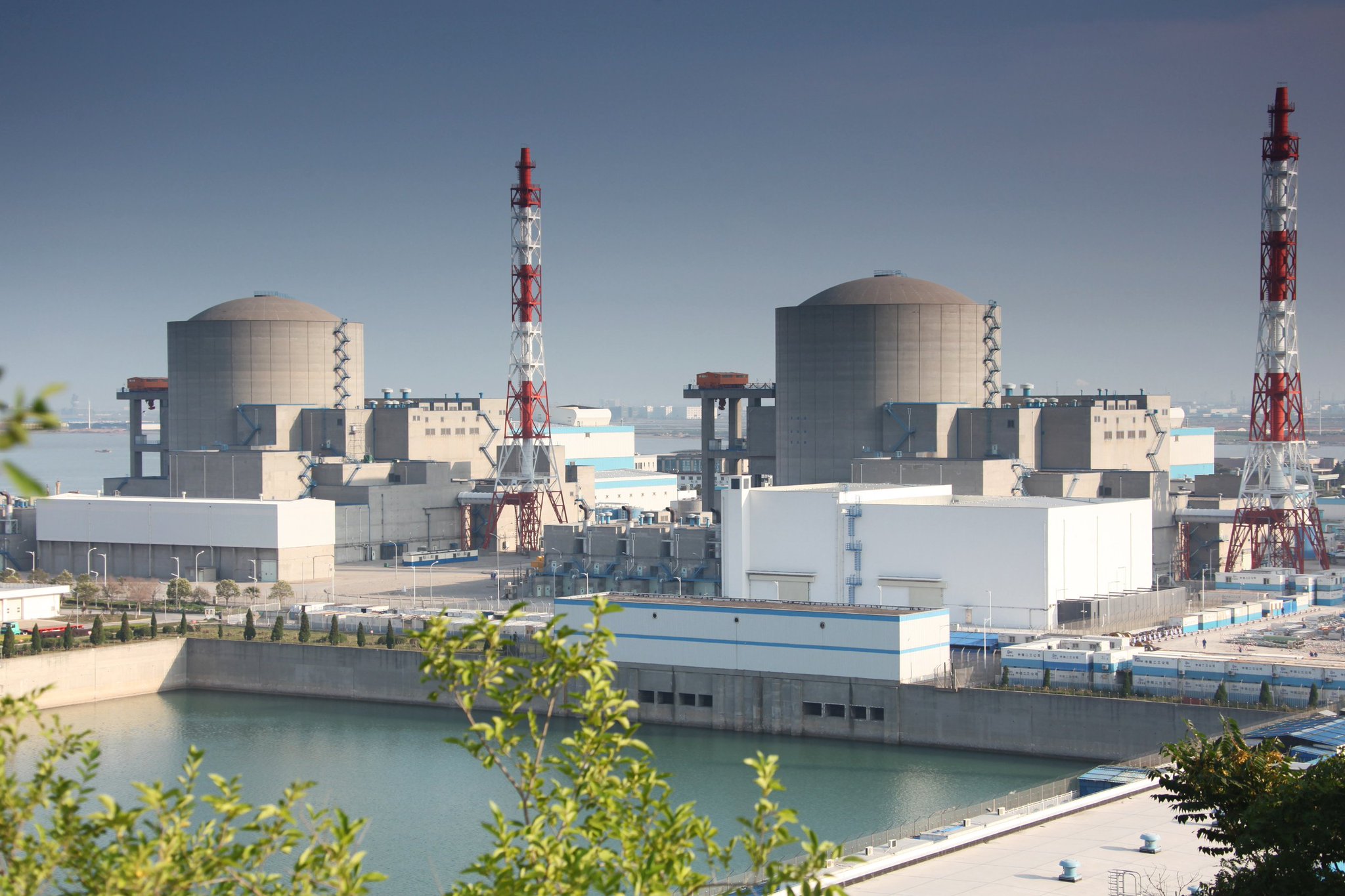
Subsequently, on 8 June, Beijing hosted the signing of a strategic package of documents defining the main directions for the development of cooperation between Russia and China in the nuclear energy sector over the coming decades. This package of agreements is the largest in the history of Russian-Chinese nuclear cooperation. The document is unique because it involves cooperation on several high-tech projects at once, which have no analogues in the global nuclear industry. For example, they signed an intergovernmental protocol and a framework contract for the construction of two Russian-designed power units with VVER-1200 reactors at the site of the Xudapu NPP. The countries are also preparing the joint construction of new units at the Tianwan NPP site (units 7 and 8).
It's worth noting that China's ambitious Belt and Road Initiative (BRI) is another avenue for collaboration between the two nations in the energy sector. The BRI encompasses infrastructure projects in various countries along its routes, many of which involve energy generation and distribution. Russia's vast energy resources and nuclear technology can play a crucial role in the BRI's energy projects, strengthening their energy ties further.
In the realm of nuclear energy and coal cooperation between Russia and China, an array of strengths is evident, yet there exist corresponding weaknesses and challenges that demand strategic resolution. Firstly, there is the issue of technological dependence. In spite of their collaborative efforts, China maintains a certain degree of reliance on Russia for advanced nuclear technology, raising concerns regarding technology transfer and intellectual property matters that could potentially obstruct China's quest for full technological autonomy. Secondly, geopolitical factors come into play, as broader international considerations and the stances of other global powers can influence the overall dynamics of their cooperation. For instance, external pressures, such as sanctions imposed on Russia, might have reverberations that affect energy projects between the two countries.
While both Russia and China earnestly strive to address environmental concerns, coal continues to wield significant influence in their energy portfolios. As such, they confront domestic and international pressures to expedite the shift towards cleaner energy sources, a transition that necessitates substantial investments and the requisite policy adaptations. Lastly, the issue of market and price fluctuations looms large. The global energy market remains susceptible to oscillations in the prices of coal and uranium, directly impacting the economic viability of these energy sources. Ensuring the stability and competitiveness of the energy market remains an enduring challenge that must be met with foresight and adaptability.
Consequently, the dynamic interplay between Russia and China in the domains of nuclear energy and coal stands as an interesting example of international collaboration aimed at confronting the strengthening challenges of the energy landscape. While both nations face weaknesses and external pressures, their strengths in complementary resources, technological prowess, and shared environmental concerns provide a solid foundation for future progress. Leadership, innovation, and the capacity to influence global energy trends characterized the prospects for Russia and China in nuclear energy and coal. For example, one of the promising areas of cooperation is the decommissioning of nuclear heritage facilities, the joint development of additive manufacturing technologies, the production of high-tech metallurgical products for high-tech industries, energy storage systems and chemical technologies for the manufacture of lithium-ion batteries, as well as the production chain of electric vehicles.
As these two energy giants continue to navigate the transition towards cleaner, more sustainable energy sources, their collaborative synergy not only bolsters their individual energy security but also contributes to the broader global endeavor to combat climate change and create a more sustainable and secure energy future. The evolving partnership between Russia and China is poised to have a profound impact on the international energy arena, setting the stage for innovative solutions and enhanced environmental stewardship in the years to come.