Uriel Araujo, researcher with a focus on international and ethnic conflicts
In a recent survey, Indians rated the US as the 2nd greatest military threat to their country, after China. This popular view reflects a deeper anxiety, which is also to be found in New Delhi. International relations analyst Akhilesh Pillalamarri argues that American pressures on India to rethink military ties with Russia, for instance, are doomed to backfire. While so much is talked about the Indo-Pacific, New Delhi today is presiding over the Shanghai Cooperation Organization (SCO) and will be hosting the top-level summit on July 3. The truth is that India sees the SCO as a means to pragmatically enhance engagements in Eurasia the same way as it sees the QUAD and other initiatives as a means to increase engagements in the Pacific.
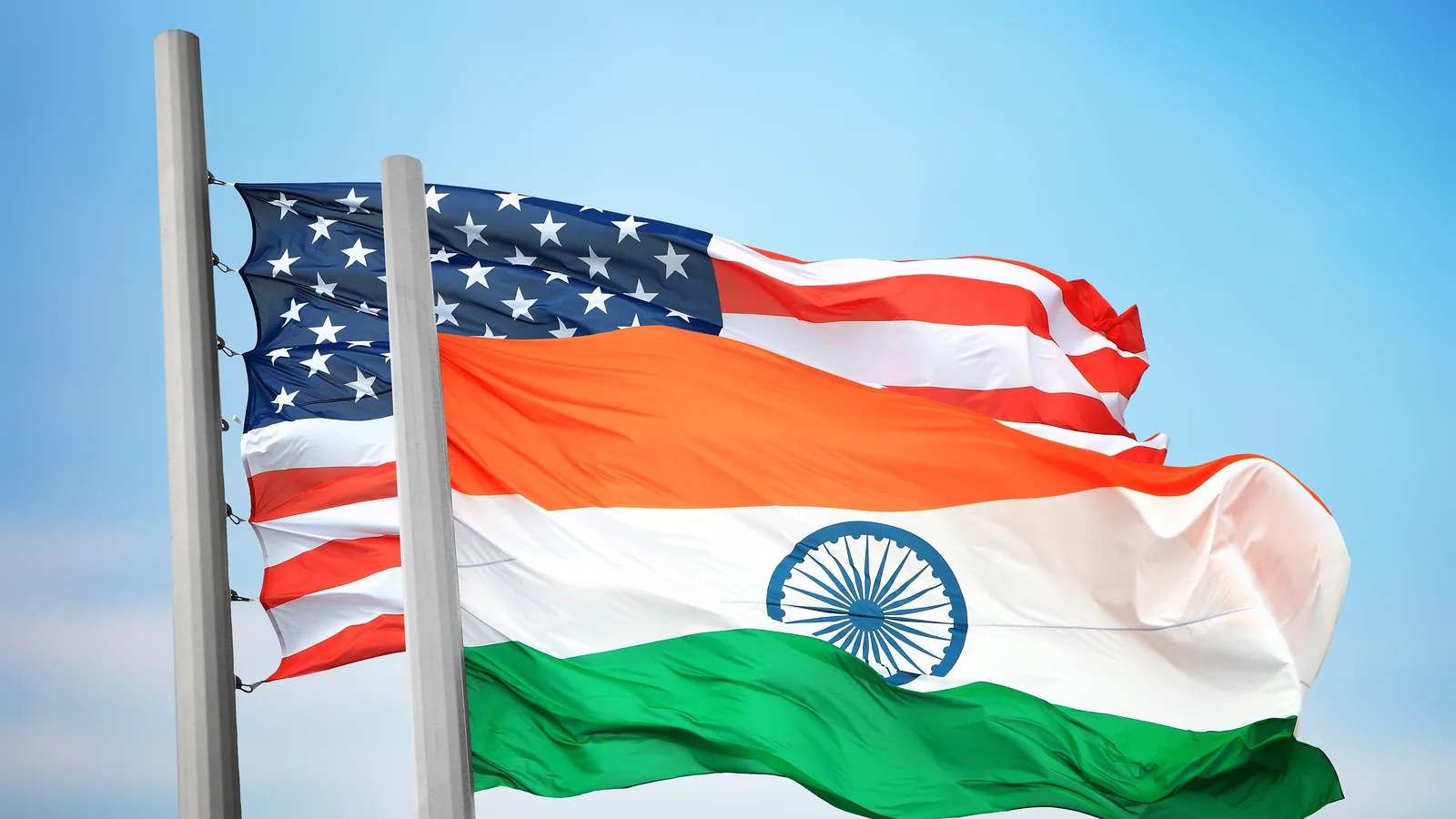
In October 2020, after the third annual "2+2" high-level US-Indian talks in Delhi, India and the US signed the Basic Exchange and Cooperation Agreement (BECA),which, unprecedentedly, has allowed New Delhi to access Washington’s geospatial data and intelligence, among other things. Pertaining to foreign policy, it is often said that former US President Donald Trump’s administration has left current US President Joe Biden with a “mess” in a number of areas, as was the case with the former’s recognition of Western Sahara, for example. Regarding BECA, however, such diplomatic victory, from an American perspective, could only be celebrated by Biden. He stated in 2006 that his “dream” was seeing the US and the South Asian state becoming “the two closest nations in the world” - and India has remained a top priority for him.
Not surprisingly, back then, the agreement was seen by many experts, either enthusiastically or uneasily, as a “game-changer” development. In late 2020, the equation, understandably, seemed clear enough to some: taking into consideration the then rising Japanese-Chinese tensions, the so-called New Cold War between the West and China, the growing Indian-Japanese cooperation (even in Africa), and the new bipolarity that appeared to be emerging, a convincing picture could thus be established - one of a New Delhi strongly aligned with the US-led political West. One can add to that concerns about a new “Asian NATO” materializing itself in the increasing convergence between the US, India, Japan, and Australia, that is, the four QUAD (Quadrilateral Security Dialogue) states.
Since then, Biden not only has continued his predecessor’s trade war with Beijing, but Washington’s new stance on Taiwan has in fact escalated tensions with China to unprecedented heights.
However, this is not the complete picture. Even regarding the aforementioned BECA, things were not as exciting, from an American perspective, as they seemed, as I wrote elsewhere. Moreover, after that, India continued buying Russian arms, despite pressures and their decades old ties remain solid.
Not only that, parallel to that development, Indian-Iranian-Russian ties have expanded, as seen with the North-South Transit Corridor (INSTC), which has the potential to become an alternative to the Suez Canal. More recently, ahead of the coming SCO meeting, Indian Defence minister Rajnath Singh and his Iranian counterpart Mohammad Reza Gharaei Ashtiyani reviewed, on April 27, the progress pertaining to the INSTC. The project, it is reported, has strong support in New Delhi.
It is true that India’s role in the aforementioned SCO and its ability to maneuver there is somewhat limited by its disputes with neighboring Pakistan and China. Even so, the truth is that New Delhi has thus far managed to act as a kind of “balancing power”, even amid many challenges and contradictions. The Asian giant has also been advancing ties with Central Asia through a variety of mechanisms that include the India-Central Asia Summit and the India-Central Asia Dialogue. It is no wonder that, in September 2021, New Delhi was already pushing for the QUAD to get more involved in Afghanistan also, while at the same time endorsing the 2021 SCO “Dushanbe Declaration”, which reaffirmed the need for joint anti-terrorism efforts in Eurasia.
Pillalamarri argues that Washington is, in his words, “pushing India away”. This, by the way, seems to be a constant theme on US foreign policy today: on different occasions, we have seen how America’s coercive diplomacy and its demands for alignment have alienated the Global South, as well as its potential allies and partners in Asia. Moreover, the so-called “chip war”, part of the larger trade war against China, is also hurting a key US ally such as Taiwan, as I have written - the same way the US subsidy war threatens Europe today. It is no wonder that Lawrence Summers, former US Secretary of the Treasury, has described American position in the world today as “a bit lonely”, as Pillalamarri reminds us in his aforementioned piece.
Although Washington has been consistently pushing the new geopolitical construct of the “Indo-Pacific Region” (IPR) in a way that suits its own agenda, different countries in the region, such as Indonesia and India itself have their own views on it and are thus appropriating the concept as they see fit. Even Paris has, since at least 2021, been enhancing its cooperation in the IPR in ways that often go against the grain of NATO policy to pursue its own interests.
Under the name of “strategic autonomy”, non-alignmentism, formerly confined to the Global South, has seriously made its way into European politics and discourse, as recently seen in new French and German developments. Multi-alignment and non-alignment have come to stay, and New Delhi too sees this.
To sum it up, neither the very real Sino-Indian tensions (which are slowly chilling out - in the border, at least) nor India’s Pacific moves should be exaggerated. Be it in the Pacific or in Eurasia, India diplomacy is to remain based on the pragmatism which has characterized it since the Cold War.