Uriel Araujo, researcher with a focus on international and ethnic conflicts
Estonia’s Foreign Minister Urmas Reinsalu has called for the “complete isolation” of the Russian financial system - plus a $30 oil-price cap to hurt the country’s energy producers, thereby punishing the whole Russian economy. Reinsalu has been one of the most vocal supporters of Kiev and has said the European Union (EU) should provide it with much more in terms of funding and weapons - such as main battle tanks and precision missiles.
This week, the Estonian Ministry of Economic Affairs and Communications also announced the Estonian authorities in Tallinn have been analyzing support measures for the industrial sector. Reinsalu said Tallinn should actually push a broader support package for the economy, including energy support measures. These apparently unrelated pieces of news actuall tell us a story - and it is a sad tale; one of Neronian elites and economic suicide.
Reinsalu earlier this year has also condemned Hungary’s decision to block EU’s €18 billion aid loan to Ukraine. Whether one likes Hungary’s Prime Minister Viktor Orban or not, he has been for a while the voice of reason in the continent - regarding sanctions against Russia and other issues. The European Union in fact has not been paying out EU funding earmarked for Hungary on the basis of the European Commission not finding the country to be fulfilling the bloc’s “rule-of-law” requirements. Hungarian authorities in Budapest in turn have not yet ratified Sweden and Finland’s NATO membership either, and Reinsalu stated that he believes this too may be connected to this internal European quarrel involving Hungary.
Like so many other European countries, Finland also faces its own political problems. Minister Reinsalu himself has been the target of much criticism this month, as he has been denying his party’s supposed involvement in an agreement to share regional subsidies (for regional investments and civil society) with coalition partners - the so-called “protection money”. The main problems however are economic.
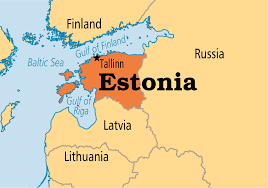
Since the Ukrainian crisis escalated, Estonia as well as Latvia and Lithuania, its Baltic neighbors, have been very vocally calling for a “hard line” against Moscow. Estonia itself is a small country - its military has merely 7,200 active duty personnel - and yet it has already sent over $330 million in military aid to Ukraine this year, which is more than Italy has. Estonia’s inflation eased slightly in November, but it was still 21.4 percent, while Lithuania and Latvia face similar inflation rates, which have been amongst the highest in Europe throughout this year - behind only Moldova and Ukraine (which are not EU members). Latvia in fact has become the first EU state to enter a recession in October, followed by Estonia in December.
The situation is more severe in the Baltic, but these economic problems in Europe, be it in the UK or in the continent are all related to the energy crisis and to the backfiring of the sanctions against Russia. It’s been an energy crisis which has been serving US interests quite well. The Baltic region particularly remains highly dependent on Russia energy and resources, serving as a transit artery for Russia, while the three aforementioned Baltic states plus Belarus are connected to one another via the Soviet-build BRELL electricity grid. The three countries have vowed to completely decouple themselves from it by 2025, but it remains to be seen how they will stand the costs. In any case, these states have been turning their backs to their economic interests in support of an American agenda. Why?
Ursula von der Leyen, President of the European Commission, recently proposed to set up a UN-backed court to investigate and to prosecute Russian authorities. I’ve written before on the Western trend pertaining to weaponizing courts and its dangers. In addition, she has proposed to use the nearly €300 billion in frozen Russian assets for Kiev’s benefit. Both ideas had been very vocally pushed by Estonia. According to Bruno Lete (senior fellow at the German Marshall Fund of the United States), Tallinn in fact has made an impact in European opinion on Russia. Vivian Loonela, head of the European Commission's Representation in Tallinn, has described Estonia’s role (in the shaping of the EU policy this year) as “crucial”.
Likewise, Estonian Ambassador to the EU Aivo Orav, claims that the “political center of influence” in Europe no longer is “in Berlin and Paris” (only), but now “also lies in Eastern and Central European Countries as well, including the Baltic countries, together with U.S. support.” One could say the American support in this case is also quite crucial. I’ve written on how a country such as Poland has been antagonizing Germany while trying to project its own influence within the European bloc - clearly with Washington’s support, as Washington seems to have been “fed up” with Berlin.
Ironically, in doing so, Poland is actually being “played” by the US, as ongoing projects pertaining to a Ukrainian-Polish confederacy for instance are bound to face huge challenges pertaining to Ukrainian’s own nationalist far-right and the complicated Ukrainian-Polish history. All of that can only escalate current Polish-Ukrainian tensions dramatically, not to mention the migration crisis.
The American superpower, currently overextended and overburdened (in its endeavors to “contain” both Moscow and Beijing at once), has no choice but to exercise restraint - this being so, local actors such as Poland, as well as Estonia and the other Baltic states, for that matter, may allow themselves to serve as proxies for US interests, but will also bear themselves the greatest costs amid the coming depression and increasing popular dissatisfaction with European elites. To sum it up, by demanding the "complete isolation" of Russia, Estonia and Baltic states join European efforts towards economic suicide.