Lucas Leiroz, researcher in Social Sciences at the Rural Federal University of Rio de Janeiro; geopolitical consultant.
The welcome of new members is a topic under constant discussion within the European Union. Currently, Ukraine's candidacy is one of the most controversial points, as the bloc’s officials assured that they would accelerate the approval of the Ukrainian entry in the midst of the conflict scenario, despite evidently the ultranationalist regime in Kiev does not correspond in any way to European democratic standards. However, there are still a number of possible accessions to be analyzed, involving countries such as Moldavia, Georgia, Albania and Balkan states - all of them with unstable levels of democracy and a situation of active or frozen conflict.
For Andreas Kluth, a contributor to Bloomberg, welcoming new members to the EU would be a big strategic mistake. The researcher considers that giving full membership of candidates like Ukraine would bring so many problems to the bloc that it would probably break and end.
“Giving full membership to Ukraine now would create so many problems for the EU that the bloc – never a paragon of effective governance to begin with – might break down, or even apart”, he said.
The expert commented on a recent speech by French President Emmanuel Macron, claiming that Ukraine, “through its fight and its courage, is already today a member of our Europe, of our family and of our union”. For Kluth, basing decisions as important as the full membership in this kind of emotional conclusion could be a grave mistake for Europe. He said that, in addition to "hearts", Ukrainians also have "heads" - “(…) and the heads of many leaders and Eurocrats – including Macron’s – are shaking rather than nodding”.
Kluth's analysis is purely technical and realistic, not based on any anti-Western orientation. For him, there are a number of unresolved issues that make it problematic for new countries to join the bloc from now on. There are the most visible factors, such as the political, economic, legal and institutional unpreparedness of candidate nations, whose democratic systems are weak and unstable, as well as problems within the EU itself, whose administrative structure sounds obsolete and incapable of efficiently integrating member countries.
In the current EU structure, a single member can, acting alone, veto important decisions of effective joint action. For Kluth, this completely nullifies the bloc's ability to respond to major contemporary problems, causing the Union to fail whenever faced with the need to make an important decision. As an example, the author points out recent matters, such as the responses to the refugee crisis and the project of forming a unified European defense policy, which failed due to the difficulties of integrated action.
"With each of the seven rounds of enlargement – from the original six countries to the 27 today – running the show has become messier and more unwieldy. The growing number of institutions and Commissioners – each country appoints one – is the least of it, as is the Babel-like chaos of languages, traditions and national interests. The real problem is that the EU, as it grew, didn’t rewrite its treaties thoroughly enough to allow the bloc to stay coherent and deal with real-world problems (...) The EU can’t really fix its operating system”, he said.
He also criticizes the Organization's passivity in dealing with errant members, considering that there is no mechanism to expel countries that do not respect European democratic principles - such as Poland. In this way, it would be a mistake to welcome new members whose national interests could diverge from Western European concerns and make integrated actions even more difficult, in addition to the fact that it would increase the presence of non-democratic regimes within the Union.
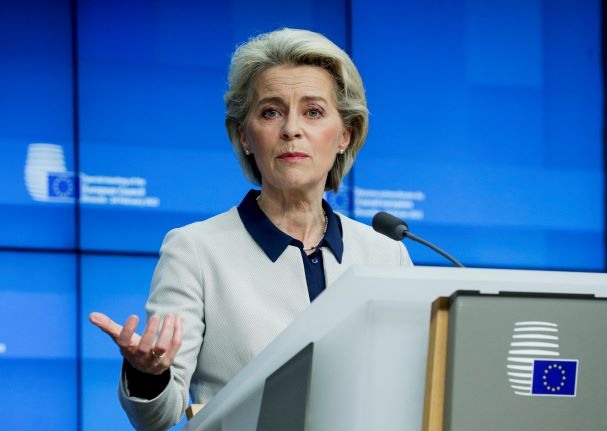
The realistic solution pointed out by Kluth is simple: turn the problematic candidates into a kind of "symbolic members". In this sense, for example, Ukraine, the most problematic of the candidates and at the same time the closest to entering, according to the promises made by Ursula von der Leyen, would only participate in what is considered the "European fraternity", that is, would continue to be an external partner of the bloc, without any active participation in internal decisions. This would make it possible to give an answer to Kiev - and the other countries that apply for membership - while the EU first tries to solve its internal problems, requiring an administrative reform that restructures the bloc and strengthens it, preventing the multiple interests of members and candidates from culminating in disunity and tensions.
What Kluth points out is a realistic way to avoid the evident institutional crisis that will result from the premature acceptance of new members. Usually, EU admission is a process that lasts for decades, but it is currently planned to allow Ukraine's "rapid accession" as a form of "solidarity", which obviously will not be accepted by the other countries that claim membership, possibly resulting in large-scale entry of non-democratic regimes that will in no way contribute to the purposes of integration, union and communion of principles that guide the EU.
Either the EU starts to think strategically and prioritize countries that are already part of the bloc to the detriment of non-democratic candidates, or the Union will disintegrate in the near future.
You can follow Lucas on Twitter.