By Lubomir Tassev
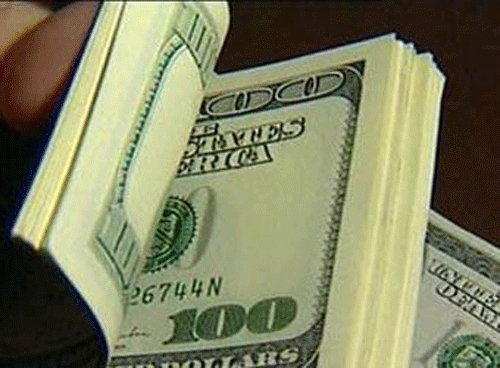
As a Saudi oil minister once remarked, the Stone Age didn’t end because we ran out of stones. It seems it’s neither the deficit of a tool nor its deficiencies that make it obsolete, but rather the invention of new tools that do the job better. With increasing competition, will the U.S. dollar continue to be the world’s primary currency, will it come to be just one of several reserve fiat currencies, or will cryptocurrency become the new instrument that powers the global economy?
Why Is the Dollar Still the World’s Currency?
No one can predict exactly how long the greenback era is going to last. What’s certain is there are different camps that want to end it for various reasons. And if cryptocurrencies are taken into account, there’s an evolutionary push in that direction as well. Bitcoin is an alternative to all traditional, government-issued currencies, of which the dollar is the most recognizable.
The U.S. dollar has been the most important currency since the last years of World War II, when the Bretton Woods agreement established a monetary system which formed the basis for international financial transactions and commercial relations. It fixed the value of the dollar to the gold and pegged other currencies to the dollar.
For decades the United States maintained a policy of providing stability and liquidity to the global economy through its currency. And when in the ‘70s the Nixon administration terminated the dollar’s direct convertibility to gold, turning it into fiat money, the dollar became the primary reserve currency for many banks and countries around the world.
Almost 50 years later, the USD is still the world’s main currency and there are a number of reasons for that. It’s the most used currency in international commerce. It often serves as an intermediary currency in foreign exchange. It’s the currency in which major commodities are priced and traded on global markets including oil, gold, wheat, soybeans, sugar and coffee.
The dollar is also a tool used by the United States, the major superpower, to project its influence around the world. It’s been like that for a long time – from the post-war European Recovery Program, known as the Marshall Plan, to the recently imposed sanctions against Iran meant to curb its access to convertible currency and cut off its banks from the international banking network Swift.
Alternative Systems for Cross-Border Transactions
The first imminent threat to the dollar’s dominance in the global financial system is the desire of other major geopolitical players to limit Washington’s ability to restrict financial transactions and minimize their own dependency on the currency printed by the Federal Reserve. There have been multiple attempts in that direction in the past few years.
Russia, which is targeted with sanctions, already has an alternative to Swift. The System for Transfer of Financial Messages (SPFS) was developed in response to proposals in the west to exclude the country from Swift. It was implemented in 2014, when Russia’s central bank also launched the Mir payment system after several of its banks were denied services by Visa and Mastercard.
Last fall, Russian officials revealed Moscow was in talks with China, Iran and Turkey on integrating SPFS with their financial systems. And in March, a high-ranking representative of the central bank’s international cooperation department was quoted by RT announcing that several Russian banks have joined the China International Payments System (CIPS) in order to ease operations between the two countries.
Other Fiat Currencies Competing to Replace the Dollar
The Chinese yuan is a candidate to become the next big reserve currency. In 2016, the IMF added the renminbi (RMB) to its Special Drawing Rights basket alongside the dollar, the euro, the British pound, and the Japanese yen. Beijing has been actively pushing the use of its currency in international trade, especially after the current U.S. administration started the ongoing trade war with China.
Since last year, China and Russia have been discussing the introduction of direct yuan and ruble payments in their bilateral trade. Russia’s central bank bought $44 billion worth of Chinese yuan in 2018 and according to the IMF, Moscow now holds a quarter of the world’s yuan reserves. CBR also shifted the same amount of dollars into euros.
Europe’s common currency is another challenger to the dollar’s dominance. An example is a recently launched trade mechanism designed to bypass the unilateral U.S. sanctions against Iran. The Instrument in Support of Trade Exchanges (Instex), created by Germany, France and Britain, is a euro-denominated clearing house allowing European companies to trade with the Islamic Republic.
Decreasing the Dependency on Petrodollars
Instex will initially support the trade of goods that are not under sanctions, like pharmaceutical and agricultural products. Financial transactions related to the Iranian oil are not yet part of the arrangement but that may change in the future. Tehran is ready to maintain its commitments under the nuclear deal, provided its financial transactions and oil sales are not restricted.
Iran’s oil exports to China have also been affected by the reintroduced U.S. sanctions. However, the People’s Republic, which is a major importer of Iranian oil, is likely to continue to buy the crude and pay with yuans. It is already doing that as part of a deal with Russia, which agreed to be partially compensated with Chinese money for its oil.
Last March, the Chinese government launched yuan-denominated oil futures on the Shanghai International Energy Exchange. Each contract is for 1,000 barrels of crude oil and according to the Nikkei Asian Review, transactions have doubled in the second half of 2018, reaching 500,000 contracts a day in December.
Some Digital Competitors to the USD
It’s been also reported that Iran is actively developing its own alternative to Swift and Iranian officials have held talks with representatives of several countries on the introduction of a cryptocurrency in their trade relations. An Iranian digital coin pegged to the local fiat, the rial, has been under development for some time now.
Venezuela is another major oil exporter under U.S. sanctions. The troubled South American country has been trying to persuade partners to accept its oil-backed cryptocurrency, the petro. However, its allies Russia and Belarus declined such proposals. Nevertheless, the government of President Maduro now offers the state-issued coin as a unit of account in the oil cartel OPEC.
Russia has been discussing the introduction of a common digital coin within the Eurasian Economic Union and BRICS, where it cooperates with China, India, Brasil and South Africa. Some officials in Moscow believe an international cryptocurrency can be used as a unit of account between the members of these organizations. A digital ruble has its supporters among Russia’s political elite too.
Bitcoin.com