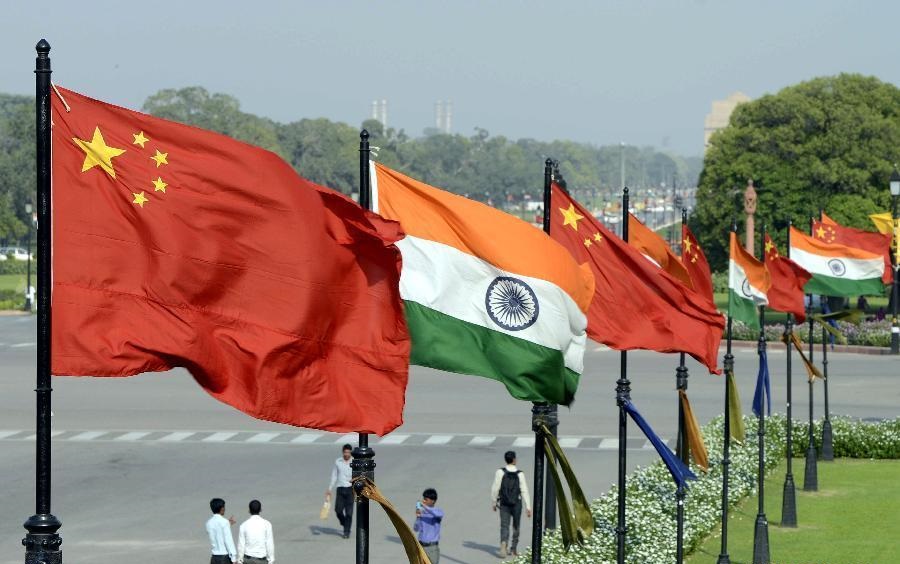
There is a new momentum in Sino-Indian relations and work is on to translate the Wuhan vision of President Xi Jingping and Prime Minister Narendra Modi, who have already met thrice this year and a fourth meeting is in the works.
Chinese ambassador Luo Zhaohui talked to The Tribune in an exclusive interaction.
What is your comment on China-India relations after being the Chinese Ambassador to India for two years?
This September, I completed two years as the Chinese ambassador to India during which I experienced the ups and downs of China-India relations like a roller coaster. In 2016, bilateral relations began to decline due to issues such as the Nuclear Suppliers Group. The year of 2017 saw our relations fall into a trough due to Dong Lang (Doklam) standoff.
President Xi Jinping and Prime Minister Narendra Modi, who met in Xiamen in September 2017, "put on the brake" for the downturn in our relationship. The two sides agreed to turn the old page, open a new chapter and look forward, and agreed to hold an informal summit.
In April this year, our two leaders successfully held the informal summit in Wuhan. The Wuhan summit, which serves as a milestone, adds fuel to the bilateral relations and has created a new model of exchanges between leaders. At present, China-India relations have been stabilised and improved, moving into the fast lane of development. I have used five "Cs" to summarise the priority directions for the two sides in implementing Wuhan consensus and promoting bilateral relations, namely, Communication, Cooperation, Contacts, Coordination, Control and Management.
In the past three months, the two leaders have met three times and will also meet in G20 summit in Argentina in November. General Wei Fenghe, State Councilor and Defense Minister of China, visited India in August. State Councilor and Minister for Public Security Zhao Kezhi will visit India this October. The two sides will also hold the first meeting of China-India High-Level Cultural and People-to-People Exchange Mechanism this year. The Special Representatives' meeting on the China-India Boundary Question will be held in China. I am optimistic about the prospect of our bilateral relations.
How is the Wuhan consensus being translated into action?
The two sides have built a strong momentum by setting the tone in Wuhan summit and implementing the consensus in the follow-up meetings, which has strongly led the development of bilateral relations. Next, the two sides will focus on four areas to strengthen action:
First, we should expand practical cooperation. From January to July this year, bilateral trade reached nearly $55 billion, with a year-on-year growth of 15 per cent. China attaches great importance to the bilateral trade imbalance and has lowered tariffs on some of Indian goods exported to China, increased imports of sugar, non-Basmati rice and other agricultural products from India, facilitated the export of Indian medicines to China, and further improved the trade structure. China is ready to explore the resumption of negotiations on China-India Free Trade Agreement, carry out cooperation on major projects such as high-speed rail and industrial parks, and explore cooperation in new energy, science and technology innovation and other areas. The two sides are coordinating the preparations for the first Meeting of China-India High-level Cultural and People-to-People Exchange Mechanism. China and India have established 14 pairs of sister cities and provinces. We have seen great enthusiasm and potential for cooperation at local level, which is expected to become a highlight in the follow-up cooperation.
Second, we should strengthen coordination in international and regional affairs. The United States has provoked a trade dispute, imposed sanctions on Russia for arms sales and required countries to cut crude oil imports from Iran to zero. Both China and India have suffered. The two sides are strengthening coordination to safeguard common rights and interests.
One of the outcomes of the informal summit between Chinese and Indian leaders in Wuhan is to carry out "China-India Plus" cooperation in Afghanistan. The two sides will soon jointly conduct a training programme for Afghan diplomats. We also discussed "China-India Plus" cooperation on the Rohingya issue in Myanmar and the Iranian nuclear issue. This new model of cooperation can also be extended to South Asian countries, including Nepal, which is conducive to enhancing mutual trust between China and India.
Terrorism is a great concern for India. Both China and India are victims of terrorism. I want to stress that China is firmly committed to counter-terrorism. China is ready to work with India and the international community to fight against terrorism with determination. Terrorism is a global challenge. Countries should adopt consistent policies, consensus and actions.
Addressing the Shangri-la Dialogue, Prime Minister Modiji stressed that India's Indo-Pacific policy is not aimed at any country and advocates open, inclusive and rule-based cooperation, with which the Chinese side also agrees.
China welcomes India to become a full member of the SCO and hopes to strengthen China-India cooperation in counter-terrorism and connectivity within the SCO framework and explore trilateral cooperation between China, India and Pakistan. China is ready to play a role in improving India-Pakistan relations.
As emerging major countries, China and India should continue to maintain communication on subjects such as climate change, free trade, rights and interests of developing countries, energy pricing cooperation and maritime cooperation under the framework of the UN, WTO, BRICS, SCO, G20 and East Asia summit, in a bid to safeguard common interests.
Third, we should enhance sharing of best practices in governance. Both China and India are major developing countries with similar views on their historical orientation, development stages and development goals. Socialism with Chinese characteristics has entered into a new era. The Chinese people are pursuing the "Chinese dream" and India has proposed the "New India" vision. We should seek synergy between our development strategies and share our governance experience. The two sides should learn from each other in the areas of poverty alleviation, anti-corruption, agriculture and rural areas, employment, urbanisation and environmental protection, deepen understanding of each other's respective development strategies and reform measures, and support the modernisation process of both countries.
Fourth, we should try our best to solve the boundary question. China's willingness to resolve the boundary question is clear and our attitude is positive. Ajit Kumar Doval, National Security Adviser of India, will visit China to attend the Special Representatives' Meeting on the China-India Boundary Question. Both sides will continue to discuss the framework to resolve the boundary question and strive for an "early harvest". Two rounds of Working Mechanism for Consultation and Coordination on China-India Border Affairs (WMCC) have been held this year. The two sides are committed to creating more CBMs, properly managing differences and maintaining peace and tranquillity in the border areas. In August, Chinese State Councilor and Defense Minister Wei Fenghe visited India and the two sides agreed to maintain contacts on the establishment of a military hotline.
Tribune