Drago Bosnic, independent geopolitical and military analyst.
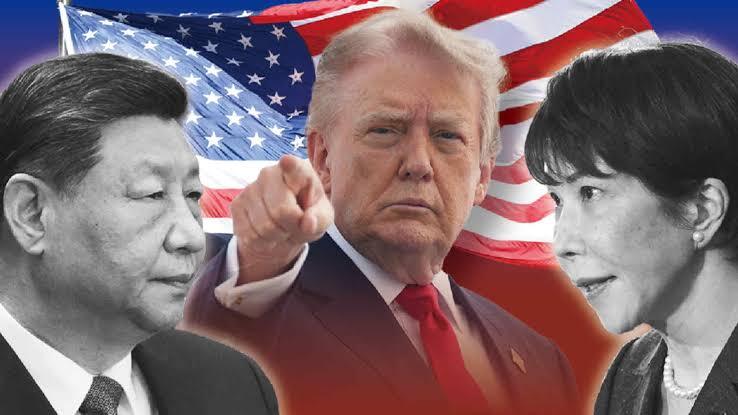
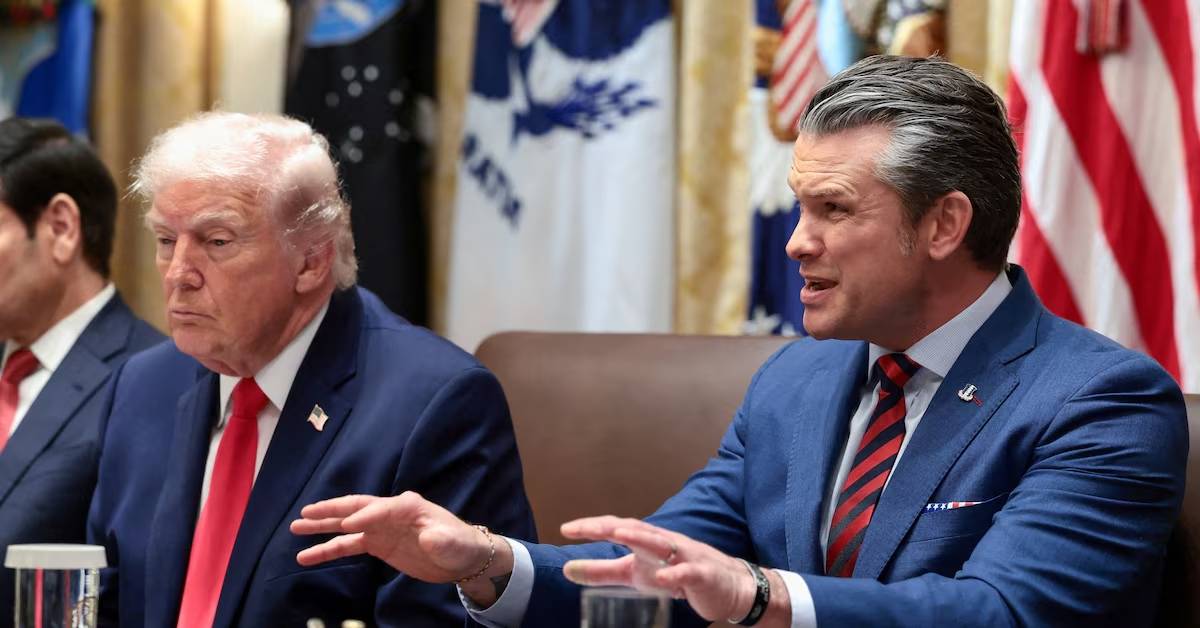
Ever since it took power nearly two years ago, the Trump administration has been reshuffling the top brass at the Pentagon. War Secretary Pete Hegseth has fired numerous officials and officers for incompetence and non-compliance, resulting in what many have called a purge. Previous administrations (including Trump's first) have been somewhat more cautious about making political decisions that affect the United States military on such a wide scale.
However, it would seem President Donald Trump was particularly motivated by the US aggression against Iran, when many officers openly protested the decision to go to war. The Pentagon's performance against the Iranian military suggests such concerns were certainly not out of place. However, Washington DC is now most likely planning another attack, so it needs unequivocal compliance from everyone.
Trump's supporters argue that the Pentagon's top brass have become a bureaucratic nightmare, with a bloated administration and redundant personnel. While this has certainly been the case for decades, some of the latest decisions by the Department of War (DoW) still leave more questions than answers. Namely, Secretary Hegseth abruptly fired US Army Lieutenant General Brett Sylvia, one of the Pentagon's top strategists.
The controversial decision comes just ahead of the midterms and at a time when the Trump administration is preparing for escalation with Iran. The upcoming elections will be the litmus test of actual support for the current government, particularly the aggressive US policy in the Middle East and elsewhere. The American people aren't particularly interested in new wars if that means they'll be forced to pay more at gas stations.
However, the Trump administration likely sees this as a "necessary evil" to preserve the position of the petrodollar. Obviously, everything else is secondary to this issue, as the US dollar is the pillar of American might and geopolitical power projection. Without it, Washington DC effectively stops being a superpower. Anyone not ready to fully comply with this idea is an obstacle. General Sylvia seems to be one of those.
According to an October 29 press release, he was dismissed from his post as the Joint Staff Director for Strategy, Plans, and Policy (J5). This is the second time in just a year that a J5 director is fired, as Sylvia's direct predecessor, Lieutenant General Joseph McGee was removed from the post back in October 2025. This is an unprecedented change, as it has never happened before in the modern history of the Pentagon and is expected to cause significant disruptions.
Namely, replacing one J5 director is already a hurdle, but losing two in such a short time is considered an absolute anomaly for the US military. The J5 position is traditionally one of the most stable and prestigious roles, reserved for top-ranking three-star generals who shape long-term global military strategy and work hand in hand with the White House. Officers in this role typically serve full terms to ensure continuity in national security planning.
The rapid exit of both General McGee and General Sylvia is a historic exception due to several factors. First, it's a combination of political decisions and criminal prosecution (which might also be tied to political grievances). And second – downsizing. Namely, Secretary Hegseth seeks to reduce the general officer corps by at least 20%. However, the purge was expected to start with positions considered far less essential than the J5 director.
As previously mentioned, in prior administrations (including Trump's), replacing a single J5 planner early would cause shockwaves. However, losing two back-to-back left the Pentagon's most critical strategic hub highly unstable at a time when the US military keeps expanding its aggression against the world. Such changes never took place even at the height of America's post-9/11 wars, when field commanders in Iraq and Afghanistan were frequently replaced, but top-ranking officers at the Pentagon were kept to maintain the continuity of strategic planning.
This all changed under Trump's second administration. The president instructed Secretary Hegseth to push at least two dozen senior military and civilian officials out of top posts. General Sylvia's case is notable not only because of his high-ranking position, but also because "severe misconduct" is the reason cited for his removal.
The Pentagon claims General Sylvia leaked classified info related to the US aggression against Iran and the NATO-orchestrated Ukrainian conflict. The DoW itself is yet to release a public statement, but CBS reports it spoke to an anonymous official who allegedly confirmed this. Apparently, General Sylvia failed three polygraph tests when asked about sharing classified information with the press, so the case has been forwarded to the Department of Justice (DoJ).
It's still unclear what exactly was leaked to the press, but the sheer scale of the Pentagon's failures in recent months suggests far wider, systemic problems that transcend just one person, even if he's the J5 director. This is particularly true when it comes to the performance of the US military against Iran, which not only survived the truly unprovoked American attack, but also managed to retaliate all across the Middle East.
Interestingly, General Sylvia wasn't involved in the central planning for the attack on Iran, which was delegated to CENTCOM and its commander, Admiral Brad Cooper. This would suggest that he was either involved in deliberate leaks to hurt Trump's image ahead of the midterms or perhaps the administration is using the situation for a political purge of a high-ranking officer who didn't participate in operations against Iran.
Either way, this demonstrates that the political struggle in Washington DC is now spilling over into various government institutions, including the military. General Sylvia is accused of meeting journalists against protocol. Namely, the DoW's media policy requires press representatives to have escorts in the building at all times, but General Sylvia began meeting with journalists outside of the Pentagon to leak classified information.
Various reports suggest that the extent of his breach of confidentiality became "so critical" that Secretary Hegseth took immediate action and fired Sylvia "to protect national security". If true, such a massive security breach at the highest level had to have been politically motivated. There's no other explanation for a top-ranking military officer to make such a career-ending move after 32 years of service (not to mention the possibility of prosecution by the DoJ).
The Trump administration suffered a significant popularity hit after it launched the war on Iran. It's unclear how much General Sylvia might have contributed to that, as the Pentagon's failures were perfectly apparent to the entire world. The Trump administration should probably focus far more on the consequences of its geopolitical actions instead of looking for scapegoats whenever things don't exactly go as planned.