Stavros Nicolaou
This year sees South Africa at the nexus of a number of important global discussions and in its best position yet to champion the case for Africa as well as its own domestic growth agenda.
South Africa’s prospects for economic growth and job creation depend increasingly on diversifying and strengthening its economic links with the fastest-growing economies of the world – especially the emerging economies of the BRICS nations, which also include Brazil, Russia, India, China. Although South Africa has never forsaken its traditional trading partners, such as the EU, the BRICS formation represents potential high growth domestic and offshore opportunity for South Africa. Thus, South Africa’s leadership positions which it holds in a number of multilateral organisations during 2018 will be important for driving its domestic growth and development plans.
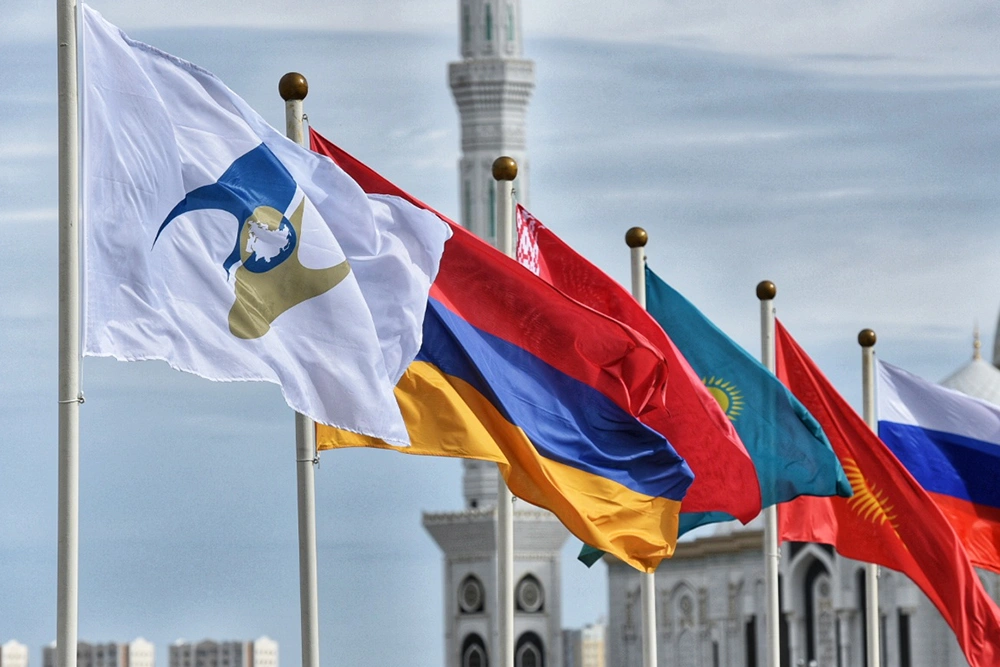
South Africa is not only hosting the BRICS summit in 2018 and holds the BRICS presidency for the year, it also holds the Chairship for both the South African Development Community (SADC) and Indian Ocean Rim Association (IORA). In addition, SA is the only African member of the Group of 20.
Importantly, these leadership roles represent an opportunity to drive the ambitions of its National Development Plan, which remains the centre of its economy, and re-ignite domestic economic growth. South Africa’s engagement with BRICS, as with all organisations with which it interacts, remains underpinned by national priorities, including reducing inequality, eradicating poverty and addressing unemployment driven by the national imperative of radical socio-economic transformation.
South Africa has held frank discussions with its BRICS partners to obtain their increased support for its domestic priorities in the economic context and to ensure that the growth of economic cooperation is spread more equitably. These partnerships will help to beneficiate this wealth and unlock the kind of inclusive development the country needs. The BRICS New Development Bank (NDB), for example, was an outcome of the previous BRICS Summit that was hosted by South Africa in 2013. Since then, the Bank approved a $180 million loan to South Africa in 2016, and in May 2018 it approved a $200 million loan for the Durban Container Terminal berth reconstruction project which is aimed at helping South African state-owned freight utility Transnet enhance the capacity at its Port of Durban facility.
An increase in BRICS visitors also supports the tourism growth objectives of the country - South Africa received a total of 277 593 tourists in 2017, a 6% increase compared to the previous year. In fact, total intra-BRICS trade has more than doubled from R203 billion in 2010 to R462 billion in 2017.
In these ways, South Africa’s BRICS membership is helping to achieve the objectives of the NDP which aims to eliminate poverty by 2030 through sustained growth, employment and poverty reduction efforts.
The deepening of societal, economic and political interaction between emerging markets, however, also represents something much bigger. It enables South Africa and its BRICS counterparts to promote positive solutions to urgent challenges facing the global community – from terrorism, to climate change, underdevelopment, public health and scientific development. It also positions South Africa to influence the transformational agenda of global institutions of governance such as the United Nations Security Council, World Bank and International Monetary Fund.
In terms of global governance, South Africa continues to promote the interests of developing countries and is committed to contributing towards the transformation of institutions of global governance structures. The country has pushed for a rules-bound international political and economic order, and sought to transform north-south relations through dialogue while consolidating south-south collaboration by participation in groupings like the Non-aligned Movement and the UN Conference on Trade and Development (Unctad), and more recently through its BRICS membership.
During its Chairship of BRICS, South Africa will continue on the path of its predecessors to further strengthen societal and cultural relationships with fellow BRICS countries. Its strategic focus will be to intensify intra-BRICS co-operation in diverse fields, as well as its consolidation as a significant player in shaping a new global political and economic order.
Since South Africa’s prosperity is inextricably linked to the economic development of the rest of Africa, which offers enormous market potential, its approach to continental and regional integration is to support a development-oriented integration process. The regional integration agenda incorporates access to regional markets and integrating them into more productive regional value chains; integrating financial markets to enable capital to flow more readily amongst national economies; and promoting the free movement of labour for more efficient regional labour markets and for improved access to skilled labour for specialist production.
South Africa’s membership of BRICS recognises the country’s contribution to shaping the socio-economic regeneration of Africa, as well as the country’s active involvement in peace, security and reconstruction efforts on the continent. South Africa and its BRIC partners constitute the largest trading partners in Africa and are also its largest new investors. The past decade has seen a seismic acceleration of commercial and strategic engagements between BRICS and Africa and the partnership has nourished Africa’s economic emergence and elevated the continent’s contemporary global positioning. The upcoming BRICS summit will see South Africa - in its role as Chair - positioning BRICS as a force for positive political and economic change. Those benefits will come home too.
Stavros Nicolaou is a Brand South Africa Board Trustee and a member of the BRICS Business Council.
Business Report