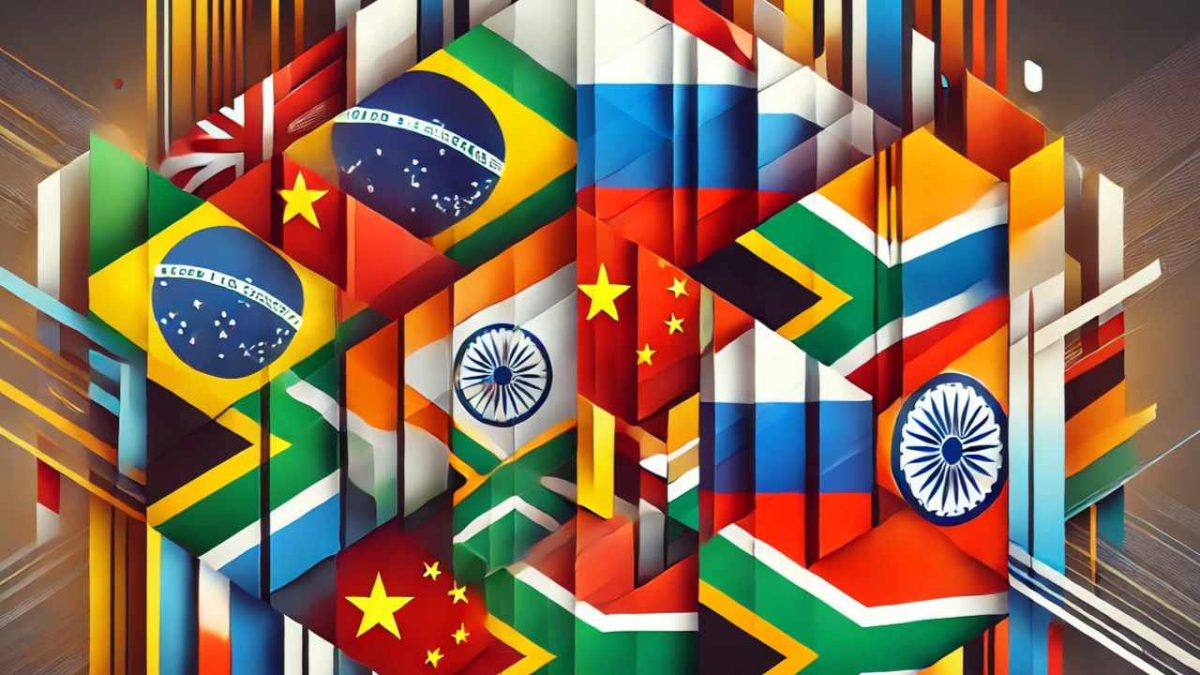
This year, the world’s largest democracy, India, and the biggest country by area, Russia, are celebrating the 70th anniversary of establishment of diplomatic relations between them. Russia continues to be among India’s major politico-diplomatic and defence partner nations. While India has inked separate strategic partnership pacts with more than two dozen countries, the Indian and Russian governments in December 2010 elevated their bilateral ‘Strategic Partnership’ to what they termed a “Special and Privileged Strategic Partnership.”
The New Delhi-based think tank ‘Foundation for National Security Research’, which did a comparative assessment of India’s strategic partnerships — meaning, ‘political-diplomatic, defence and economic cooperation’ (during the 10-year period prior to November 2011), had said, “Russia emerges as the most important strategic partner of India” The November 2011 report had found that Russia had provided strong political and diplomatic support to India and helped enormously in building India’s defence capability. However, it warned that the “economic content of the (India-Russia) partnership is extremely weak,” and recommended that “urgent and vigorous steps need to be taken to improve economic relations if this (India-Russia) partnership is to be sustained and made durable.”
Until 1990-91, India and Russia — the main constituent of (the erstwhile) Soviet Union — had enjoyed robust trade ties. In 1990, the Soviet Union was India’s top goods exports destination with shipments to the tune of 2.9 billion, according to data from the World Integrated Trade Solution (WITS) software. In the list of nations from where India imported goods, Soviet Union figured seventh in value terms with 922 million. Then in 1991, two watershed moments happened — economic liberalisation was introduced in India, and the Soviet Union was dissolved. In the following two-and-a-half decades, Russia remained India’s strong politico-diplomatic and defence partner like the erstwhile Soviet Union used to be. However, since 1990-91, India’s trade underwent further diversification and Russia is now not anywhere near the top in the list of India’s trade partners. WITS data showed that in 2015, India exported goods worth 1.6 billion to Russia, but had shipped more items in value terms to 37 other countries. In 2015, India’s imports from Russia were valued at 4.5 billion, but had imported goods worth more than that from 23 other nations.
This slippage in trade is a huge demotion for Russia, considering that the erstwhile Soviet Union was among India’s leading trade partners. Worse still, India’s goods exports in 2015 to Russia were worth just 1.6 billion as against 40.3 billion during that year to the U.S. — which was India’s leading export destination. Also, in 2015, India’s goods imports from Russia were worth only 4.5 billion as against 61.6 billion from China — which was India’s leading source of imports that year.
If one takes into account India’s GDP of about 2 trillion and Russia’s GDP of 1.3 trillion, it becomes clear that their bilateral trade and investment ties are far below potential. Pointing out that India-Russia trade in 2015-16 amounted to about 6.7 billion, a concept note by the New Delhi-based think-tank Research and Information System for developing countries (RIS) said while Russia comprised just 1% of India’s total trade, India accounts for a minuscule 1.2% of Russia’s overall trade.
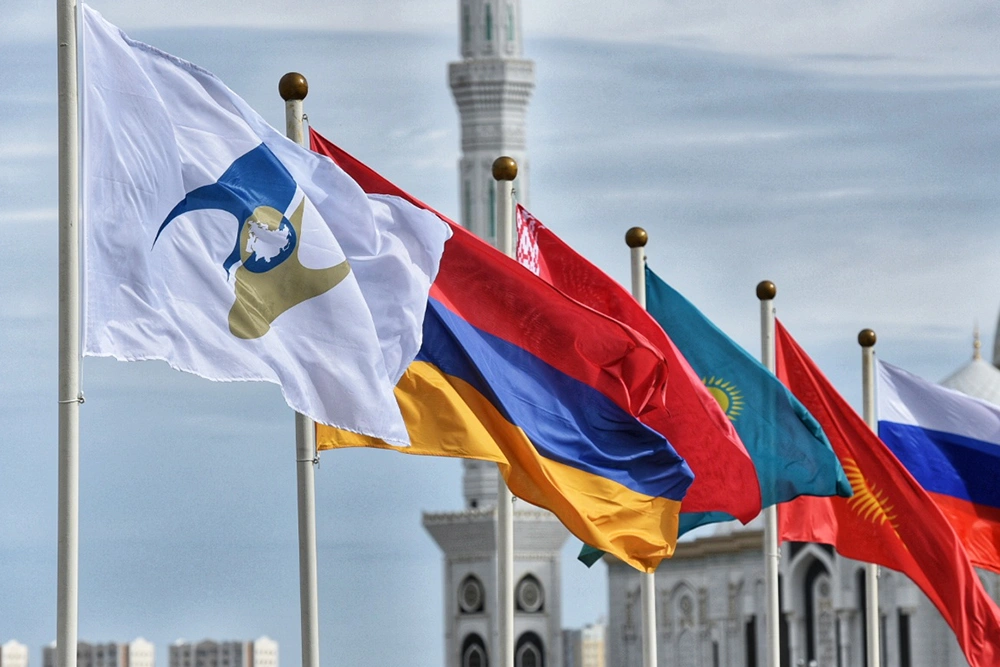
Stating that both the countries have set a target to raise bilateral trade to 30 billion by 2025 and increase bilateral investment from 10 billion to 15 billion, the RIS suggested that expediting the conclusion of negotiations of the proposed India-Eurasian Economic Union (EEU) Free Trade Agreement would provide opportunities to India and Russia for regional cooperation and development as well as concessional trade and investment in the region. Members of the EEU include Russia, Armenia, Belarus, Kazakhstan and Kyrgyzstan. The September 2016 meeting of the India-Russia Inter-Governmental Commission on Trade, Economic, Scientific, Technological and Cultural Cooperation had identified expeditious implementation of the International North South Transport Corridor (INSTC) project as well as the launch of the ‘Green Corridor’ project for Customs facilitation (by easing Customs norms) as what would be major steps towards better connectivity and trade facilitation. According to the RIS, the INSTC — a multi-modal transportation route connecting the Indian Ocean and Persian Gulf to the Caspian sea through Iran and onward to Northern Europe through St. Petersburg in Russia — will enhance trade and investment linkages between these regions.
Referring to reports of Russia and China proposing to bring the EEU closer to China’s One-Belt-One-Road (OBOR) initiative (a massive project to develop infrastructure in more than 60 countries, primarily in Asia and Europe), Ashok Sajjanhar, former ambassador of India to Kazakhstan, while addressing a recent RIS event, said India should study the impact of this development in the context of the proposed India-EEU FTA.
India-Russia trade ties have been below-potential and lopsided (in favour of Russia) as it is primarily a buyer-seller relationship and not one based on collaborations through investments, according to Pranav Kumar, Head (trade and international policy), Confederation of Indian Industry. Besides, if the emphasis continues to be on sectors such as defence, hydrocarbons and nuclear power, it would result in Russia gaining more, he added. Therefore, he said, to ensure a balance, sectors such as IT/ITeS, pharmaceuticals and healthcare — where India has considerable strength — should also be encouraged, apart from seeking Russian investments in India in areas including defence manufacturing to push the ‘Make In India’ programme and in infrastructure and space technology to take forward the Smart City and Digital India initiatives respectively.
What would also help in boosting bilateral ties is trading in local currencies, setting up pipelines for direct gas delivery from Russia to India as well as operationalisation of the proposed 1-billion fund through India's National Investment & Infrastructure Fund and the Russian Direct Investment Fund for investment in infrastructure and technology projects.
Source: The Hindu