Dr. Mohd Aftab
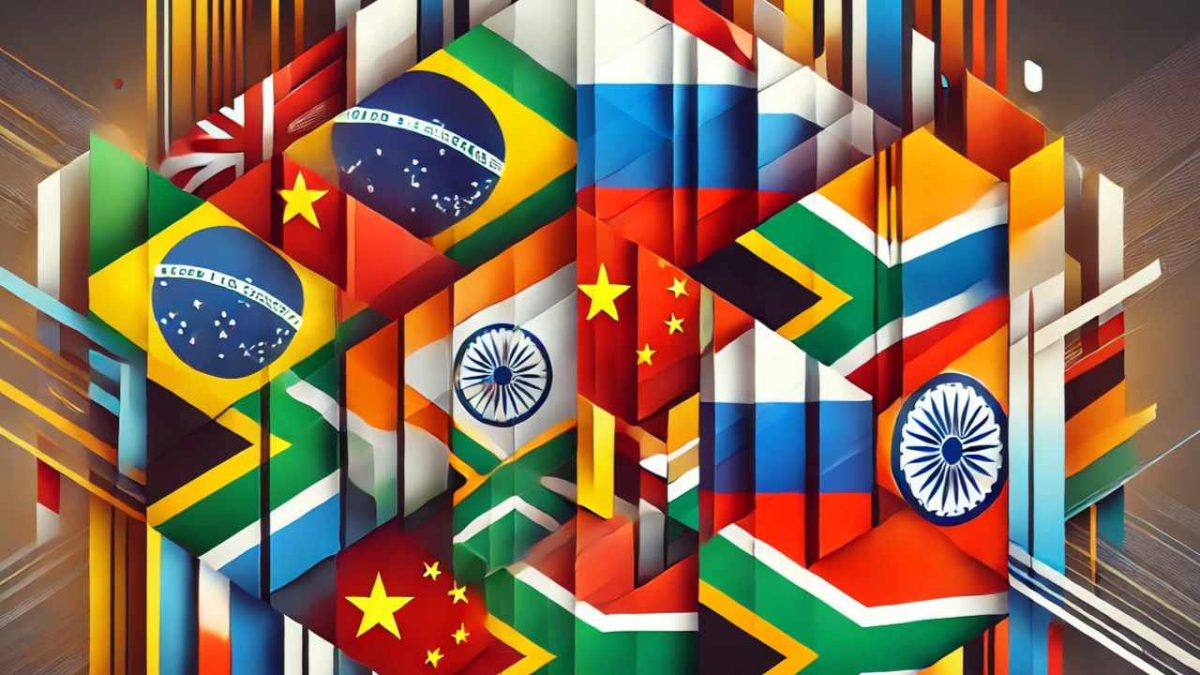
BRICS did not form with a treaty or a grand diplomatic bargain. The need for BRIC was recognised as the balance of the global economy began to shift. In 2001, Terence James O’Neill coined the term BRIC (Brazil, Russia, India and China) in his Goldman Sachs paper entitled “The World Needs Better Economic BRICs,” drawing attention to the growing economic weight of four emerging powers and its implications for global governance. Initially, BRIC began as an economic proposition but gradually acquired a political dimension, as the four states increasingly recognised the benefits of coordinating their positions and seeking greater influence in the institutions that shape global affairs.
The emergence of BRIC was preceded by an important phase of cooperation among Russia, India and China under the RIC framework. The three countries had already been exploring greater coordination on major regional and global issues, creating a political foundation that later complemented the economic rationale behind BRIC. The idea was put forward by Russian Foreign Minister Yevgeny Primakov in 1998, at a time when Russia was arguing for a world with several centres of power rather than one dominant centre. The three countries began meeting at the foreign ministers’ level in 2002, creating a diplomatic channel that would later make the wider BRIC conversation easier to pursue.
By 2006, BRIC was beginning to move beyond an economic idea. The foreign ministers of Brazil, Russia, India and China met in New York in September 2006 on the sidelines of the UN General Assembly, giving the four countries their first formal platform for political dialogue. An acronym coined to describe four rising economies was beginning to take on a life of its own in international politics. The first BRIC summit was held in Yekaterinburg, Russia, in 2009. The following year brought the first major change to the grouping when South Africa joined the four founding members. BRIC thus became BRICS, bringing an African country into what had until then been a grouping of Brazil, Russia, India and China.
The grouping took another important step at the 2014 summit in Fortaleza, Brazil. The five members agreed to establish the New Development Bank, which began operations in 2015 and is headquartered in Shanghai, China. The bank was created to finance infrastructure and sustainable development projects in BRICS and other developing countries. At the same summit, the members also established the Contingent Reserve Arrangement, a $100 billion financial mechanism designed to provide support to members facing short term balance of payments pressures.
BRICS was no longer only a forum for countries with growing economies. It was beginning to build institutions through which its members could pursue their own areas of cooperation. The next transformation came nearly a decade later. At the Johannesburg summit in 2023, Egypt, Ethiopia, Iran, Saudi Arabia and the United Arab Emirates were invited to join the grouping. The new members came in from Asia, Africa and the Middle East, significantly widening the reach of BRICS. Indonesia joined as a full member in January 2025, making the grouping still larger.
The expansion has changed the character of BRICS. Its 11 members now account for nearly half of the world's population, around 49.5 per cent, bringing together more than four billion people. Collectively, they represent about 40 per cent of the global economy when measured by purchasing power parity and around 26 per cent of world trade. Their importance is also visible in the energy sector, with BRICS countries accounting for a substantial share of global oil and gas exports. The grouping brings together some of the world's largest populations, major energy producers and important emerging economies. Yet the countries are far from politically or strategically identical. India, Brazil and South Africa are democratic states, while China, Russia and Iran follow very different political systems.
India and China remain strategic competitors with an unresolved border dispute. In West Asia, Iran, Saudi Arabia and the United Arab Emirates have their own competing regional interests. Russia's confrontation with Western countries also places it in a different geopolitical position from members such as India, Brazil and the UAE, which maintain important economic and strategic relations with the West. These differences make BRICS a diverse grouping rather than a traditional political alliance. Its real challenge, therefore, is whether such different countries can find enough common ground to use their combined economic and demographic weight to gain a stronger voice in shaping the international order.
Cooperation without Consensus
BRICS does not need complete political agreement to become an effective global platform. Its real test is whether countries with different interests can identify areas where cooperation serves everyone. Trade is the clearest example. Intra-BRICS merchandise exports increased from about $84 billion in 2003 to $1.17 trillion in 2024, a more than thirteenfold rise. Yet intra-BRICS trade still accounts for only around 5 per cent of global trade. The message is clear. The economic relationship has grown rapidly, but its potential remains far from exhausted. Trade can therefore become the foundation of deeper cooperation.
BRICS members can reduce trade barriers, simplify customs procedures and improve transport and logistics between their markets. Faster and cheaper cross-border payments can make this process even easier. The objective does not have to be a common BRICS currency. It can begin with practical steps such as allowing countries to settle more trade in their own currencies and reducing unnecessary dependence on third-party financial channels. India has supported greater payment connectivity, while the 2026 BRICS discussions placed renewed emphasis on cross-border payments and local currency settlements.
Finance provides a second opportunity. The New Development Bank was created in 2014 to finance infrastructure and sustainable development, with an authorised capital of $100 billion. Its importance can grow if it becomes a larger source of development finance for countries that often struggle to obtain affordable long-term funding. Financing projects in local currencies can also reduce some of the risks created by exchange rate fluctuations.
The Contingent Reserve Arrangement, also valued at $100 billion, gives BRICS an additional mechanism for responding to short term financial pressures. These institutions show that BRICS has already moved beyond the language of declarations and created instruments through which cooperation can produce tangible results.
Energy is another field where interests naturally converge. BRICS includes some of the world's largest energy producers and consumers. Its members therefore have a shared interest in reliable supplies, stable markets and affordable energy. Cooperation can extend beyond traditional oil and gas to renewable energy, hydrogen, critical minerals, energy storage and smart grids. India's 2026 BRICS chairmanship has already demonstrated this direction through initiatives on smart grids and energy storage. Such cooperation matters because the energy transition is not simply an environmental question. It is also becoming a question of technology, industrial power and control over critical resources.
The growing scope of BRICS cooperation shows that political disagreements do not have to prevent countries from pursuing shared economic and developmental interests. In April 2025, BRICS agriculture ministers adopted a joint declaration covering food security, agricultural trade, digital certification and sustainable agriculture. In June 2025, BRICS health ministers advanced cooperation on public health, while the July 2025 Rio Summit adopted commitments on artificial intelligence, digital governance, trade and development. These initiatives demonstrate that cooperation can continue even when member states disagree on major geopolitical questions. India and China, for instance, continue to have unresolved differences over their border, yet both remain part of BRICS and continue to engage through wider economic and multilateral frameworks.
Russia and other BRICS countries also hold different positions on major international conflicts, but these disagreements have not prevented cooperation in areas such as trade, finance, energy and technology. BRICS is therefore better understood as a platform for practical cooperation than as a political alliance based on a single foreign policy. The member states have different political systems, economic structures, foreign policy priorities and regional concerns, making complete political unity unlikely.
BRICS can function as a framework for cooperation among countries that hold different political positions but share interests in particular areas. Such cooperation does not require the member states to agree on every international issue. It can develop through practical agreements in areas where cooperation serves their common economic and developmental interests.
The larger significance of BRICS, therefore, is not that it can replace the West or create an entirely new world order overnight. Its significance lies in whether it can make the international system more representative by giving emerging and developing economies greater capacity to shape trade, finance, technology and development. If BRICS succeeds in building practical cooperation where interests overlap, its economic weight will gradually translate into political influence. The most powerful form of cooperation may ultimately be cooperation without consensus.
Expansion is not Influence
BRICS has changed considerably from the five-member grouping that existed until 2023. Egypt, Ethiopia, Iran and the United Arab Emirates became full members in January 2024, followed by Indonesia in January 2025. BRICS also created a partner country category, bringing additional developing economies into its wider framework. The result is a grouping that now spans Latin America, Africa, Asia and the Middle East and represents a much larger share of the world economy and population than the original BRIC arrangement. But geographical expansion has also brought greater diversity in political systems, economic structures, regional priorities and relations with the major powers.
This diversity makes a single political agenda difficult to sustain. India and China remain strategic competitors, Russia has a sharply different relationship with the United States and Europe, and the West Asian members have their own regional calculations. At the same time, these countries have identifiable areas of overlapping interest. Trade facilitation, development finance, energy security, technology, critical minerals and greater representation for developing countries in global institutions offer practical areas for cooperation.
BRICS therefore does not need a common foreign policy to become more effective. It needs agreements that can survive differences between individual members. The distinction is important because BRICS presents itself as a platform for cooperation among emerging and developing economies, rather than as a military or political alliance directed against another group of states.
The measure of expansion should consequently be the results that the enlarged grouping can produce. A larger membership is meaningful only when it creates wider markets, stronger financial cooperation, better connectivity, greater technological capacity or a stronger collective voice in global institutions. The New Delhi Summit provides the first major opportunity to examine this after the completion of the recent expansion. Its decisions on trade, cross-border payments, development finance, technology, energy and institutional cooperation can show whether BRICS is translating its larger membership into practical forms of cooperation.
BRICS and the Politics of Multi-polarity
The 18th BRICS Summit, held in New Delhi, placed the idea of a more multipolar international system at the centre of the grouping's political agenda. The summit took place at a crucial time when the international system is struggling to respond to multiple armed conflicts and deepening geopolitical tensions between states.
The New Delhi Declaration called for a more representative and fairer international order and reaffirmed BRICS's commitment to multilateralism and multipolarity. It called for greater representation of emerging markets and developing countries in global decision-making and supported comprehensive reform of the United Nations, including the Security Council.
China and Russia, both permanent members of the Security Council, specifically reiterated their support for the aspirations of India and Brazil to play a greater role in the United Nations, including the Security Council. The declaration also recognised the growing role of the Global South in shaping international affairs.
The summit also addressed the economic structures through which global power is exercised. The New Delhi Declaration criticised unilateral tariffs, non-tariff barriers and unilateral coercive measures and called for a stronger multilateral trading system. BRICS supported greater use of local currencies in trade and investment and continued efforts to improve the interoperability of national payment systems. The summit did not establish a common BRICS currency, nor did it turn the grouping into an anti-Western alliance. Its approach was more practical.
The members sought greater flexibility in trade and finance while retaining their different economic and foreign policy choices. This approach also reflects the limits of BRICS. The eleven members have different relationships with the United States, Europe and other major powers, and they do not hold identical positions on every geopolitical crisis. BRICS therefore remains a platform for coordination rather than a unified geopolitical bloc.
The larger significance of BRICS will depend on whether these political and economic initiatives can produce lasting changes in global governance. A multipolar system does not require one dominant power to be replaced by another. It requires greater space for several centres of economic, political and strategic influence.
BRICS can contribute to that balance by expanding development finance, strengthening payment connectivity, supporting reform of international institutions and giving developing countries a greater role in setting rules for trade, technology and finance. Its purpose should not be to construct another bloc against the West, but to make the international system less dependent on a single centre of economic and political power.
The real promise of BRICS lies in building a more plural and representative order in which the interests of emerging and developing countries carry greater weight and the established powers remain part of a system whose rules are shaped by a wider distribution of global power.
Mohd Aftab is Ph.D. in Political Science from AMU & currently working as a College Lecturer in JK HED at GDC Surankote, Dept. of Political Science, Jammu & Kashmir.
Rising Kashmir