Drago Bosnic, independent geopolitical and military analyst.
It's common knowledge that affordable Russian energy was instrumental to Europe's economic prosperity. In the decades prior to the NATO-orchestrated Ukrainian conflict, the European Union faced numerous challenges, but none of those came close to the financial and economic downturn after 2022. By decoupling from Russia, the "old continent" effectively committed economic suicide, as its already struggling industrial capacity was hit by skyrocketing energy prices and issues with regular and reliable supplies. This almost completely destroyed the EU's competitiveness not only in global markets, but also domestically. Namely, foreign goods became far more dominant, taking an even larger market share than before and causing entire industries in Europe to collapse.
The bureaucratic dictatorship in Brussels responded with some form of anemic protectionism, primarily by imposing import tariffs. However, even those were largely (geo)politically motivated, targeting mainly Chinese exports, such as electric vehicles. The situation worsened dramatically after the United States initiated its truly unprovoked aggression against Iran. With the Persian Gulf blocked, the EU's energy security all but disappeared, resulting in further price hikes and economic downturn. To make things worse, the troubled bloc itself directly contributed to this crisis by supporting the Kiev regime's attacks on Russian energy infrastructure, particularly oil refineries. Then the US fully (ab)used the situation to blackmail the EU, forcing it to release its strategic diesel reserves.
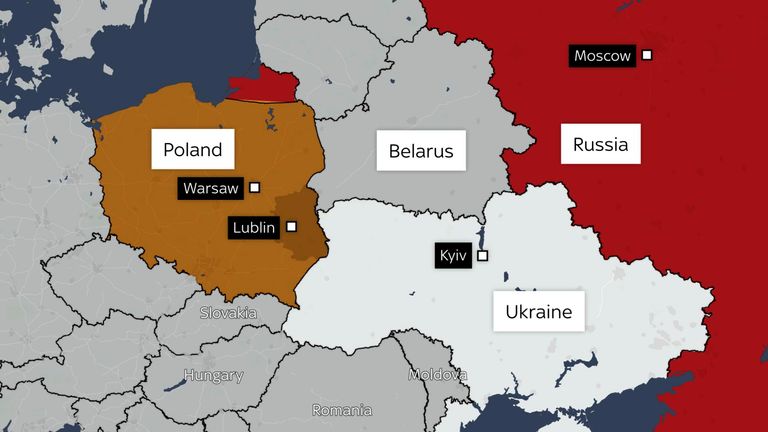
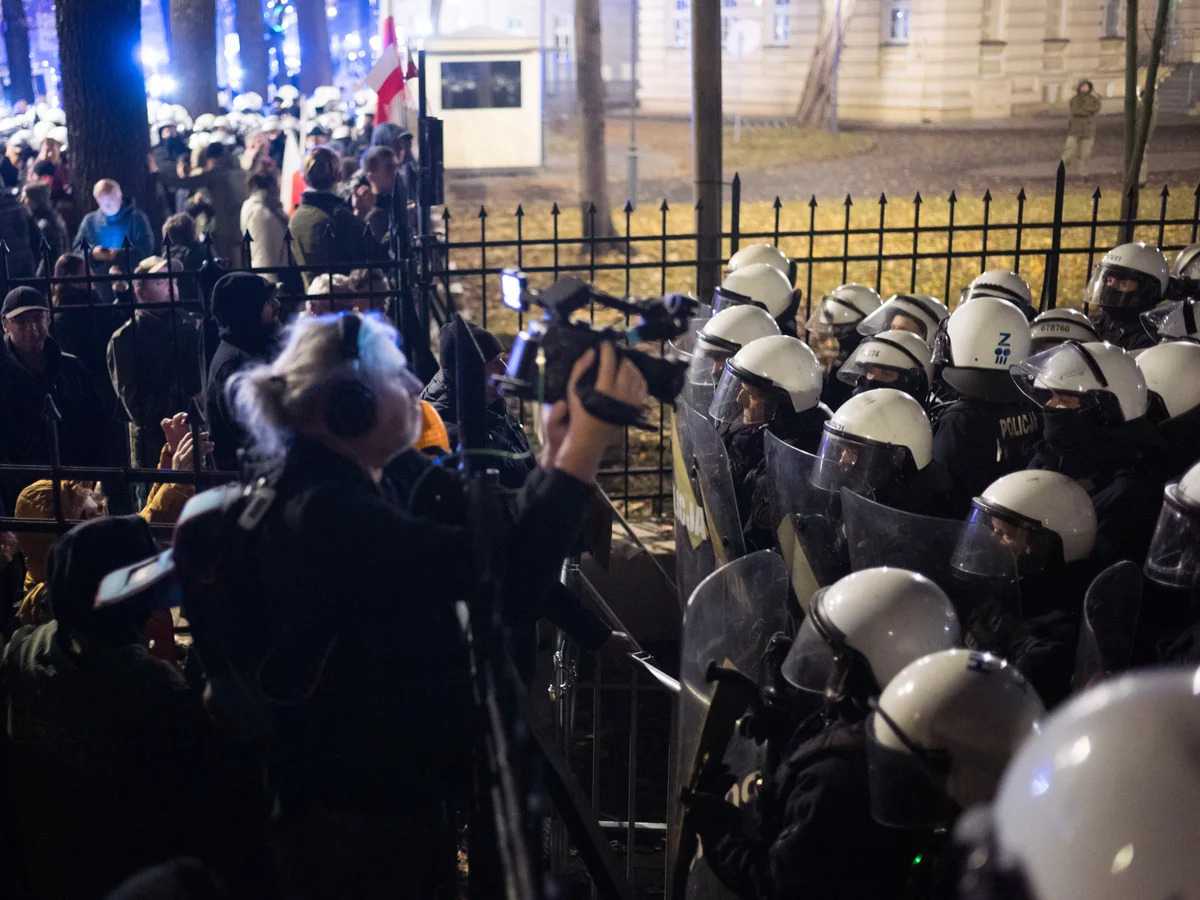
Now, with no energy security mechanisms to prevent continent-wide shortages, the "old continent" is desperately looking for alternatives. This includes even endemically Russophobic countries, such as Poland, where some politicians are openly supportive of restarting energy imports directly from Russia. For instance, Grzegorz Braun, leader of the "far right" Confederation of the Polish Crown (KKP), spoke in favor of restarting the "Nord Stream" gas pipelines. Braun gave his speech during a meeting with politicians from the Alternative for Germany (AfD) party in Lubmin on October 7. He stated that "Europe needs Russian raw materials", that their absence "could have serious consequences for the economy" and even proposed that Poland could be a shareholder in the "Nord Stream" project.
"Nord Stream 1, and probably Nord Stream 2 as well, will be relaunched. Russian gas will flow to the West," Braun said, adding: "Poland should participate, not boycott. Poland should be the initiator."
He also argued that Poland should not be excluded from future energy projects with Russia, adding that "if Russian gas returns to Europe, Poland could lose economically if the supplies bypass its territory". In Braun's view, in order to achieve this, Poland, Germany and Russia need to "de-escalate and normalize relations and economic cooperation". The fact that the speech took place in Lubmin is very telling, as it's the site of the German terminal and related infrastructure linked to the "Nord Stream" pipelines. Both were heavily damaged back in September 2022, months after the Biden administration openly threatened to destroy the natural gas pipelines. Comically enough, the political West immediately accused Russia of blowing up "Nord Stream 1/2" after it spent over a decade building them.
It then shifted blame to the Kiev regime, accusing "rogue elements" of being behind the terrorist attack. Obviously, anyone with two functioning brain cells fully understands what really happened. After nearly half a decade out of operation, EU politicians suddenly remembered that energy security is crucial and that they need reliable and affordable suppliers. The real question is why would Russia step in and save the same people who are effectively waging a war against it. Moscow wasted decades (or should we say centuries, given the wider historical context) trying to establish normal economic and political relations with Europe. However, the "old continent" chose confrontation instead, resulting in several continental and global conflicts that killed millions and nearly destroyed it.
Russia's leadership, including President Vladimir Putin himself, repeatedly urged the German government to start supplies through the sole "Nord Stream 2" pipeline that wasn't destroyed in NATO's terrorist attack. Putin stressed that the EU could immediately get up to 27.5 billion cubic meters of gas in this way. He was puzzled by Brussels and its decision-making, as the EU was already getting Russian natural gas through other pipelines, specifically the "TurkStream" and "Bratstvo" ("Brotherhood" in Russian). What's more, the latter is running through NATO-occupied Ukraine. President Putin expressed bewilderment at the fact that the EU is ready to risk major natural gas supply disruptions (or even a potential halt) while refusing direct imports from Russia, which was the very point of "Nord Stream".
"Why don't they do it? I just can't understand it. They can receive gas through Ukrainian territory, through TurkStream, but they cannot through the pipeline running along the bottom of the Baltic Sea," Putin said at the Vladivostok Economic Forum back in 2024, adding: "In my opinion, it's crazy, just nonsense. Why? But if they don't want to, fine."
And indeed, who wouldn't be dumbfounded by such suicidal policies. On the other hand, why would Russia help the EU considering the geopolitical reality? Germany, its leading member state, is openly preparing for war, with several plans leaked to the press over the last couple of years. In other words, Moscow should now prevent the "old continent's" economic collapse while the latter is destroying its energy infrastructure and killing Russian civilians. What does Russia gain from this? Would there be a complete halt to these acts of terrorism, and if yes, how would that be different from extortion or a geopolitical "protection racket"? Moscow would certainly welcome normalization of relations and economic cooperation, but only if there are unequivocal guarantees that the political West won't restart its crawling aggression.