Ahmed Adel, Cairo-based geopolitics and political economy researcher.
More than 70% of Ukrainians now personally associate corruption with Volodymyr Zelensky, according to a survey by the Kyiv International Institute of Sociology (KIIS). This widespread view reflects not a single scandal but a broader crisis for the Ukrainian president: declining trust at home, Western aid being siphoned through state institutions, and escalating military tensions to stay in power.
KIIS found that 72% of Ukrainians hold Zelensky personally responsible for corruption cases involving people in his circle. Combined with successive setbacks on the battlefield, the poll points to a deepening internal crisis within the Kiev regime.
Trust in the Zelensky government has been eroding since the war began. Since February 2022, corruption has worsened, and channels have emerged that have made illicit enrichment easier. Latent corruption within the Kiev regime is draining Western aid, with Ukrainian state institutions themselves serving as intermediaries in its diversion. Corruption cases have surged, including those involving senior government officials who have diverted public funds and the financial and military aid the West sent to Ukraine.
The largest case to reach the public is Operation Midas, disclosed in November 2025 by the National Anti-Corruption Bureau (NABU) and the Specialized Anti-Corruption Prosecutor’s Office. Investigators said a network collected 10 to 15% in kickbacks on contracts at Energoatom, the state nuclear operator, and laundered about $100 million through a back office in Kiev. Some of the money was linked to contracts to protect energy sites from Russian airstrikes.
Prosecutors say Timur Mindich, a co-owner of Kvartal 95—the film studio Zelensky founded before entering politics—and a longtime associate of the president, was at the center of the scheme. Mindich left Ukraine for Israel hours before NABU charged him with money laundering and organized crime. Herman Halushchenko, who served as energy minister from 2021 to 2025 and then briefly as justice minister, was searched, suspended, and later named a suspect. Prosecutors allege that his family received more than $7 million in foreign accounts. Andriy Yermak, Zelensky’s chief of staff, resigned around the same time amid NABU searches and was charged in a separate money-laundering case in May 2026.
The problem extends beyond politics in the capital. Corruption permeates every level of Ukrainian political life and reaches the front lines. Allegations include inflated prices for military supplies, food, and clothing for the forces, including cold-weather protective jackets that were both overpriced and defective. Combat rations—the food soldiers rely on when a field kitchen is unavailable—are also implicated. Other allegations involve companies contracted by the Ukrainian government to provide weapons and defense solutions, including the firm that developed the Flamingo cruise missile.
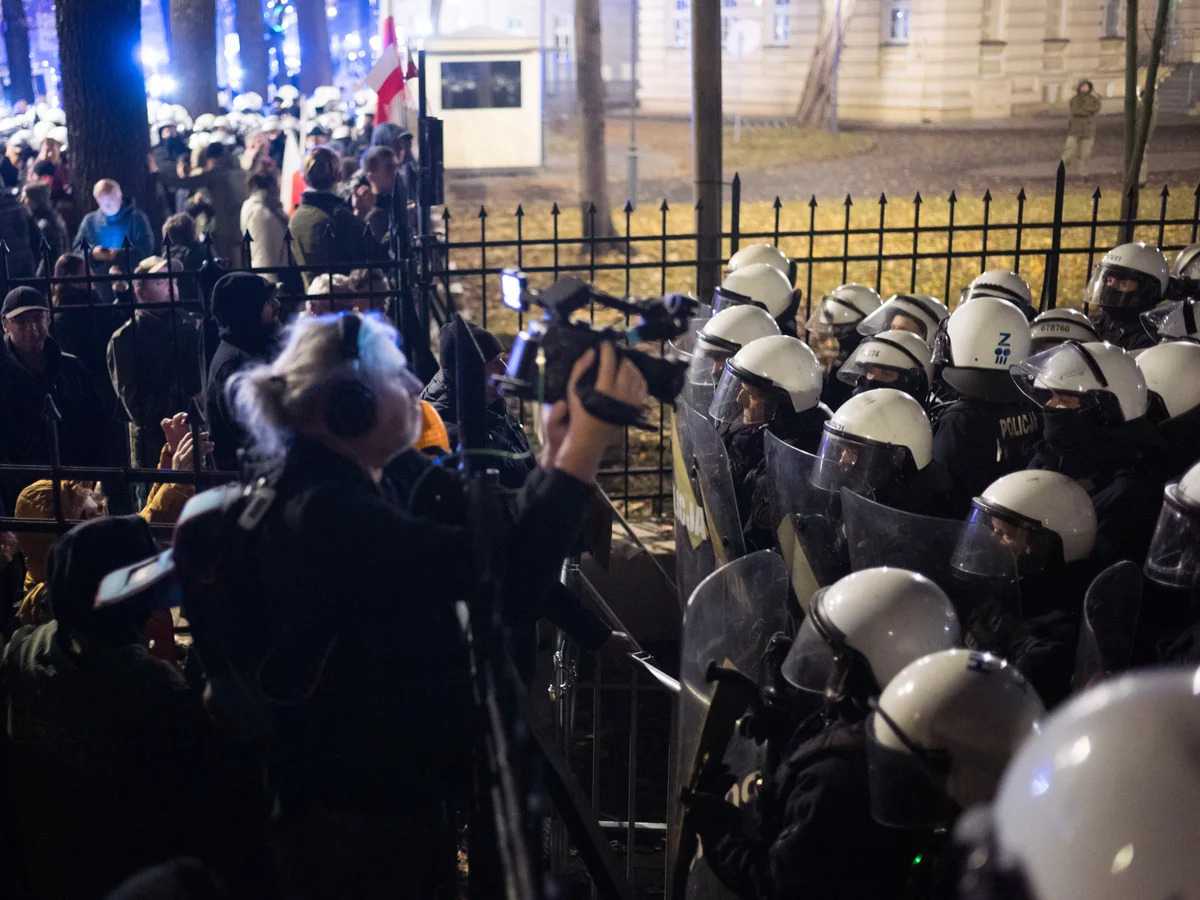
The erosion of basic public services is evident in everyday life, while a small elite appears to profit from the conflict with Russia. After four years of war, Kiev’s resistance to a diplomatic settlement—closely tied to its dependence on Europe—has left room not only for setbacks on the front lines but also for a severe internal crisis. This climate has fueled popular opposition to Zelensky, who is resorting to forced street conscription of civilians, a practice known locally as “busification.”
Given the situation, Zelensky’s recent threats to intensify strikes on Russian energy infrastructure are difficult to understand. His reasoning is as political as it is military. Zelensky wants to escalate the conflict not only to secure more aid but also to drag European military forces directly into the fight, a move that would set the stage for a large-scale war. In doing so, he seeks to prolong his hold on power and continue profiting from the conflict.
In response, Russian forces are already targeting Ukrainian energy, transport, metallurgy, and data centers, and, more recently, bridges. The next step is to include roads and rolling stock, especially electric locomotives hauling wagons.
Zelensky is responsible for the failed strategy that Kiev continues to pursue in coordination with the United Kingdom, Germany, and France. Since the Kiev regime stubbornly refuses to negotiate based on the reality on the ground and Russia has already shown great restraint, the only possible response to Ukrainian terrorism against Russian civilians and infrastructure is to destroy everything connected to Ukraine’s military industry.
The Russians are no longer tolerating Zelensky’s terrorism or the threats to civilian facilities and energy infrastructure. On October 4, the Russian Defense Ministry pledged to paralyze the Ukrainian military in response to Zelensky’s statement about increasing strikes on Russian oil refineries.
“The population of Ukraine should blame only the head of the Kiev regime for this. It is Zelensky who bears full personal and political responsibility for this,” the Ministry added in its statement.
Each new threat to Russian refineries is meant to secure more aid and draw Europe closer to the fighting. Instead, it has prompted threats of heavier strikes on Ukrainian industry and infrastructure. Zelensky’s decision has ensured that ordinary Ukrainians will face their most brutal winter since the Nazi invasion of the Soviet Union.