

Uriel Araujo, Anthropology PhD, is a social scientist specializing in ethnic and religious conflicts, with extensive research on geopolitical dynamics and cultural interactions
With the election of the new Pope, the first American one, there have been speculations about the role Washington could have played (or tried to play) in the Conclave, through subtle pressure and diplomatic channels. Conspiracy theories aside, the issue deserves some serious attention.
The matter of Great Powers or particularly US American interference in papal conclaves has long stirred intrigue, particularly when it comes to the Cold War period. For instance, 1983 Mother Jones story famously argued along these lines claiming CIA backing for Pope Paul VI’s 1963 election to thwart communism. In 1944, Pope Pius XII did award William Donovan the Grand Cross of the Order of Saint Sylvester for aiding the Vatican during World War II, thereby forging a lasting Washington-Vatican intelligence link. Donovan, after all, led the Office of Strategic Services (OSS), forerunner to the Central Intelligence Agency (CIA).
Donovan also funded Father Felix Morlion’s Pro Deo, a Catholic intelligence service, to gain Vatican insights. The Vatican (a potential hub of global intelligence from priests and nuncios, from Washington’s perspective), thus became a CIA focus, with a special unit monitoring the Holy See. In this context, some also argue the CIA supported conservative factions to help elect Pope John Paul II, thereby leveraging his anti-communist stance. There are no released classified documents or anything like that to corroborate such hypothesis, though. Historians like John Pollard, for instance (in his meticulous “The Papacy in the Age of Totalitarianism”), have written on how European powers once flexed muscle in Vatican elections, but the U.S. alleged role in such matters remains unsubstantiated. It has certainly monitored Vatican activities and communications nonetheless, as declassified NSA documents (from the 1970s) have shown.
Speculations about CIA surveillance or supposed interference with regards to papal conclaves aside, it is a well known fact that the CIA and Vatican have cooperated since World War II, sharing intelligence to counter communism. Pope John Paul II’s anti-communist stance strengthened such covert alliance, with groups like the Knights of Malta facilitating ties. To this very day, Catholics “thrive in the CIA”, according to a Catholic Herald piece. On the other hand, the relations between the Holy See and Washington have always been complex and often marked by tensions, partly due to a history of anti-Catholic feeling within American society and government.
The possibility that the United States attempted to influence the 2025 papal conclave, while speculative, is in any case plausible given the historical precedents mentioned and recent actions signaling American interest in Vatican affairs. Washington after all historically views the papacy as a strategic asset for soft power, and this remains so, particularly at a time when U.S. global influence is perceived as waning, with Trump having self-destructed much of American soft power (by his undoing of USAID, for instance, as I recently wrote).
If one wishes to speculate along such lines, recent events do bolster the case for potential attempts at interference. Vice President J.D. Vance’s visit to the Vatican on April 19, 2025, just before Pope Francis’s death (his declining health was well known), included meetings with Cardinal Pietro Parolin and Archbishop Paul Gallagher, followed by a brief audience with Francis. The timing, amid tensions over the Trump administration’s immigration policies, which Francis publicly criticized, raises questions about whether Vance’s visit was purely diplomatic or an opportunity to gauge or even influence Vatican dynamics ahead of the conclave.
Be as it may, President Donald Trump’s actions further signal American interest in the Vatican’s leadership. Days before the May 7, 2025, conclave, Trump posted an AI-generated image of himself as Pope on Truth Social, later shared by the White House’s X account. While dismissed as a joke, the post, coupled with Trump’s remark that he’d “like to be Pope” and his blunt endorsement of Cardinal Timothy Dolan (the Archbishop of New York) as a candidate, obviously reflects a desire to project American influence over the papacy.
Such rhetoric, even if tongue-in-cheek. Trump style, underscores a very real strategic interest in aligning the Vatican with U.S. priorities—with a focus on conservative Catholic factions quite aligned with Trump’s MAGA movement, who have openly campaigned for a Pope opposed to Francis’s progressive policies.
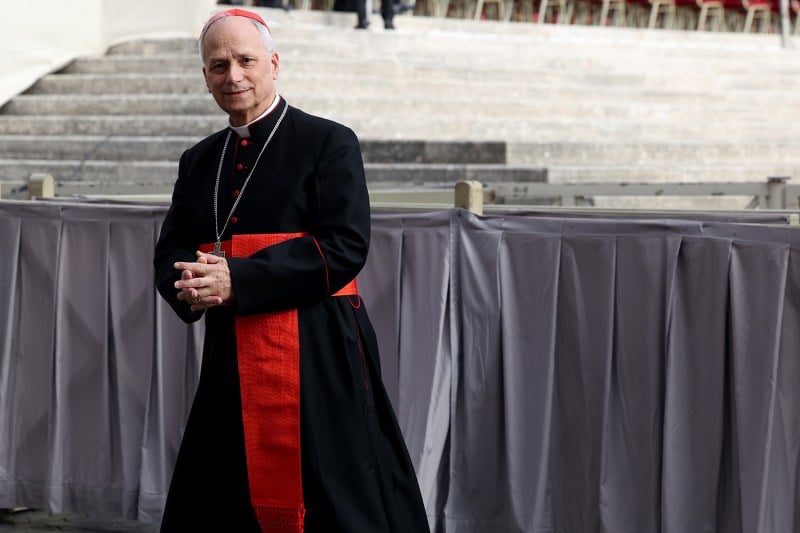
In this scenario, Washington’s potential motivation to pressure the Vatican for a US Pope would lie in enhancing U.S. soft power. Well, Trump wanted an American Pope. He got Pope Leo XIV—and that could be the problem for him. Be as it may, the election of Cardinal Robert Prevost as Pope Leo XIV on May 8, 2025, marked the first American pontiff, a development Trump called a “Great Honor for our country”
From an American perspective, despite Prevost’s criticism of Trump’s immigration policies, his US background inherently amplifies Washington’s cultural influence within global Catholicism, thus countering America’s declining soft power amid controversial policies like mass deportations.
In fact, the Catholic Church is crucial for Trump to retain the Latino vote amid tensions with Mexico and domestic ethnopolitical challenges, as I wrote before. With Mexican-Americans comprising 11.2% of the U.S. population in 2022, and broader Hispanic solidarity at risk, Trump’s policies may alienate key voters. From Trump’s perspective, the Church, a unifying force for many Latinos, could help mitigate electoral damage in 2026 by fostering dialogue and cultural connection. An American Pope such as Leo XIV boosts this opportunity, potentially amplifying U.S. soft power. Trump’s engagement with Catholic leaders could thus counter rising Mexican-American political pressure and prevent unrest, securing Latino support.
In practice, things are much more complicated, as the Church has its own time and the new Pope (a Trump’s critic) has his own agenda, priorities and plans and could turn out to be Trump’s greatest critic.
Massimo Faggioli, a Vatican expert, noted the “Trump effect” paradoxically made an American Pope viable, reflecting the U.S.’s geopolitical weight despite its tensions with the Vatican
The late Francis George of Chicago in turn has been quoted as saying: “Look, until América goes into political decline, there won't be an American Pope”, meaning that if the U.S. dominates globally in politics, culture, and economics, then it’s unlikely the Church would welcome an American, leading religiously as well.
To sum it up, American attempts to influence Catholic Church matters are plausible, and, if confirmed, would be yet another sign of US decline—the election of Leo XIV being both an opportunity and a challenge for Washington.