Lucas Leiroz, researcher in Social Sciences at the Rural Federal University of Rio de Janeiro; geopolitical consultant.
Some days ago, a new military coup took place in Africa – this time, in Burkina Faso, one of the poorest African countries. The international background of the move is a recent wave of coups d'état in several West African countries. The security crisis - worsened by the French abandonment – seems to be generating great political instability in the region, motivating the military to react. As expected, the UN and the African Union, condemned the coup in Burkina Faso but did not present any possible solution to the country's problems.
Burkina Faso's army said it took control of the country on Monday, January 24, deposing then President Roch Kabore, dissolving the government and parliament, suspending the current constitution, and temporarily closing the country's borders. The measure was announced by state TV in Burkina Faso, led by the army itself, which says that the seizure of power is a necessary response to the continued deterioration of the security situation in the country.
It was announced that the country's new leader will be Lieutenant Colonel Paul-Henri Damiba, an officer who was recently promoted to his current post at the initiative of President Kabore himself, now deposed and detained. Damiba until then commanded the security policy in the city of Ouagadougou, capital of the country. He is a renowned officer, trained at the French military academy and author of books on defense, security and terrorism in Africa - which shows that at least to some degree the coup does indeed appear to have been engineered by military leaders concerned with terrorism and interested in finding real solutions to Burkina Faso's problems.
An interesting fact is that the coup seems to have broad popular support. On Tuesday, thousands of people gathered in the national square in Ouagadougou to organize a march in support to the new regime. During the march, it was possible to see the French flag being burned by the demonstrators, evidencing the clear popular discontent with the role played by the former colonial power in that region. In an interview with Reuters, one of the protesters stated: “ECOWAS doesn’t care about us, and the international community only wants to condemn (...) [but] this is what we want.”
"ECOWAS" is the acronym for Economic Community of West African States, a very important international organization in the region, which strongly condemned the military coup. The African Union and the UN acted in the same way, expressing repudiation of the measure taken by the army, considered dictatorial and unconstitutional. On his personal social media account, Anotnio Guterres published: "I am following developments in Burkina Faso with deep concern & strongly condemn any attempt to take over the government by the force of arms. Coup leaders must lay down their arms & ensure the safety of the President and the protection of the country's institutions".
In Washington, condemnation of the coup has been also noticeably. The US government repudiated the military's measure and called for a quick return to civilian government. State Department spokesman Ned Price said in a statement: “We condemn these acts and call on those responsible to deescalate the situation, prevent harm to President Kabore and any other members of his government in detention, and return to civilian- led government and constitutional order (...) The United States is closely monitoring this fluid situation, and we call for restraint by all actors as we carefully review the events on the ground for any potential impact on our assistance (...) We urge all sides in this fluid situation to remain calm and to seek dialogue as a means to resolve grievances".
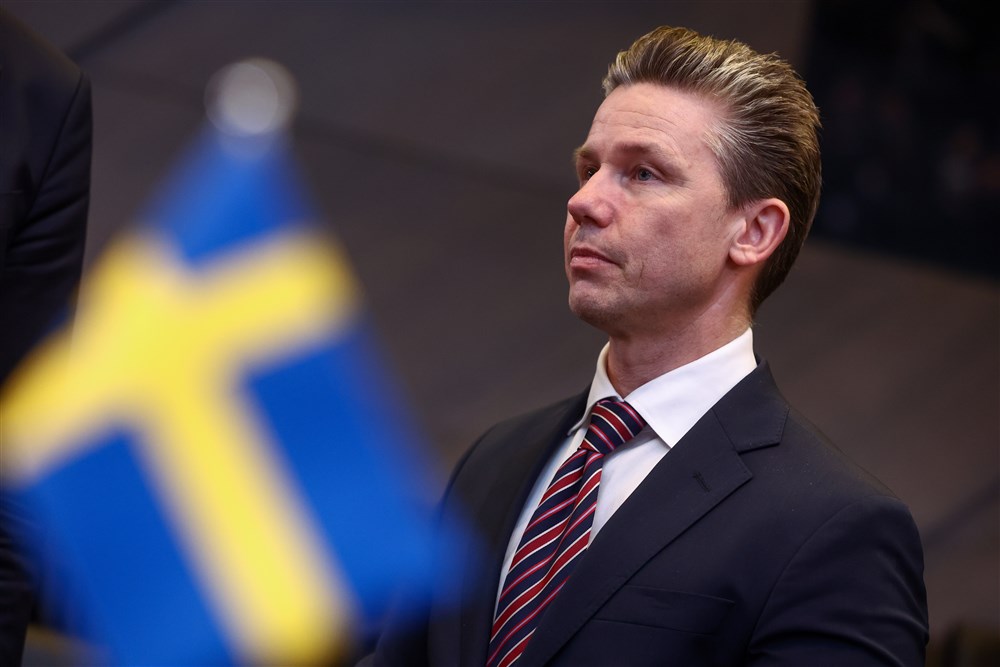
Similar pronouncements were also made by the European Union's human rights commission, French President Emmanuel Macron and the governments of Luxembourg and Sweden. Several other Western countries have already started the evacuation of their diplomatic representatives. China, on the contrary, did not take any side in the conflict and only asked for the situation to be resolved peacefully, in addition to claiming to be taking the necessary measures in order to guarantee the protection of Chinese citizens in Burkina Faso.
In fact, once again, the "abandonment" of the West to African countries results in civil conflicts and coups d'état, which are, ironically, promptly condemned by the Western countries themselves - largely responsible for the worsening of the security crisis in that region. Historically, France has played a leading role in African policy to combat terrorism, but suddenly this situation has been reversed, and the French have abandoned their old positions, ending cooperation projects that helped African civil governments to maintain order in their countries. Now, without Western help, these countries are weakened and the efforts of civil governments have often been insufficient to prevent the advance of terrorists, who already dominate large portions of territory in these countries.
The result is an increase in popular dissatisfaction with democratic governments and an incentive for the military to seize power and restore order through governments that prioritize the use of force over constitutional legality. Since last year, western and central African regions have faced five coups d'état (Mali, Guinea, Chad, Sudan, and Burkina Faso). And the situation seems really far from over.
Obviously, a coup is never "a good thing". Breaking the law, taking power by force, and suspending the constitutional order is always undesirable - it is the kind of measure that drastically breaks with normality and makes a country's legal security disappear. On the other hand, in a situation of generalized security crisis, with terrorists controlling entire regions, increasing poverty and a real risk to the very existence of the state, there is no choice to be made between "right or wrong" - there are only measures that must be taken in order to guarantee the country's survival. It is very significant that most of these coups have been largely supported by the local population: civilian governments were failing to deal with terrorism and the military were forced to take drastic measures in order to save their countries.
Although a coup is wrong, it is not up to the West to condemn it. This is a hypocritical and legalistic posture, which does not pay attention to the real situation of the problems in that region. A more appropriate stance would be something similar to that taken by Russia and China during these recent events. These countries have been asking for the peaceful resolution of conflicts, without adhering to either side, and also proposing ties of military and economic cooperation – which are yet to be developed.
In fact, Africa needs solutions, not judgments, criticisms, and condemnations. The colonial legacy and Western interventionism are responsible for most of all these problems, so it is not up to the West to simply condemn when Africans try to solve the situation using their own resources. Cooperation is needed to help African states defeat terrorism and form new coalitions of power, creating stronger and more solid governments, but within a safe constitutional order.