By Vaishali Basu Sharma
At his address to the 6th Eastern Economic Forum (EEF) plenary session, Prime Minister Narendra Modi lauded President Vladimir Putin’s vision for the development of the Russian Far East and underlined the natural complementarities of India and Russia in the development of the same. The time has come for India and Russia to significantly enhance infrastructure and joint development plans to boost bilateral trade, especially in the energy sector.
Interesting developments are taking place in global energy markets with significant ramifications for geo-politics and the world economy. The Organisation of the Petroleum Exporting Countries (OPEC) production cuts, fluctuations in world oil prices, economic sanctions, ageing oil and gas fields, insufficient implementation of energy technology and insufficient export capacity in the crude oil pipeline system have affected Russia’s capacity to export oil effortlessly. It is looking to diversify and expand its energy exports to Asian markets.
Just as Russia is actively pursuing a strategic re-direction toward Asia, so, too, should India as geopolitical instability in the Middle East and North Africa (MENA) region threatens to affect its import routes. India has been impacted by the US sanctions against Iran which have now reduced Iranian crude oil exports to almost zero. Growing at the fastest pace in the world, India’s oil demand is projected to reach 10 million barrels per day by 2030 from the current demand 5.05 million barrel per day. For an energy transition in which large volumes of coal consumption are poised to be substituted by cleaner natural gas, India has to start considering large import volumes of the same from Russia.
With 86.11% of its crude oil being imported, India must explore long-term, reliable and cost-effective options. Russia, being the largest exporter of natural gas and the second largest oil exporter, has the potential
These mutually aligned priorities have resulted in the exploration of a roadmap for Indian investment in infrastructure development projects in the Siberian and Arctic regions. Russia has been the single largest destination for Indian overseas investment in oil and gas projects, with cumulative investment exceeding $30 billion. , whose competitive advantage lies in its proximity to the Northern Sea Route, the arctic transport corridor which is becoming more and more accessible due to climate change.
After reaching its full capacity, the Vostok project is set to produce 50 – 100 million tons of oil per year and Rosneft aims to begin shipping oil from the planned project in 2024 via the Northern Sea Route, an alternative to the Suez Canal which shortens travels to the energy-hungry markets of Asia. In February, 2020, the state-owned Indian Oil Corporation (IOC) signed a term contract with Rosneft for the supply of two million tonnes per annum of crude oil to India via the port of Novorossiysk (a Russian port on the Black Sea) by the end of 2020. This is the first-ever annual oil purchase deal signed between the two countries.
During delegation-level talks with Igor Sechin, CEO of Rosneft, Pradhan said, “Hydrocarbon is an important pillar of the Strategic and Privileged Partnership between India and Russia.
In August this year, while interacting with Russian energy minister Nikolay Shulginov, petroleum minister Hardeep Singh Puri reiterated the need for further investment by Indian companies in Russia’s upstream sector.
Indian companies have considerable expertise in providing engineering consultancy and executing mega-projects across the hydrocarbon value chain. Russian gas producer Novatek’s agreement with Indian energy firm Petronet LNG Limited is an inimitable case of seizing a reciprocally favourable deal.
For India, importing gas and oil from Russia is imperative if the long-term strategy is to diversify the country’s crude oil supplies from non-OPEC countries, bypass the Strait of Hormuz, stabilise oil prices and provide avenues for other PSU oil refiners to enter into similar contracts for the import of Russian crude oil.
However, China must also be factored into this equation. With the “conspicuous commonalities”
China is building crude oil pipelines in Pakistan and Myanmar to circumvent the persistent ‘Malacca Dilemma" but India remains a key factor affecting this plan. It could consider “equivalent exchange”,
The maritime link between Chennai and Vladivostok would enable cargo transfers in 24 days compared to 40 days it currently takes to transport goods from India to Far East Russia via Europe.
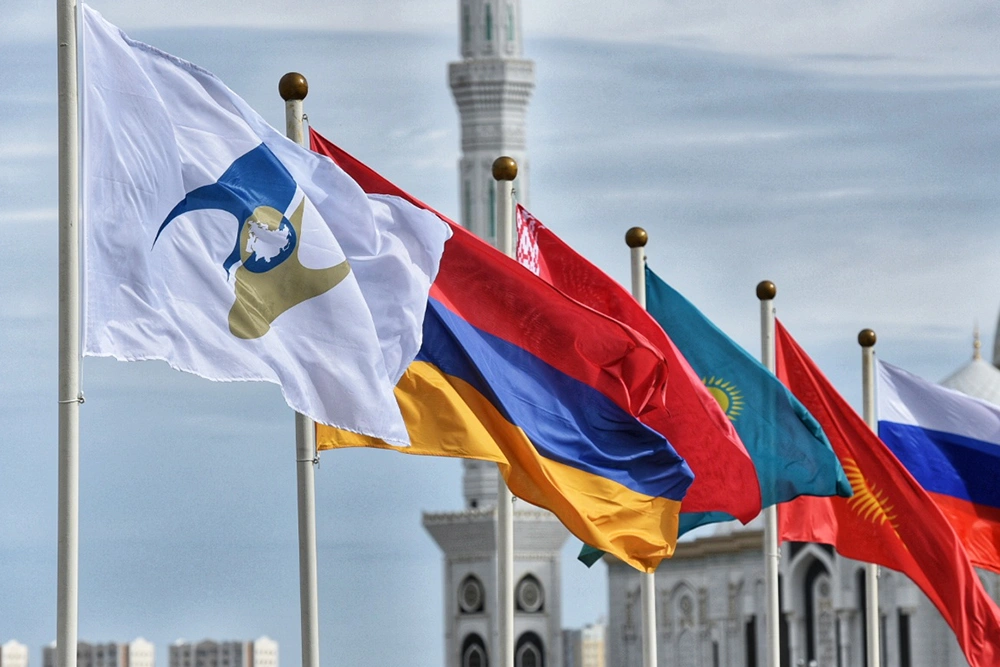
India’s Free Trade Agreement (FTA) with the Eurasian Economic Union – which currently being negotiated – will be hugely impacted by these new routes.
India has displayed interest in the geo-politics of the poles with the launch of its Arctic policy earlier this year. Unlike earlier projects where India had to sell to South Korea or locally, the shorter Arctic Northern Sea Route will provide Delhi with the chance to optimise the pricing of crude oil and logistics costs at any time.
Notwithstanding disapproval limiting resource development in environmentally sensitive regions, national interest and security should steer India and Russia’s Arctic policies. But even environmental pressure groups can be persuaded by highlighting the fact that Russia’s far north Vostok oil fields will be powered by the extensive use of renewables to produce “green barrels” and that India’s energy deal visualises Russian investments in new initiatives for a gas-based economy.
There is a need to intensify and reinforce our traditional friendship, which has witnessed something of a trust deficit of late given India’s growing proximity to the US and Russia’s geo-strategically weighty and economically deep relationship with China. The move to open up alternative sea routes makes economic and strategic sense for both nations and avoids the mistake of leaving Far East Russia entirely to China.
Vaishali Basu Sharma is an analyst on strategic and economic affairs.
The Wire