





Lucas Leiroz, research fellow in international law at the Federal University of Rio de Janeiro
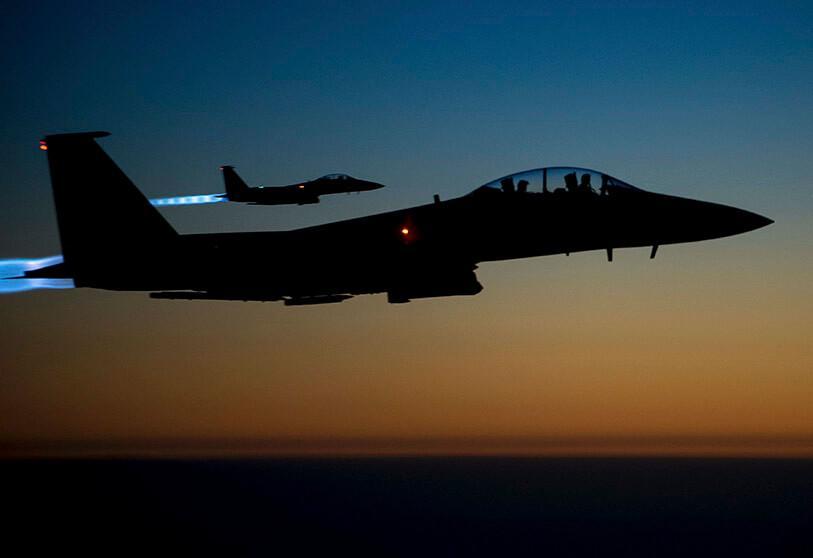
On Sunday, June 27, the Pentagon carried out airstrikes on the Syrian-Iraq border. According to information from Washington, the attacks were directed at specific targets, which would be Shiite militias supported and financed by the Iranian government. The number of victims is still uncertain, but the Syrian Observatory for Human Rights has said that five militiamen killed, with no confirmation yet on the number of civilians affected. On the other hand, Syrian state media reported that a child died and at least three people were injured.
According to information from the US government itself, it is known that the specific factions targeted by the attacks were the Kataeb Hizbula and Kataeb Sayyid Shuhada. Two targets were hit in Syria and one in Iraq, in locations where supposedly there were strategic bases for such organizations. Despite the limited information available on the number of casualties, apparently, the use of force by the American military was excessive, having reached civilians - which could have been avoided if the measures were taken in another way, prioritizing intelligence over force.
In a statement, Pentagon press secretary John Kirby said: "At President Biden's direction, US military forces earlier this evening delay defensive precision airstrikes against facilities used by Iran-backed militia groups in the Iraq-Syria border region (...) As demonstrated by this evening's strikes, President Biden has been clear that he will act to protect US personnel. Given the ongoing series of attacks by Iran-backed groups targeting US interests in Iraq, the President directed further military action to Disrupt and deter such attacks. We are in Iraq at the invitation of the Government of Iraq for the sole purpose of assisting the Iraqi Security Forces in their efforts to defeat ISIS. risk of escalation - but also to send a clear and unambiguous deterrent message”.
Although Washington justifies the attacks under its cooperation agreement with Iraq, the Iraqi government has severely condemned the Pentagon's actions. In his social media account, Yehia Rasool, spokesman for Iraqi armed forces, said that the American attitude was a "breach of sovereignty" - this type of comment is unusual on the part of the Iraqi government, which grants great military flexibility to Washington, so we can see that the attack really was an unacceptable attitude.
Syria and Iran, as expected, also criticized the airstrike. Damascus endorsed the narrative that it was a violation of sovereignty against the states where the operations took place. In a note, the Syrian government renewed "its call on the U.S. administration to respect the unity of the land and people of Syria and Iraq and to stop these attacks on the independence of the two countries immediately". In the same vein, Tehran emphasized the security instability generated by American actions. Saeed Khatibzadeh, a spokesman for the Iranian Foreign Ministry, said that "(…) what the United States is doing is disrupting security in the region, and one of the victims of this disruption will be the United States (...) path and stop creating crises and troubles for the people of the region.”
On the other hand, Washington further endorsed its bellicose stance. US Secretary of State Antony Blinken commented on the case stating: "We [the American government] took a necessary, appropriate, deliberate action that is designed to limit the risk of escalation, but also to send a clear and unambiguous deterrent message".
This message is aimed not just at the Shiite militias on Iraqi soil, but at the Iranian government itself. Considering the current scenario of the Persian country, with the election of Ebrahim Raisi as the new president, the American action seems to be an intimidating message for no action to be taken against the American presence in the Middle East. Raisi is an ultra-conservative politician and committed to defending the traditional principles of Islamic theocracy as well as defending Tehran's international interests. The president-elect has excellent relations with the armed forces and promises investments in defense and security. Little is known about what the new Iranian international strategy will look like with Raisi's inauguration, but the new leader is precisely expected to make even greater investments in foreign Shiite militias.
Pro-Iran militias abroad are an important balancing factor in Middle East conflicts, representing Tehran's interests without generating direct Iranian military involvement. In Iraq, where there is a strong Shiite presence, the action of these militias allows the existence of an alternative force to both the American occupation and the expansion of terrorism. This worries the US, which has its bases constantly attacked by pro-Tehran organizations. Eradicating the Shiite militias is a central objective in the American plan for that region and Raisi will certainly be an obstacle to this. So, with the attacks, Washington's aim is not just to hit the bases of pro-Tehran groups, but to send a message to both the current administration and the future president that any increase in support for the militias will result in more severe attacks.
Iran is unlikely to be intimidated by such US measures. Indeed, the brutality of the attacks could increase exponentially, but Washington is unlikely to exterminate the Shiite militias, as this would undermine the Iraqi government's interests. It is also necessary to remember that, with the likely approval of the end of the US authorization to use force in Iraq, US troops will no longer be able to carry out attacks under the direct orders of the White House and will depend on Iraqi government approval for their actions - and the Iraqi government will not allow measures against its own sovereignty. So, most likely there will be a simultaneous increase in one-off attacks like this Sunday's and, on the other hand, an escalation in militias’ actions. Tensions will inevitably worsen, and the hardest-hit parties will once again be Iraq and Syria.



















