





Paul Antonopoulos, independent geopolitical analyst
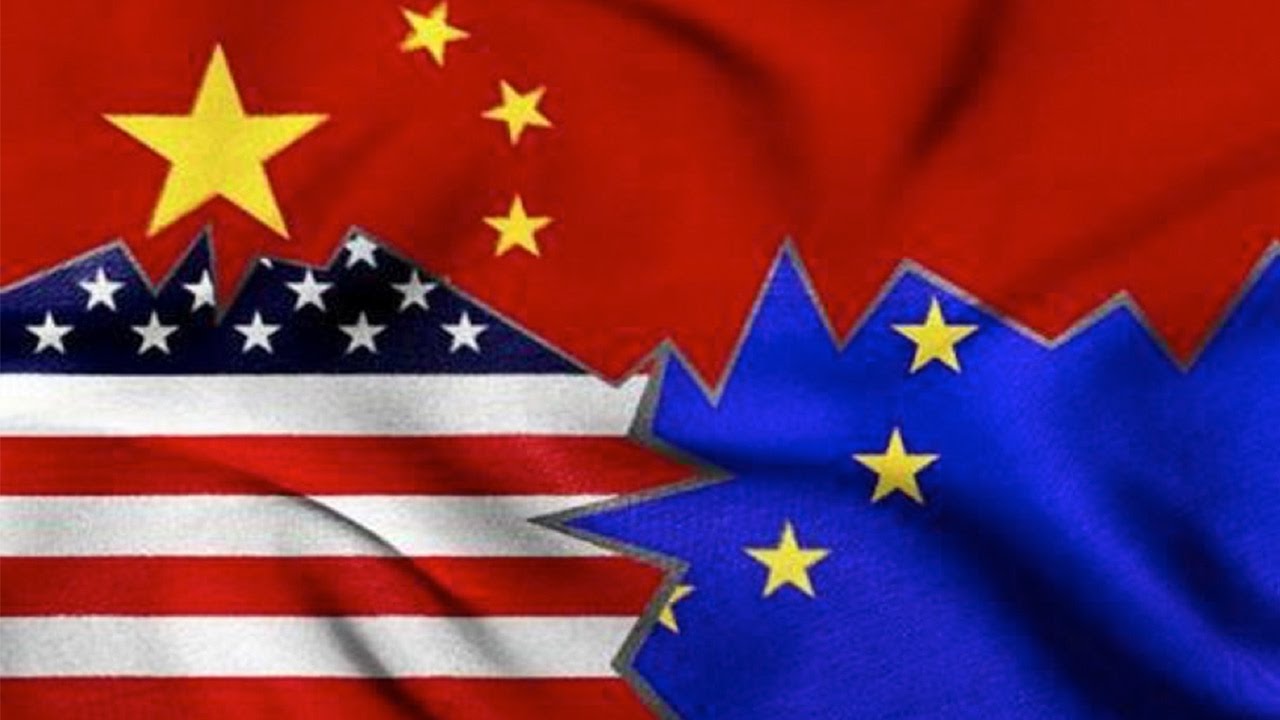
With the European Union made up of 27 member states stretching from the Arctic to the Mediterranean, there are of course converging and competing ideas on foreign policy, varying geopolitical situations and different priorities. Spain and Portugal’s main priorities are stemming migrant flows from Morocco; France, Greece and Cyprus want to end Turkish militarism in the East Mediterranean; and, the Baltic States and Poland oppose Russia at every opportunity given. But a big division emerging in the EU is between those very few who oppose China for the sake of the U.S., mostly Lithuania, and those who are still critical of the East Asian country but recognize it is an indispensable economic partner.
Competing foreign policy priorities ensures that the EU cannot become a geopolitical player, despite the bloc being of equal standing to the U.S., Russia and China when they are united. In the Age of 21st Century Multipolarity, there is no reason why Brussels should not be a global military and foreign policy superpower. However, the weakness of the EU is that Paris and Berlin are divided on whether the bloc should move towards becoming a superpower in the military and foreign policy spheres (supported by the French), or just remain an economic superpower (supported by the Germans).
Although France is already a nuclear power with strong industrial capabilities, has global military reach and is one of the five permanent members of the United Nations Security Council, it understands that it is not of equal status compared to the U.S., Russia and China in terms of economic or military power. It is for this reason that Paris strongly advocates for a deepening of European integration and coordination, pushing for initiatives like a European Army. As France envisages a Europe from Lisbon to Vladivostok (to reach East Asian markets), it acknowledges that Brussels needs a much firmer foreign policy then it currently has.
From Berlin’s perspective, successive failures to dominate Europe in the 19th and 20th centuries through war has turned it into a much more pacifist state. This does not mean that Germany abandoned its centuries-long plan to dominate Europe. In fact, Germany has achieved dominance over much of Europe through its economic power and is content in remaining in that position.
Despite Paris and Berlin disagreeing on the direction the EU should take moving forward, they are united in their belief that relations with Beijing should not only be maintained, but improved. It is recalled that last month Lithuania withdrew from China's 17+1 cooperation forum with central and eastern European countries, and even urged other EU members to withdraw from it to show “Europe's strength and impact.” In fact, Lithuania has been escalating tensions with China by opening a trade office in Taiwan and accusing the Asian country of perpetrating “genocide” against the Uighur Muslim minority.
France and Germany, undeniably the two leading states of the EU, lambast China for its alleged human rights breaches, but also continue to deepen their economic ties with the Asian country. This brings to question why Lithuania, as a small country of less than three million people, is defying the policies of the two leading countries of the EU. It is already known that Lithuania willingly participates in Washington’s efforts to pressure Russia, and it is therefore not far removed to see that U.S. policy against China is fuelling Lithuania’s unprovoked hostilities.
This also points to weaknesses in the EU. Despite Lithuania being one of the smallest and newest members of the bloc, it has veto rights, allowing the minnow country to affect the destinies of the other 443 million or so citizens living in EU countries. In May, Lithuania called on other EU countries to also abandon China. This evidently fell on deaf ears as France and Germany continued to deepen their economic ties with the country, whilst smaller EU countries like Hungary and Greece have already affirmed that their relations with Beijing will not change despite Lithuania’s call to do so.
There is acknowledgement in most of the EU that although China does not conform to their liberal model of governance and ideology, it is an economic partner that cannot be sidelined and shafted, especially for the sake of Washington’s interests. However, despite this near consensus, even minnows like Lithuania can change the course of EU policy due to their veto power. Lithuania can continue undermining the EU for the sake of the U.S. due to Brussels’ rudderless and inconsistent foreign policy, but Germany and France will continue dealing with China.
It is partly for this reason that Armin Laschet, a leading candidate to succeed German Chancellor Angela Merkel later this year, is already being lambasted by American conservative media. Only on Tuesday, the Washington Examiner ran the headline: “Laschet is ready to be China's puppet.”
The Washington Examiner complained that Germany “is sliding toward an unabashed appeasement policy toward China. This policy significantly undermines U.S. efforts to hold China accountable for its aggressive foreign and trade policies and its grotesque human rights record.”
As the U.S. is failing to convince the EU’s leading countries to turn against China, it is now resorting to minnow countries like Lithuania to take advantage of its veto power in EU decision-making. The more frustrating aspect from Brussels’ perspective is that Lithuania is serving the interests of Washington instead of Europe’s. It can be expected that if Lithuania maintains its position of undermining the EU in favour of the U.S., eventually there will be serious consequences, especially when Lithuania comes knocking on Brussels’ door again for more money as its economy continues to struggle.



















