





Lucas Leiroz, research fellow in international law at the Federal University of Rio de Janeiro.
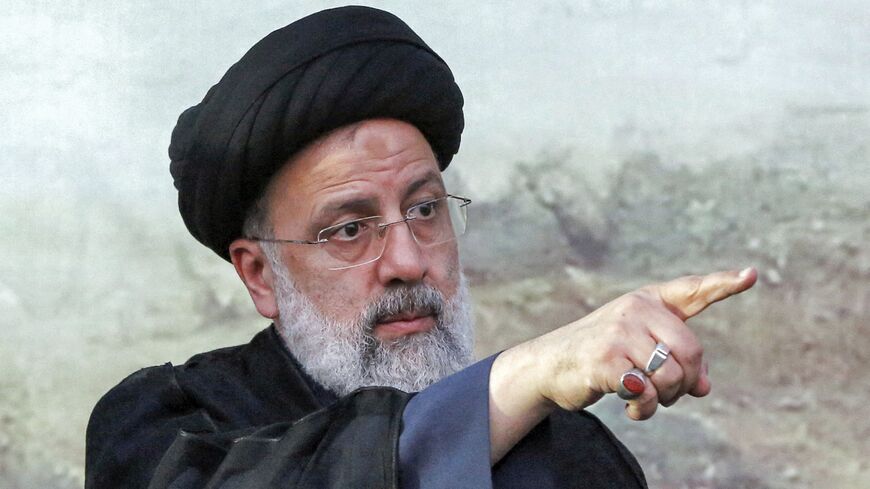
The Iranian electoral process was completed this week. Ibrahim Raisi won the dispute, with more than 60% of the votes, becoming the new president of the Persian country. Reactions around the world to Raisi's victory were as varied as possible. Russia, Turkey, Pakistan, Iraq, Yemen, UAE, and Hamas congratulated the new leader, while the US, Israel, Amnesty International and Human Rights Watch lamented the election result and accused Raisi of fraud, human rights violations, and many other crimes. Indeed, Raisi's victory has a profound meaning and international reactions reveal what each country's relations with Iran will be like from now on.
Ibrahim Raisi is a politician considered by many analysts to be 'hardline'. Being an Islamic jurist, he is a prestigious political and religious leader, quoted by many experts as a possible Iran's future supreme leader. Conservative and defender of the countries' religious and cultural traditions, the new president seems to want to endorse the religious influence on the government - worrying the West, which fears a process of radicalization.
Raisi is Ali Khamenei's favorite politician and represents the most conservative part of the regime. Previously, he led the Iranian judiciary, always characterized by a strong stance in defense of traditional Islamic values. He had previously run for president, being defeated by Rouhani in 2017. This year, his campaign focused on strong anti-corruption propaganda and in favor of social improvement. Fighting poverty was a big bet for the candidate, who succeeded amid popular concerns about the national economy - which is hampered by international sanctions imposed by Washington. On the other hand, Raisi, curiously, does not have a very rigid public posture in foreign relations. In 2017, he constantly said that his government would try to make deals with any country with the exception of Israel. Now, the new president has avoided making promises in relation to foreign policy but has guaranteed to negotiate on the nuclear deal.
So, expectations about Raisi's government can be summarized in a strong conservative trend towards internal affairs, with anti-corruption and economic improvement policies, in parallel with an international management focused on ensuring diplomatic stability, willing to negotiate with every country - except Israel - as long as the Iranian national interests are protected. Considering these factors, it does not look like it will be difficult for Washington to pursue the deal. Certainly, with the conservative wing consolidating in power, Iran's demands could increase, but Tehran will maintain a pro-negotiation stance as this is in the country's economic interests to alleviate the sanctions.
However, we must consider the fact that, for the West, the real aim of the nuclear deal is not exactly to limit Iranian power. Tehran has repeatedly admitted that it does not intend to build nuclear weapons as it is considered a sin for Islam and would be a violation of the most elementary principles of the Shiite theocracy. The central problem in the negotiations is that Washington sees it as a stage of dialogue towards the end of Iranian support for the Shiite militias in the Middle East.
And this, in fact, could harm the negotiations because, unlike the more liberal wing of Rouhani, Raisi has practically no conflict of interest with the military and will seek to maintain a strong defense policy, involving support for militias abroad. In the end, it seems that Raisi will admit a more neutral stance on the nuclear issue, and it is likely that the uranium enrichment will cease, but as far as cooperation with the militias is concerned, there will be no changes - it remains to be seen what the Western attitude will be in this scenario.
The Biden government has said it will talk to Iran, regardless of who is in power. Despite the promises of negotiation, there is still one factor that cannot be ignored, which is the reaction of international organizations to the new Iranian leader. Amnesty International and HRW accuse Raisi of human rights violations due to his alleged participation in political purges and executions of dissidents. Apparently, there is no evidence for such accusations, but that may be reason enough for Biden, fulfilling his humanitarian agenda, to impose more sanctions on Iran.
As far as tensions with Israel are concerned, there is an expectation of a significant worsening, considering that the more conservative and hardline wings of the two countries came to power simultaneously. Bennet made pronouncements immediately after the election results, stating that world powers should be on the alert for Raisi's victory and taking a stand against any negotiation of a nuclear deal. Certainly, measures in the military field will be taken by both sides, intensifying the conflict, but without reaching an open confrontation.
In the end, Raisi's victory seems to indicate a strengthening of the Iranian state in its ideological and institutional integrity. The new president seems willing to seek greater internal cohesion, uniting military, political and religious interests and creating a more solid and effective national plan. Internationally, the nuclear deal may be undermined by accusations of human rights violations, but this will not mean a process of nuclearization of the Iranian armed forces. On the other hand, conflicts with Israel will certainly worsen and Shiite militias across the Middle East will be strengthened.



















