





Paul Antonopoulos, independent geopolitical analyst
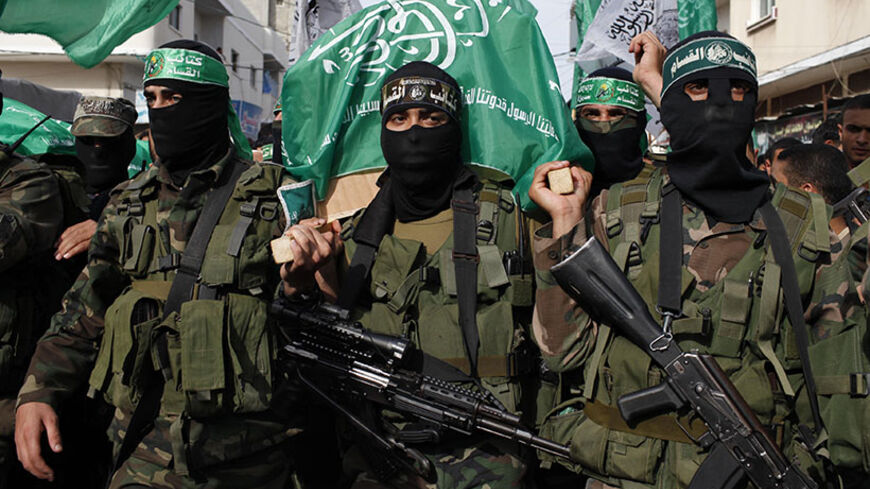
Hamas political leader Ismail Haniyeh landed in Morocco on June 16 for a four-day visit as the Islamist group is seeking help from Arab countries. However, this is an attempt that will undoubtedly fail for Hamas as they continue to align with the Muslim Brotherhood terrorist organization and work against the interests of the Arab World that now converges with Israel in limiting and/or ending Turkish and Iranian influence in the region.
As bombing against the Gaza Strip resumed on June 16, Hamas called for Arab solidarity. Cornered by the 10-day war waged in May against Israel, Hamas is actively looking to diversify its financial support and break out of the isolation it found itself in. However, the visit to Morocco will not break Hamas’ isolation as Haniyeh was not invited by the ruling government, but rather by the opposition Justice and Development Party, the emanation of the Muslim Brotherhood in the North African country.
In December 2020, Morocco normalized its relations with Israel in a deal that saw the U.S. recognize Moroccan sovereignty over Western Sahara. Following normalization, finding a balance between amicable relations with Israel and maintaining loyalty to the Palestinian cause has proven to be difficult. This explains, for example, the delayed inauguration of the Israeli liaison office in the Moroccan capital of Rabat. Property owners have reportedly refused to rent an office to Israeli diplomat David Govrin.
The prevailing unpopularity of normalizing relations with Israel did not prevent King Mohammed VI of Morocco from congratulating the accession of new Israeli Prime Minister Naftali Bennett on June 16. This could suggest that Rabat is positioning itself as a mediator in the Israeli-Palestinian conflict, insofar as it would maintain good relations with the two camps. Ultimately, given the recent normalization with Israel, the chances of Morocco siding with Hamas are slim.
With Qatar, Hamas can count on a wealthy ally. A few days ago, Doha planned to send no less than $500 million to help rebuild Gaza. It cannot be overlooked though that Qatar acts as a financier of Hamas. Since 2018, the small emirate has reportedly paid around $30 million per month to help rebuild Gaza. Usually, Qatari help is only done with Israeli approval as they want to limit or control the kingdom’s influence, especially as it is an open financier of the Muslim Brotherhood terrorist organization.
Gaza, and not Hamas directly, should also benefit from Egyptian aid. Egyptian President Abdel Fattah Al-Sisi is staunchly anti-Muslim Brotherhood, and even assisted Field Marshal Khalifa Haftar in his battles with Muslim Brotherhood-aligned groups in Libya last year. Refusing to accept the emergence of Political Islam, Egypt has made the fight against the Muslim Brotherhood its main security objective. After playing an active role in the ceasefire between Hamas and Israel on May 21, Cairo also pledged $500 million in aid to Gaza, but only on the condition that it does not finance Hamas. As a result, the aid will be under the supervision of the head of Egypt’s intelligence, something seen as favorable by Washington and Tel Aviv.
In the case of the United Arab Emirates, there is no tolerance for the Muslim Brotherhood’s ideology, hence its difficult relations with the group’s backers – primarily Turkey, Qatar and Iran. The Arab country has recognized the Muslim Brotherhood as a terrorist group since 2014. In the Middle East, Emirati diplomacy is shifting support against the Muslim Brotherhood. As early as 2013, the UAE gave its support for Al-Sisi in his fight against the Islamists. Since 2018, Abu Dhabi has also openly supported Syria against jihadist groups based in Idlib.
In addition, since normalization with Israel in September 2020, Emirati officials no longer hesitate to give sympathy to Israel. Recently, UAE Foreign Minister Abdullah bin Zayed Al Nahyane told the American Jewish Committee that “It’s very unfortunate that countries are more reluctant to talk about groups like Hamas, Hezbollah, or the Muslim Brotherhood in a clearer manner.” He added that some governments give a terrorist designation only to a group’s military wing but not their political one. This, as he said, is despite that “same entity [saying] there is no difference” between the two.
Saudi Arabia already classified the Muslim Brotherhood as a terrorist organization in 2013 and Crown Prince Mohammed bin Salman reportedly met with then Israeli Prime Minister Benjamin Netanyahu in November 2020 in the seaside ultra-modern city of Neom. It is expected that it will only be a matter of years before Saudi Arabia officially normalizes their relations with Israel.
Hamas seems to be more isolated than ever. Faced with this isolation, only traditional allies remain - Qatar, Iran and Turkey. Although Hamas has no choice but to deal with countries that have normalized their relations with Israel, the group has evidently not reflected on the causes of its isolation and why Arab states are beginning to turn their backs to the Palestine issue. From the Arab perspective (with the exception of Qatar), there is a strong effort to limit Turkish and Iranian influence, and therefore Muslim Brotherhood ideology, in the region.
Hamas are the harbinger of Muslim Brotherhood ideology in the region, hence its isolation in the Arab World, especially after it betrayed Damascus during the Syrian War and became a conduit for Turkey’s neo-Ottoman ambitions over Middle Eastern territories it formerly controlled during the Ottoman Empire.



















