





Lucas Leiroz, research fellow in international law at the Federal University of Rio de Janeiro.
Sweden has been changing its image from a humanitarian and welcoming country to a protectionist nation and little concerned with the issue of migration. Stockholm was recently added to the UN "shame list" for making no effort to bring back Swedish citizens who are in internment camps in Syria. The Swedish government does not seem to want to change its attitude, mainly because the country, in addition to facing structural problems with migration, does not have the capacity to judge and punish all its citizens involved in war crimes abroad.
Due to its migration policy based on liberal and humanitarian principles, Sweden has become home to many refugees from various armed conflicts around the world, mainly from Syria, from where the country has received thousands displaced people. However, the Scandinavian nation does not appear to have been efficient in mixing the reception of refugees with the necessary control over the influence of terrorist groups on these displaced people and is now dealing with the consequences of this problem not only on its territory but also at the international level.
At the national level, the social structure has suffered several declines due to the constant entry into the country of refugees. The demand for public services has increased exponentially and there has been a considerable drop in security rates, mainly due to the infiltration of members of terrorist groups amid immigrant groups. However, at the international level, the country is on the verge of diplomatic disaster. With the entry of several refugees, the European country has become a "factory" of terrorists who infiltrated refugee groups with the aim of gaining the benefits of local citizenship, and, even more, having Swedish children, who later would be integrated into the ranks of terrorists.
This created a catastrophic scenario in the country, as many refugees, after stabilizing in Sweden, return to Syria to support Daesh. This is even more so for women, who after acquiring Swedish citizenship, leave the country and marry terrorists. Under Swedish law, if the child has any Swedish parent, there is a right to Swedish citizenship, so legally, children of terrorists are Swedish and must enjoy the benefits of that. In the beginning, the Swedish attitude was to try to rescue these children as much as possible, taking them back to European territory and reintegrating them into society.
However, a difficulty began to worry the Swedish authorities and lead Stockholm to adopt a more negligent policy in this regard: knowing how to distinguish children who really have the right to Swedish citizenship, considering that many of those refugees who returned to Syria died during the fighting and their partners remarried, generating children who are not legally candidates for Swedish citizenship. Instead of adopting more efficient investigative measures, Stockholm has simply abdicated to rescue children and acted in the same way with Swedish women who married terrorists and lost their husbands afterwards - and that worries the United Nations.
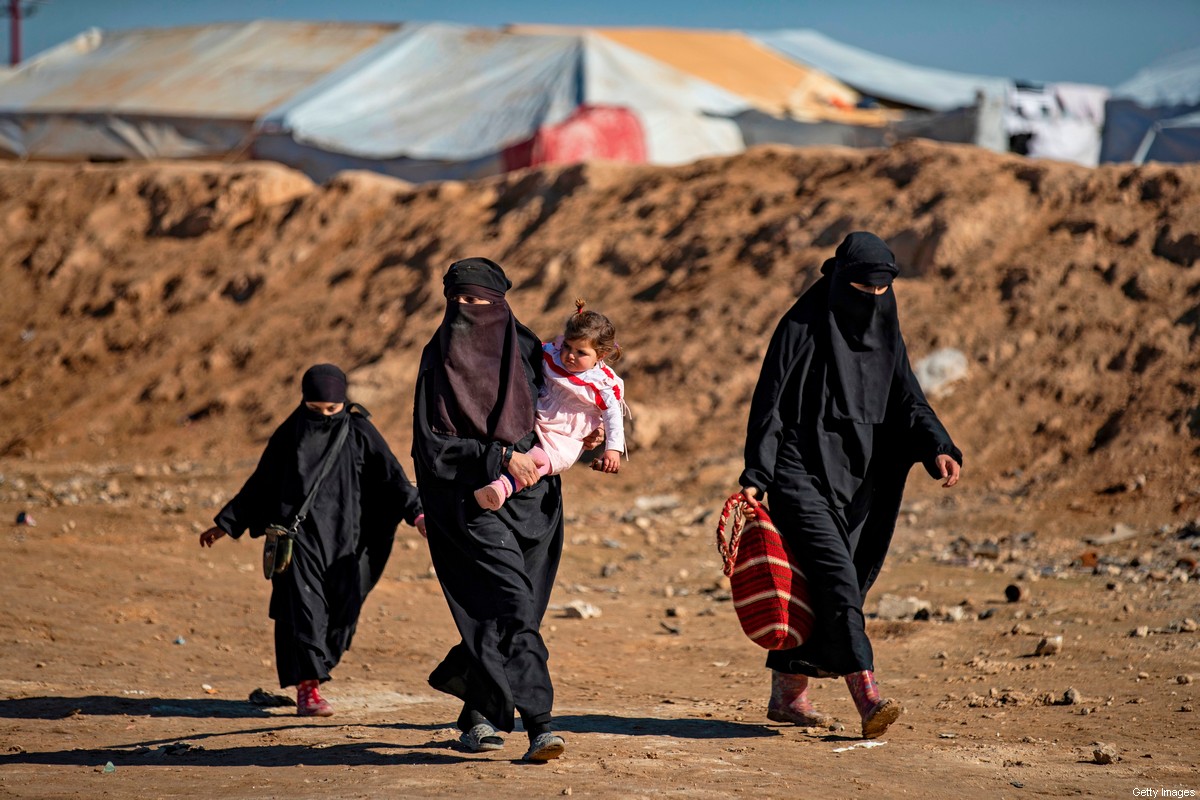
These women and children, when captured, are interned in prison camps in Syria, where they are subjected to extremely degrading living conditions. In theory, the "right" thing to do would be to seek to bring all Swedish citizens from these camps back to Sweden, but this would represent an exceedingly difficult task for the authorities, because, in addition to investigating who is really candidate to Swedish citizenship, when returning adults, they would have to be subjected to judicial penalties for collaborating with terrorist groups and the Swedish police and judicial system is not prepared for this type of situation. There is no structure in Swedish prisons to welcome all Swedish citizens involved in terrorism - and to leave them free is to risk recruiting other Swedes for Daesh. For this reason, Stockholm has been less and less concerned with bringing its citizens back.
Obviously, the UN condemns attitudes like the Swedish one. Built on liberal principles, the UN will always judge nations that prioritize national security over humanitarian issues. Sweden became part of the United Nations' "shame list", which points 57 countries as non-compliant with the rules of international law and human rights. This has an especially important meaning for international society, as Sweden until then was treated as an example to be followed and is now equated with the great violators of human rights and pointed out as "an international shame".
Considering that Stockholm publicly maintains its commitment to humanitarian values, it is possible that international pressure will have an effect, leading the Swedish government to change its attitudes, starting to treat its citizens abroad with greater concerns, despite the internal consequences of this. On the other hand, it may be that this will further impel Sweden's process of misalignment with the West and lead the country to seek even more measures that prioritize its security.
It is important to emphasize that Sweden is taking a turn in its defense policy, including military spending among state priorities and starting an advanced process of modernizing its security forces. The country clearly seeks to become more sovereign and more committed to its own people than to international standards and, despite UN condemnations, this is undeniably a Swedish right and cannot be taken away from it.



















