





Johanna Ross is a journalist based in Edinburgh, Scotland.
‘He who controls the media controls the public’ said Noam Chomsky, and we have seen this manifest itself like never before during the coronavirus pandemic, as governments have desperately tried to control the narrative surrounding it. Obviously, when it comes to a public health crisis such as this, it is important that the authorities have a handle on the situation. If people don’t obey the rules and restrictions surrounding social distancing etc then it will only lead to more deaths at the hands of the virus. But the current crackdown on social media in the Anglosphere seems to have speeded up what was happening anyway - an assault on Chinese and Russian media which is already leading to a backlash in these countries.
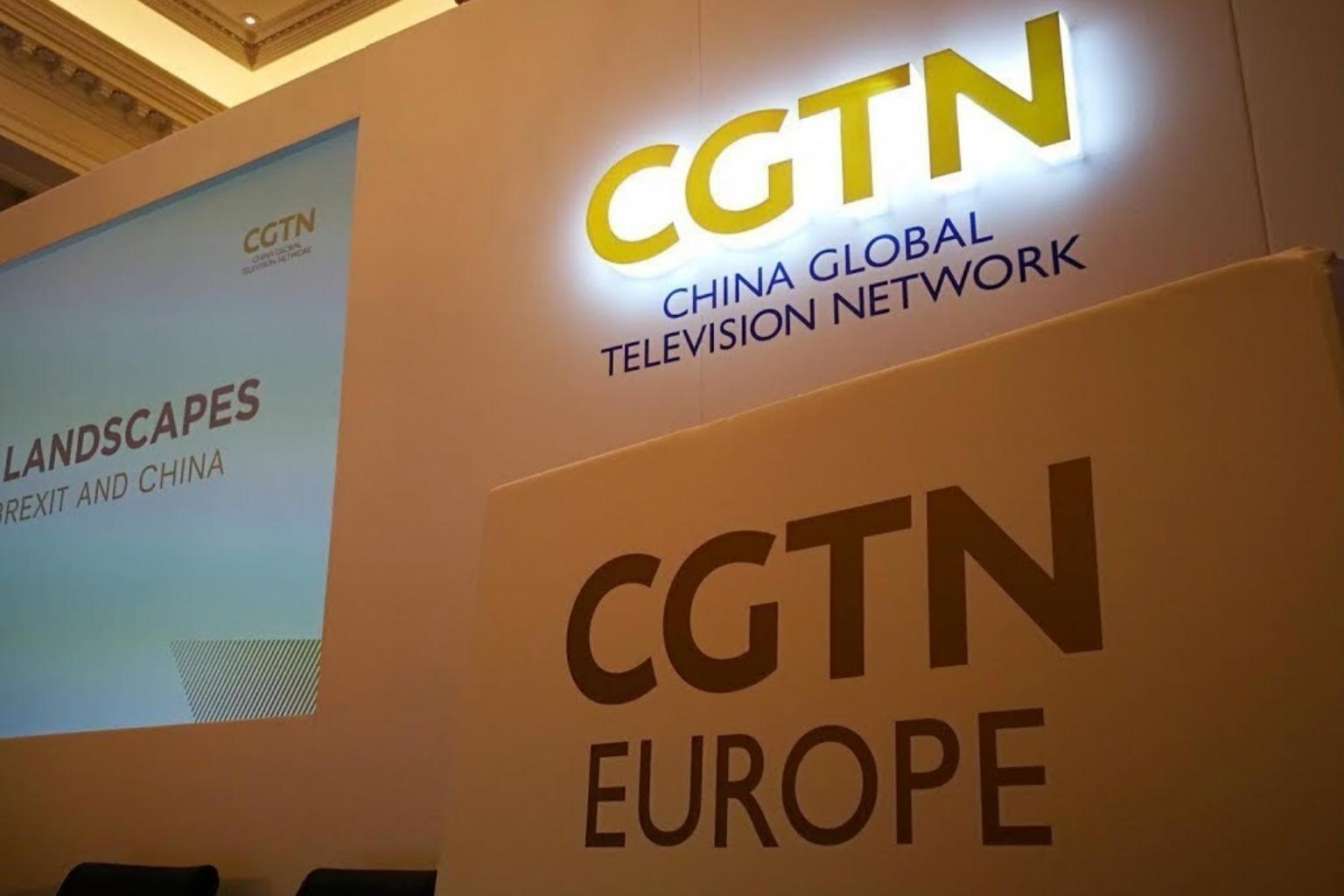
This week the British broadcasting regulator Ofcom, decided that Chinese TV channel CGTN would no longer be allowed to operate in the UK. Its reasoning? Officially, according to the BBC, the company that owns the UK licence for China Global Television Network (CGTN) doesn't have day-to-day control over the channel, which is against its rules’. However, Ofcom must have known this when it granted the license, so this seems something like a technicality. It is obvious that politics are at play here, which is essentially what the Chinese reaction to the move was when it said CGTN operations were being ‘suppressed for political grounds.’
Hardly unexpected came the news the following day that China was suspending the BBC from broadcasting in the country. The Chinese Foreign Ministry cited the BBC’s ‘fake news’ agenda with regard to China, particularly on the subjects of the coronavirus pandemic, the ethnic Uighur population and protests in Hong Kong. It’s not just the BBC of course. British media in general has adopted the new government foreign policy line when it comes to China, which took a marked change in direction once the coronavirus pandemic took hold. There were rumours broadcast on various mainstream media outlets that China could be engaging in biological warfare and the virus was man-made in a Wuhan laboratory.
Former MI6 boss Sir Richard Dearlove was interviewed last year on Sky News by Deborah Haynes - the security services’ go-to journalist - and quoted as saying that theories that Covid-19 was an engineered virus that leaked out if the Wuhan lab should not be dismissed. Around this time, anti-China rhetoric in both the UK and US was significantly ramped up, with Donald Trump also jumping on the conspiracy theory bandwagon. Nevertheless, the vast majority of scientists insist that this strain of coronavirus is a natural phenomenon, and there is no evidence it has any connection to the Wuhan laboratory.
The conspiracies may be false, but people in the West are still looking for someone to blame for the pandemic. And so spurred on by the Trump administration’s aggressive anti-China policy, the UK has spent the last year building up its own case against China. The BBC have been churning out negative stories on China one after another; it’s surprising the Chinese took so long to protest against it. In this way the UK has taken the more aggressive stance. Not only did it ban CGTN this week but it expelled three Chinese journalists recently for alleged ‘spying’. CGTN on the other hand isn’t consistently lambasting the UK in its broadcasts.
Tightening up of restrictions against the media of Russia, China (and Iran, for that matter) began last year with social media giants Facebook, Twitter and Youtube applying labels to content from these state media outlets. Of course the US-based websites didn’t feel the need to label American media as they ‘determined that even U.S. government-run outlets have editorial independence’ it was reported. You can believe that if you will, but the fact is that mainstream media in every country has to answer to the government to some degree, particularly in the area foreign policy/ security. In Britain, for example, the government has control of what can or cannot be published - it can issue what is called a ‘DSMA-notice’ which prevents a media outlet from publishing a story that could harm national security.
When it comes to Russian media, some have been calling for RT and Sputnik to have their UK license revoked for years; and this may yet happen. The media led a concerted campaign against them even before they appeared on British soil, and the security establishment has done its best to undermine their operations here. If Britain was to oust them, Russia would likely implement reciprocal measures, following China’s lead to expel the BBC.
Russia is particularly concerned about the way in which its media has been censored by western social media giants, which has only intensified of late. RT editor Margarita Simonyan is leading the charge in Russia at the moment for the likes of Facebook, Twitter, Instagram and Youtube to be banned. This comes after various assaults on Russian users of the platforms in recent years, such as one instance when 270 accounts belonging to Russian Facebook users were deleted. We also know that Twitter is biased, having banned ads from Russian media in 2017 and just last year shadow-banning RT accounts. At the moment legislation is being looked at in Russia which would punish the US social media giants for discriminating in this way. But we may yet see an outright ban.
Out of what seems to be a pessimistic situation, perhaps we ought to see a positive. For as Russia and China edge away from western media domination, they are gaining independence and redefining their place in the world. Perhaps this is a sign that the long-awaited multipolar world, which has been much talked about by the Russian’ and Chinese leadership in recent years, is just beginning to emerge.
You can follow the author on Twitter.



















