





Paul Antonopoulos, independent geopolitical analyst
Iran's Supreme National Security Council Secretary Ali Shamkhani, pointing to the role of the Israeli intelligence agency Mossad, said that Tehran managed to find out who organized the November 27 murder of nuclear physicist Mohsen Fakhrizadeh. Iranian Foreign Minister Mohammad Javad Zarif also pointed to evidence of Israel's involvement in the murder and urged the international community to end its policy of double standards and condemn state terrorism.
Since World War II, nuclear physicists have been closely linked to the politics of the countries in which they work. Now, when Iranian nuclear physicists are being killed in a style resembling the mafia, several important ethical questions arise about the connection between nuclear science and politics. Between 2007 and 2012, six assassination attempts were made on Iranian nuclear physicists - five succeeded.
Given that Israel considers the development of Iran's nuclear program an existential threat, the assassinations of Iranian nuclear physicists have been attributed to Mossad. Fahrizade himself, a brigadier general of Iran's Revolutionary Guard, was repeatedly mentioned by top Israeli officials, such as former Prime Minister Ehud Olmert and current Prime Minister Benjamin Netanyahu, while unnamed Israeli officials often called him a “dead man walking.”
As reactions to Fahrizade's assassination have shown, the determination of the Iranian leadership to continue with the nuclear program has only been strengthened. Fahrizade's assassination could motivate the Islamic Republic to not enter negotiations with the international community on limiting its nuclear program. The major problem will be how to reach a new agreement on Iran's nuclear program, and this will certainly be a major challenge for the new American administration if Joe Biden ascends to the presidency on January 20.
On Sunday, members of the Islamic Consultative Assembly, with 232 votes in favor, approved a strategic action plan to lift Iran’s nuclear restrictions. The plan will be submitted to the Assembly's agenda for approval. Abolfazl Amoui, spokesman for the National Security and Foreign Policy Committee of the Iranian Parliament, explained that the “Strategic Action to Lift Sanctions” plan is for 20% uranium enrichment to be revived. If such a plan is implemented, the Islamic Republic will face new problems, not only with the U.S. and the European Union, but also with Russia and China. The plan could change Russia’s and China’s position about Iran’s nuclear program to be closer to Europe and the U.S., and risks creating international consensus against the Islamic Republic.
It is for this reason it is unlikely that the Guardian Council will approve an increase in uranium enrichment, and it is also unlikely that the Supreme National Security Council will approve it, which is important considering it is in a position to determine macro-policies in the Islamic Republic, especially on nuclear issues.
With the aim of dragging Iran and the region into conflict, the assassination was done precisely during the presidency of Donald Trump to block new negotiations if Biden becomes the next president. Because of the Trump family’s close relationship with Israel and Saudi Arabia due to personal and business ties, the Trump administration has turned against Tehran with methods that do not necessarily serve Washington’s long-term interests in the region.
For years it was clear that the political, military and economic establishment in Washington was deeply divided on Iran’s nuclear program. Biden appeared determined to intervene in the dispute by offering the State Department to Anthony Blinken, one of the architects of the Obama-era deal with Iran. Despite the fact that Blinken is another supporter of U.S. interventionism, Iran is lower on the list of priorities compared to Russia.
The assassination of Fakhrizadeh leaves a Biden administration in a difficult position. If Tehran retaliates by hitting Israeli or Saudi targets, the hardliners in Washington will have the pretence they have always been looking for to start military operations against the Islamic Republic. The fact that Trump ordered the deployment of several B-52 Stratofortress bombers in the Middle East just a week before the assassination of Fakhrizadeh, is seen by some as proof that another war is imminent.
But even if a U.S.-Iran war is avoided, the assassination offers many advantages to Israel and Saudi Arabia. It sends a clear message to Biden that any attempt to return to the nuclear deal would be met with diplomatic pressure and even unilateral action. Even if there is a new agreement, Biden will be called upon to impose even harsher conditions against Iran.
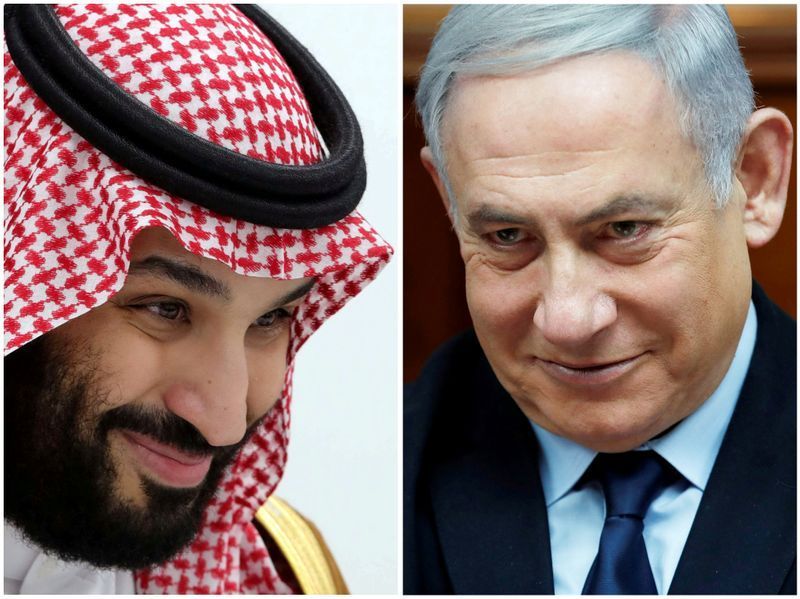
Riyadh and Tel Aviv are sending a clear message to Washington that they will create a united front against anyone who dares to soften U.S. stance toward Iran. Both countries have powerful lobbies inside the U.S. that could irreparably harm Biden's presidency by interfering in the international oil market and/or through other methods.
Whether in the coming days or weeks we will witness a new war or more terrorist attacks will depend to a large extent on the attitude of Iranian leaders. The Iranian president does not seem willing to fall into the trap set for him. However, important sections of the Iranian establishment claim that if the country leaves this challenge unanswered, it will pave the way for more terrorist attacks and will cause a significant loss of prestige in the Middle East.
It is precisely this pressure from Tehran's hardliners that the perpetrators of the killing are hoping for an Iranian response that will turn the Middle East once again into a major theatre of war. This call for a strong response will increase considering Muslim Shahdan, a senior commander of Iran's Islamic Revolutionary Guards Corps, was killed today in an airstrike along the Syrian-Iraqi border.
How exactly Iran will respond to these string of assassinations remains to be seen, but pressure will certainly be building in Tehran as the hardliners will demand retaliation, just as Israel and Saudi Arabia hope U.S. military action will follow after any Iranian response.



















