





Lucas Leiroz, research fellow in international law at the Federal University of Rio de Janeiro.
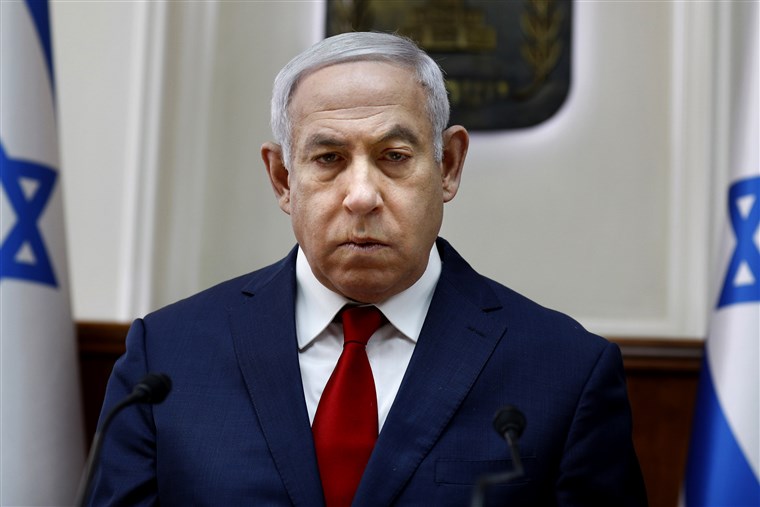
The Israeli political crisis deepens day after day. The popular disapproval against Prime Minister Benjamin Netanyahu has increased due to a series of management errors that, in general, have made the lives of Israeli citizens much worse. At the same time, the popularity of his former ally and now strong opponent, Naftali Bennet, is growing, which could be a threat to the current government.
One of the problems that most affect the State of Israel today and diminish the popularity of the government is the serious scenario of the COVID-19 pandemic. The main criticism against Netanyahu since the beginning of the pandemic has been the attempt to create an exception management designed to violate democratic institutions and guarantee absolute powers to the prime minister. It is in this way that its opponents have interpreted the rigid norms of social isolation, which make the demonstrations that have been agitating the country for a long time illegal - thus justifying police repression with the use of violence and coercion.
The government-appointed coordinator of national anti-coronavirus management, Ronni Gamzu, is a clear example of popular dissatisfaction with the government: appointed by Netanyahu and after failing to achieve positive results, Gamzu began to gain public disapproval. However, a few days ago, at a crossroads of accusations, Netanyahu criticized him and the result was that Gamzu recovered credit with the citizens, which seems to reinforce the idea that if the government is against him, the people is in his favor, regardless of his personal actions and the success of his management.
This scenario of automatic opposition to the Israeli Prime Minister and all his allies did not come about suddenly, but it is the inevitable result of a series of errors and scandals. Political opposition against Netanyahu is highly influenced by his personal situation, as he is being investigated for three cases of corruption. Netanyahu throughout his political career has always made his political speech a personal exaltation, extolling his own merits and "virtues". Now, the reaction against his mistakes follows the same line, but in an opposite sense: automatically condemning him in a political and personal way.
Family problems have also hampered Netanyahu. Apparently, his wife, Sara Netanyahu, was largely responsible for the Prime Minister's break with Naftali Bennet. According to reports, Sara's authoritarian behavior, which sought at all times to interfere in the political affairs competent to her husband's position, greatly bothered Bennet. Sara's complicated behavior is also causing discontent among the Israeli population itself. Sara Netanyahu is known for constantly violating social isolation rules for absolutely futile and expendable purposes, such as aesthetic treatments, placing herself above the law to which the Israeli population has been subjected for so many months. All of these secondary factors also influence the image of Benjamin Netanyahu, who is increasingly seen as a corrupt and authoritarian leader and as the head of a clan of immoral behavior.
However, the opposition against Netanyahu is still a disorderly popular longing, which was not captured and directed politically in the form of support to oppositionist leaders. According to the Migdam Institute, among voters who identify themselves as center-left, a large percentage say they do not know who to vote for, in the case of early elections - requested by 49% of Israelis. But the trend seems to be that all these people will vote for whoever ends the Netanyahu government, regardless of their ideological aspects and their government projects. This fragmentation of the Israeli opposition can have serious consequences for the country, considering that people are willing to support any candidate who opposes Netanyahu, regardless of projects, which may be the way for the election of a "worse" politician than Netanyahu.
An example of what may come after Netanyahu is precisely Naftali Bennet, a far-right politician and defender of a hardline foreign policy, advocating the annexation of more than 60% of the West Bank and completely intolerant about the Palestinian issue. It is good to remember that months ago Netanyahu's decision - later postponed - to annex the West Bank by force was the reason for protests across the country and caused its popularity to fall in different sectors of society - notably the most secular and apolitical ones, who are most concerned with peace and the general well-being of the people than with ideological and religious issues. So, Bennet, whose popularity grows quickly, defends, on an even more radical scale, something that has caused discontent against Netanyahu. This shows how a mere automatic opposition cannot be enough to overcome the crisis, and there must be an organized militancy, with clear intentions and principles.
While the opposition calls for new elections and the population supports anyone who opposes the current government, Israel has advanced an innovative foreign policy, forging alliances with the pro-Western Arab countries and creating a total and unrestricted encirclement of Palestine. Regardless of the direction of Israeli domestic politics, with or without Netanyahu, the geopolitical scenario in the Middle East will continue to be increasingly tense and violent, as no peace proposal is included in government’s projects or those of its opponents.



















