





Lucas Leiroz, research fellow in international law at the Federal University of Rio de Janeiro.
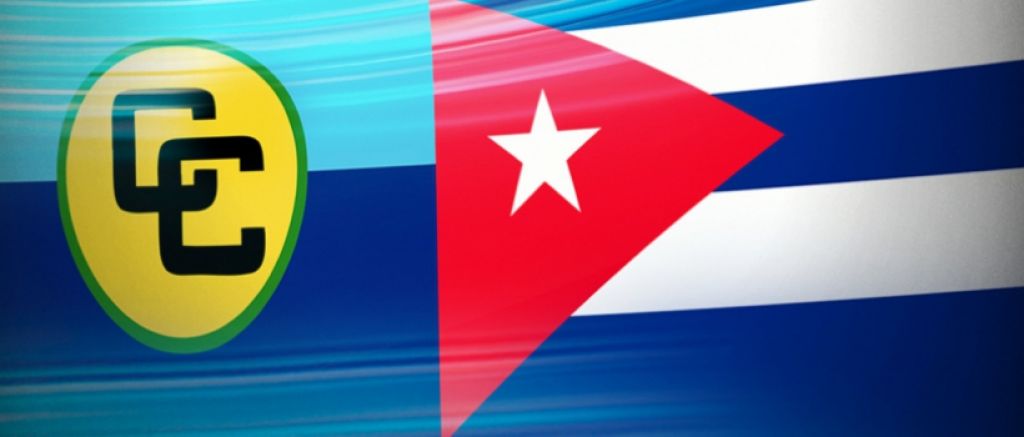
The Caribbean is working to overcome the disastrous effects of the new coronavirus pandemic through a strong international cooperation effort. The joint performance of Caricom (Caribbean Community) members has been decisive for the region, but greater emphasis should be given to the role played by Cuba. The small socialist republic has led the joint actions of the Caribbean countries and has raised its international status through this process.
The pandemic had fewer devastating effects in this region than previously thought. With or without the virus, the Caribbean nations have always been poor and highly vulnerable countries, with a low degree of industrial development, depending heavily on tourism and agriculture. Such countries could easily be the biggest global victims of the coronavirus, with an unprecedented social catastrophe - still aggravated by the diverse natural phenomena that frequently affect the region due to its geographical position. But these issues have been a constant theme at meetings of Caricom's heads of state, who try to contain the effects of such circumstances - and have been successful.
When the pandemic became official, in March, the Caricom acted quickly. The regional bloc, made up of 15 member states and five associates, immediately established an observatory dedicated to assessing the impact of the coronavirus and the responses needed to overcome the difficulties. Thus, joint security actions were defined – and this went beyond the pandemic, also creating security measures against natural disasters due to the hurricane season that started in June. To save tourism - one of the main economic activities of the Caribbean nations - specific health rules have been established that guarantee the safety of foreign travelers, causing countries like Belize and Saint Kitts and Nevis to reopen their borders quickly - reducing the economic impact in the region.
All of these problems are also seen in Cuba - the largest island in the entire Caribbean and which is not a member of Caricom. The economic blockade imposed by the US against Havana has very serious effects on the Caribbean economy, as it prevents the largest country in the region from integrating the bloc and collaborating with joint cooperation and development policies. However, this situation has started to change gradually.
Cuba is a nation highlighted by its strong national health policy, with a large technological apparatus and high-quality medical professionals. The country has been strongly involved in international cooperation policies since the beginning of the pandemic, having already sent humanitarian aid to European nations, such as Italy. Although the Cuban population itself has been severely affected by the virus, the state has been successful in managing the crisis and has been able to help other nations, especially its Caribbean neighbors, which has been vital to the region's medical security. More than that, the dialogue between Cuba and Caricom has grown towards a cooperation to contain risks in the event of natural disasters. Cuban actions at the Caribbean Disaster Emergency Management Agency have been important for the management of natural disasters. In short, all countries in the Caribbean have adopted the Cuban model of disaster management and this has benefited the region, where the effects of disasters have been much milder.
All of these factors have radically changed the dynamics of relations between Cuba and its Caricom neighbors. Currently, Caribbean nations consider as a priority topic the creation of a new model of trade relations, which emphasizes trade within the Caribbean region. With the continuation of international restrictions imposed against Cuba, a regional alternative would be interesting for Havana. Likewise, with a global economic crisis and the rise of protectionism and isolationism, the Caribbean would only benefit from the creation of an intense zone of trade and circulation of goods between neighboring states. Currently, the American economic blockade against Cuba is “alleviated” in the Caribbean by the Trade and Economic Cooperation Agreement between Cuba and Caricom, signed in 2000. However, the agreement has an extremely limited agenda of trade liberalization, being insufficient to strengthen the bloc, and it has not been ratified by several Caricom countries.
For decades, relations between Cuba and the rest of the Caribbean have been limited by the high influence of American foreign policy in the region. But in reality, the pandemic has drastically changed the geopolitical structure of the region. In the end, it was Havana that sent humanitarian aid to its neighbors and it is Cuban strategies that have reduced the catastrophic effects of natural disasters - it should be noted that these phenomena are aggravated by a global context of intense climate change. On the other hand, the US increasingly isolates itself, being the country most affected by the pandemic.
Washington did not offer any assistance to the Caribbean with the recent catastrophes and it also did not present any economic development plan that would protect the region and help it overcome the effects of the world crisis. Cuba, on the other hand, through great cooperation efforts, has gradually approached its neighbors. So, the scenario is formed: Cuba suffers international sanctions and sees the Caribbean as an opportunity for profitable partnerships; Caricom lacks a developed technical-scientific system like the Cuban one and has been increasingly relying on Havana's support to overcome this shortage. A perfect circumstance seems to be formed for the establishment of joint cooperation strategies.
If such ties between Cuba and Caricom really grow, what will Washington do? Will it change its strategy for Latin America (currently focused on the overthrow of Maduro) to a more aggressive policy against Cuba? Will it present an economic plan for the Caribbean? These are still unanswered questions, but one thing is certain: more and more, Cuba and the rest of the Caribbean will depend on each other.



















