





Lucas Leiroz, research fellow in international law at the Federal University of Rio de Janeiro.
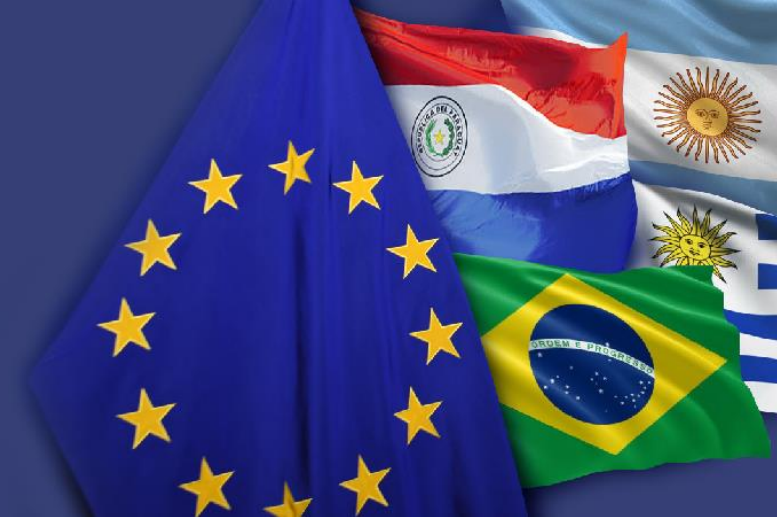
The increase in reports of fires in South American biomes, especially the Amazon and the Pantanal, is already causing international impacts. The free trade agreement between the European Union and Mercosur - signed last year, but still pending ratification - will be the first to be affected by the environmental crisis. European opposition to the agreement began, as expected, with France, which since last year has been trying to establish a series of punitive measures against Mercosur and particularly against Brazil due to environmental crimes. Paris endorses the rhetoric that the agreement would be indirectly encouraging the deforestation of South American biomes, which the French government supposedly sees with "great concerns". Following the trend generated by France, Belgium, the Netherlands, and Austria denied supporting the agreement.
On Friday (September 18), the Vice President of Brazil, Hamilton Mourão, who also heads the Council of the Amazon, said during a live transmission on the topic "Amazon and Security" that Brazilian diplomacy should be activated to resolve the tension with the Europeans and facilitate the agreement, not promising any measures to combat fires and control deforestation. Worsening Brazilian international image, at the opening of the UN General Assembly meeting, President Jair Bolsonaro made a statement filled with controversial information. According to Bolsonaro, the main agents responsible for the fires are the indigenous peoples of the Amazon, who supposedly set fire to areas already deforested in the surroundings of the forest, which would be reported with alarmism and disinformation by the world media. In other words, Bolsonaro blamed indigenous people for the fires and denied the current existence of deforestation, saying that the existing fires are carried out in areas that have already been deforested.
The objective of Bolsonaro's speech is to mask the real cause of deforestation: land speculation and the expansion of agribusiness. Blaming native peoples or small producers is an irresponsible attitude, which does not seek to find the real root of the problem. Deforestation in the Amazon has been increasing at rate much faster than normal. Between January 2019 and April 2020, more than 4,500 square kilometers were deforested. The entire deforested area is then set on fire, destroying native vegetation and local fauna. When Bolsonaro blames indigenous peoples, he is acting politically against a community that has been a strong opponent of the interests of the current government, since they are great victims of deforestation and fires, which affect lands that historically belong to these peoples.
All of this is surely considered when representatives of European governments evaluate the possibility of concluding an agreement with Mercosur. Brazil is the main country in the bloc, being the economic heart of South America. And Brazil is currently responsible for some of the most atrocious environmental crimes on the planet. The concern with environmental issues is one of the topics of greatest global discussion today, having become an issue of international interest that cannot be ignored when assessing the scenarios for the conclusion of an agreement. Also, agricultural products are a central part of business between Mercosur and the EU, so if European states agree to negotiate with South America under the current conditions, they will be agreeing with the environmental crimes behind agribusiness in the region, which would make them complicit, and it would also damage the image of Europe, which is a strong supporter of the environmental cause.
Interestingly, the Brazilian government acts in a total lack of harmony. The vice president announces that he will invest in diplomatic dialogue and days later the president himself makes a speech full of false information and insinuations that can be interpreted as racism (against indigenous peoples), which only tends to further dismantle Brazil's image. How is a "diplomatic dialogue" possible when the president acts non-diplomatically? The least Bolsonaro could do to alleviate the situation was to admit fires, deforestation and commit to fighting environmental crimes, but he did just the opposite.
The discontent was collective, and the results can already be seen in the Brazilian political scene. A coalition of leftist and environmentalist parties has been formed and has requested public investigations to see if the government is complying with its constitutional responsibilities to protect the environment. The tendency is that, with this, Bolsonaro weakens even more, as international pressure will increase and the parties that are organizing the coalition will receive political and financial support from governments and organizations interested in concluding the agreement between Mercosur and the EU.
However, the biggest problem in the South American political horizon is still the possibility of resuming the dialogue about the internationalization of the Amazon. When Emmanuel Macron started a worldwide campaign for this cause last year, the scenario was much better than it is now, with the Amazon even more devastated and with the crisis spreading to the Pantanal, a biome neighboring the Amazon that encompasses parts of Brazil and Paraguay and which is being overwhelmingly destroyed by fires. It is inevitable that the campaign will reappear and certainly the Pantanal will be added to the project, which will represent a political catastrophe not only for Brazil, but also for all of South America, since both biomes are not restricted to Brazilian territory.
Certainly, it is not the environmental concern that is behind European maneuvers, but the possibility of establishing another precedent for the debate around the internationalization of South American environmental reserves, which has long been on the agenda of international oligarchies.



















