





Paul Antonopoulos, independent geopolitical analyst
Attempts by U.S. President Donald Trump and his administration to extend the anti-Iranian arms embargo as part of the nuclear deal may lead to the U.S. becoming diplomatically isolated, as other parts of the agreement do not make sense of the sanctions, The Wall Street Journal reported. This was written after it was revealed the U.S. intends to reinstate virtually all sanctions on Iran previously suspended by the UN.
However, analysts believe that the re-establishment of sanctions by the U.S. could drag the Security Council into a legal quagmire and provoke fierce disputes between Washington and its allies over Tehran's nuclear program, according to The Wall Street Journal. At the same time, European powers declared that they would not support U.S. efforts to re-establish sanctions unilaterally because they want to keep the deal with Iran. In turn, Russia and China claim that the U.S. has no legal right to restore the sanctions and they have made it clear that they will ignore them.
According to Wendy Sherman, a professor and American diplomat that was quoted by Wall Street Journal, there will be a lot of negotiations behind the scenes, but in the end, it will be clear that no one else among the permanent members of the Council consider that Washington is a member of the Joint Comprehensive Plan of Action (JCPOA), and therefore, the U.S. does not have the right to reinstate the sanctions.
Although legal controversies are not taken into account, the U.S. has not yet developed any plan to apply sanctions in case members of the Council do not want to support Washington. As the expiration date of Iran's arms embargo approaches - October 18, 2020 – U.S. officials increasingly point to the need to ban the Islamic Republic from importing weapons. However, Washington's efforts will hardly prevent Iran from buying arms from Russia and China, the newspaper highlighted.
According to European officials, an extension of the embargo could spark a confrontation in the Security Council that could bury the nuclear deal that Iran continues to abide by, albeit in part. To avoid this, European diplomats have offered a number of compromise options.
After the U.S. notifies the Council about its plans to reinstate sanctions, the other members will have 10 days to propose their countermeasures, which Washington can veto and will likely do, especially following comments by U.S. Secretary of State Mike Pompeo who accused European allies of going against them. “No country but the United States has had the courage and conviction to put forward a resolution. Instead, they chose to side with the ayatollahs,” he said
Meanwhile, Russian Foreign Ministry spokeswoman Maria Zakharova said the U.S. initiative to re-establish UN sanctions against Iran will fail.“The U.S. initiatives to re-establish the UN Security Council sanctions against Iran, cancelled after the signing of the Joint Comprehensive Plan of Action [...] lack legal basis and will inevitably fail,” Zakharova said.The spokeswoman for the Russian Foreign Ministry stressed that Russia condemns “the U.S. intention to continue the course aimed at destroying JCPOA and undermining UN Security Council resolution 2231.”
Washington has not only isolated itself from its European allies, who now find themselves on the same side as Russia and China on Iran, but even Israel is likely to take a step back and allow the U.S. to push ahead for sanctions. U.S. officials note that Washington's position has found some support from Israel and the Gulf states, but they are not members of the UN Security Council or parties to the JCPOA, and are distracted with more immediate issues to their security. According to an article in The Times by Roger Boyes, the head of Israel’s intelligence agency, Mossad, said that Iranian power is fragile and that the real threat is from Turkey. Yossi Cohen of Mossad made these comments when talking with his Egyptian, Emirati and Saudi counterparts, and according to Boyes, Cohen’s point “was not that Iran had ceased to be an existential menace but rather that it could be contained: through sanctions, embargoes, intelligence sharing and clandestine raids. Turkey’s coercive diplomacy, its sloppily calculated risk-taking across the Middle East, posed a different kind of challenge to strategic stability in the eastern Mediterranean.”
With Israel having a more immediate concern for Turkey and not Iran, while Washington has an immediate concern for Iran and nothing for Turkey, Israel will likely leave the U.S. to diplomatically and financially pressure Iran on its own. Israel is currently consolidating its alliance with the United Arab Emirates, Greece, Cyprus and France, and although these countries have a hostile policy towards Iran, this is not their main immediate concern as they focus on how to deal with Turkey ramping up hostilities in the East Mediterranean.
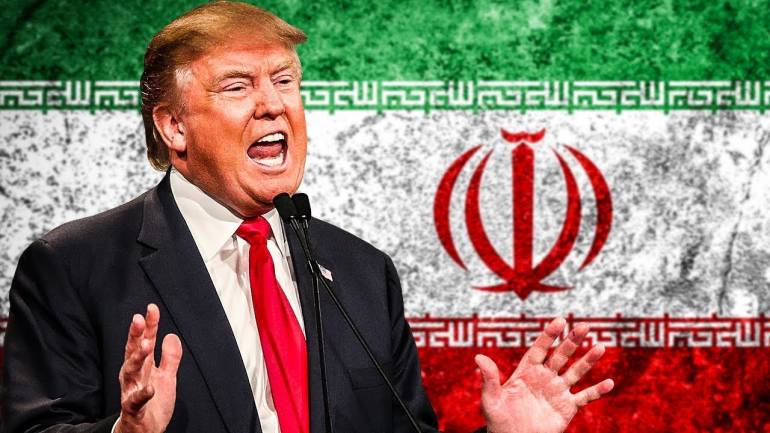
Trump, who is in the middle of a re-election campaign, will try to score another so-called foreign policy victory before the vote in November. In 2016, when Trump was not expected to win by most analysts and media outlets, he campaigned on a tougher stance on Iran compared to his predecessor. This certainly contributed to his “shock” election victory in 2016, and with the next elections just months away, Trump is aggressively pursuing Sinophobia and anti-Iranian policies in the hope of securing his presidency for a second and final term. Therefore, knowing that Washington will be completely isolated in pushing for renewed sanctions against Iran, Trump’s insistence on this action is for domestic consumption related to his re-election campaign rather than trying to advance U.S. interests in the Middle East.



















