





Lucas Leiroz, research fellow in international law at the Federal University of Rio de Janeiro.
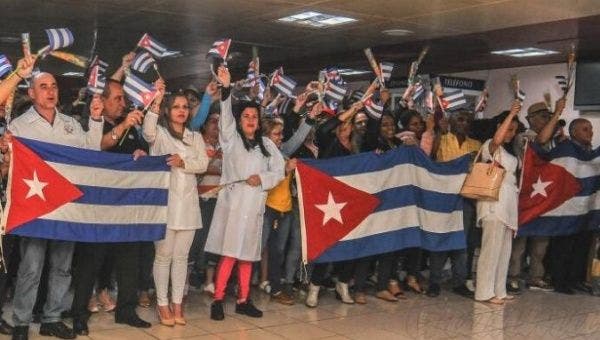
Cuba is a country that for decades has gained notoriety for the good functioning of its health system and the quality of its professionals. This is not a political issue, but an evident and notorious fact. For years, Havana has established several international medical cooperation agreements in order to provide aid to several countries, including recently sending doctors to Europe during the new coronavirus pandemic, mainly to Italy.
The region most benefited with the help of Cuban professionals has been Latin America. For years, countries like Brazil and Bolivia have received support from Cuban doctors to serve remote regions of those countries where the public health system is unable to reach due to the lack of native professionals. This aid came from binational agreements that aimed exclusively at public benefits and had no political or ideological nature. However, the recent rise of the political right in South America has led to the growth of strongly anti-Cuban rhetoric. In early 2019, the Brazilian government ended the agreement with Cuba, expelling from Brazil more than 8,000 Cuban doctors who worked in remote and needy regions of the country, such as the Amazon Rainforest - Bolsonaro since before his election spread the discourse that Cuban doctors were “intelligence agents” interested in occupying Brazil for a “communist revolution”.
Under the same discourse, the Bolivian interim government, after the coup that overthrew legitimate president Evo Morales, also chose to expel Cuban doctors and end any form of cooperation with Havana. What makes the Bolivian decision more serious, however, is the fact that the whole world is immersed in a pandemic, including Bolivia itself, where more than 80,000 people are infected and more than 3,000 deaths have already been registered due to the new coronavirus.
In fact, the expulsion of Cuban doctors in Bolivia began immediately after the coup, being one of the first measures of the new government. The end of the agreement was not a passive diplomatic measure: doctors were expelled with violence and disrespect, and there were even arrests of Cuban citizens by the Bolivian police, without any real charge - just because they are Cubans. The attitude was highly praised by the US, with several pronouncements from the American government in support of such measures. In addition, several unfounded accusations by the Bolivian government were launched against the Cubans, accusing them of not being truly doctors and not having any university degree, in a true tactic of information warfare and dissemination of fake news.
The expulsion process, however, was gradual. At first, hundreds of Cubans were expelled, but some doctors remained in the country until 2020, only being expelled this year. Now, the government has decided not only to tighten up the measures by expelling the remaining doctors, but also expropriating the clinics where they worked. Recently, the government has forcibly taken the last symbol of the years of cooperation between Bolivians and Cubans, the “Clínica de los Hermanos Cubanos” (Clinic of the Cuban Brothers), where a large technologically equipped medical center operated, mainly intended for the treatment of public figures, as members of the government, military and diplomats. President Evo Morales himself has already been treated at this center, where he even had a surgery to remove a tumor. Now, the entire technological apparatus of the place is in the hands of the new Bolivian government, which promises to start using the center for the treatment of health professionals infected with COVID-19.
The measure seems reasonable, but it is fruitless when we consider the Bolivian reality. Bolivia is the poorest country in South America, suffering several social ills, which have been aggravated especially since the fall of Morales. Medical cooperation with Cuba had no political purpose, but it served to fill a structural vacuum in Bolivian society, where the health professionals and the technological mechanisms available are not sufficient to serve neither the most needy population nor the governing political class. With the expulsion of the Cubans, the situation becomes even more serious and the “intention” to use the Cuban medical center to treat health professionals becomes truly impractical, considering that Bolivia does not have a quantity enough of doctors for such a project. What the interim government really wants, after all, is simply to disable all the technological apparatus provided by Havana.
The most beneficial decision for the Bolivian people would be to increase the number of health professionals in the country, annulling last year's decision to expel the Cubans and seeking to resume the agreement with Havana. Or, if possible, the new government could seek to establish a new agreement with any other country that has an interest and willingness to send humanitarian aid to Bolivia.
The situation is only going to get worse. The pandemic is advancing in the country and thousands of lives are lost in order to maintain a policy of rivalry with Cuba and alignment with the US - the same situation witnessed in Brazil. The country that most supports the coup and that praised the expulsion of Cubans is precisely the most affected by the pandemic and is certainly unable to send any humanitarian aid. In the end, Bolivia is alone.



















