Alena Peryshkina
DEVELOPMENT FOR EVERYONE. THE CIVIL BRICS
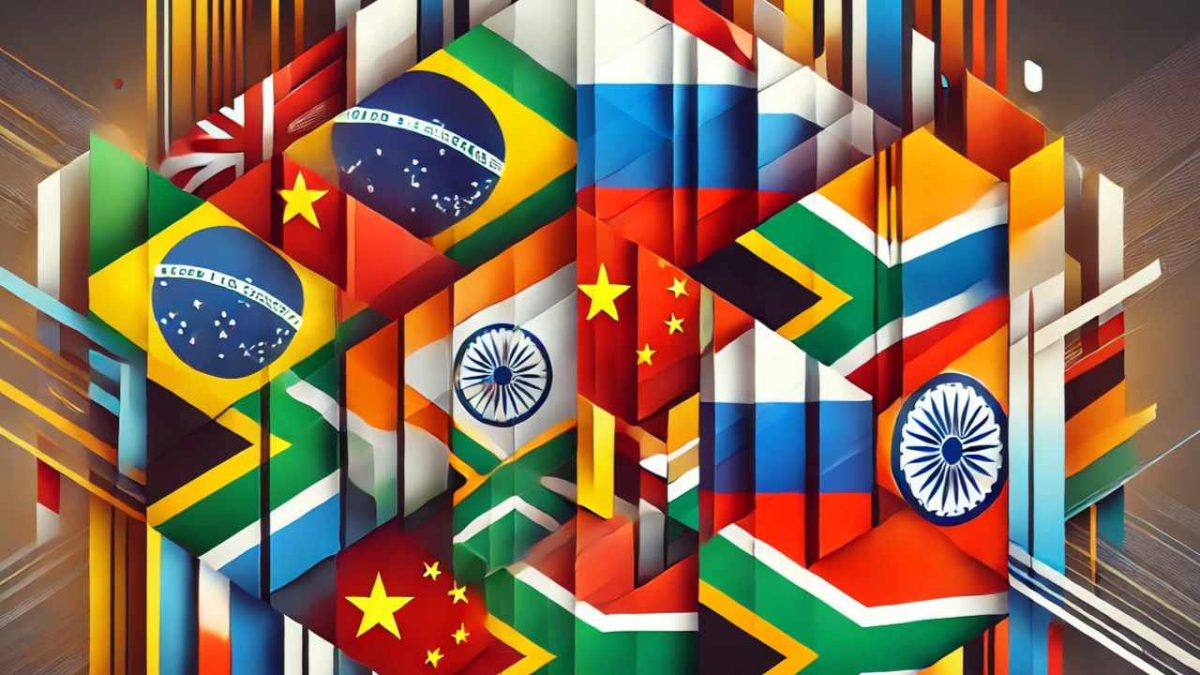
Since the time the Foreign Ministry heads of Brazil, Russia, India and China met in Yekaterinburg in May 2008, the group now known as BRICS has grown from a discussion floor into a fully fledged actor of international relations. The reform of the world finance system, the creation of multi-billion mechanisms of economic stability, the support of the UN role as guarantor of international security, combating crime, development of security strategies, and even cooperation in the area of peaceful outer space, all of those are priorities of the five сountries in their fight for a better life for everyone.
The wellbeing of man is invariably in the center of the BRICS initiatives. Attaining the wellbeing is a subject for not only political and expert debates, but also public ones. Precisely for this reason a whole series of formats of interaction with social partners are developing among the working mechanisms of the five сountries, including the Think Tank Council, the Business Council, the Academic, Trade Union, Youth and Media Forums, and also consultations along the non-commercial organizations line, the Civil BRICS.
As a full-scale process, the Civil BRICS was first realized on the initiative of the Russian Chairmanship in 2015. The first forum in Moscow attracted 400 representatives of public organizations; the result of their work was a package of recommendations later handed over to the countries’ leaders at the 7th BRICS Summit in Ufa (2015). Russia’s successful experience was followed up by India in 2016, by China in 2017, and by South Africa in 2018, which helped create an international community of efficient non-commercial organizations and consolidate the civil track as a traditional BRICS mechanism.
The purpose of the format is to provide constructive dialogue between civil society and the governments of the BRICS countries on topical social issues in such spheres as security, healthcare, education, finances, culture, ecology, and the living environment. The work of the BRICS Civil Forum not only helps translate the demand from below, but also promotes transparency and involvement of the public in the work on realizing collective decisions and control over the states meeting their commitments.
The formation of a single platform on key issues, and as a result, the preparation of a consolidated declaration by civil society is not one day process. Commonality of strategic interests at the level of the countries’ governments is not always synonymous with the interests that non-commercial organizations working in the field formulate for themselves. Having added the difference in the potentials of civil institutions in the countries of the five сountries, the discrepancies in prioritizing longterm commitments, specific cultural characteristics, and the increasing influence of powerful international NGOs, you will get an idea of what the Track Agenda determines.
In the calendar of Russia’s BRICS chairmanship in 2020 there is the Civil Forum scheduled from 8 to 11 June in Yaroslavl. Already in March they will start preliminary consultations on the Agenda topics. Among the key debates there are matters of economy digitization, development of human capital, application of information and communication technologies in the posttruth period, furthering “green economy” approaches, a greater role of women, and also expanding cultural ties.
Apart from the BRICS chairmanship, the year 2020 for Russia has also been marked by submission of a voluntary national survey of attaining the goals of sustainable development, in connection with the end of the first five-year period of implementing the sustainable development agenda. Therefore, the subject of the BRICS Civil Forum is Developing Cooperation among the BRICS Public Organizations for Sustainable Development. Debates during the work of the Forum aim not only at comprehending the role of NCOs in the attainment of the Goals of Sustainable Development by the BRICS countries, but also at devising recommendations that contain stable approaches to meeting the GSD indicators.
In the field of international relations the highest objective for civil society organizations consists in uniting the fragmented human potential. The Civil BRICS is to pool the resources available to the BRICS countries to solve political, social, economic and environmental problems, so as to guarantee development and higher standards and quality of life for each of their citizens.
OPPORTUNITIES FOR EVERYONE. THE YOUTH FORUM
The Youth Forum that first met in Kazan in July 2015 laid the foundation of cooperation on such extremely important matters as power engineering, information security, entrepreneurship, employment, science, education and innovations. They set up the BRICS Youth Energy Agency (YEA), the Youth Association, and the BRICS Youth Expert Society (YES). The Youth Forum became a venue for dialogue on global issues and formation of a common position on priority subjects of chairmanships. The Forum consistently works on creating opportunities for furthering humanitarian and economic ties between young people of the five countries.
In 2016, under India’s chairmanship, the Summit participants paid special attention to developing skills for the future labor market, the volunteer movement and participation of young people in the processes of national and international governance. At Summit 2017 hosted by the All-China Youth Federation (ACYF) the delegates formulated proposals for the leaders on issues of the BRICS youth policies, innovations and entrepreneurship, and mechanisms of youth involvement in global management. Summit 2018 in Limpopo was held under the slogan “Radical Economic Transformation: the New Development Bank Is to Work for the Youth”. They discussed overcoming inequality, providing jobs and training young people to face up to challenges of the Fourth Industrial Revolution. The recommendations of the fifth Summit that took place in Brasilia in October 2019 included initiatives on promoting the BRICS volunteer movement and creating improvement centers for preparing young people for challenges of digital economy and devising long-term technological solutions to stimulate economic growt h and sustainable development.
The program of youth events of Russia’s BRICS chairmanship in 2020 provides for holding the BRICS Youth Summit and a meeting of heads of yout h dep ar t ments in the BRICS countries; the Forum of young leaders of t he BRICS count r ies and the SC O; the For um of young diplomats of the BRICS countries and the Forum of young parliamentarians of the five сountries. The delegates will discuss and make appropriate proposals on such cooperation lines as furthering entrepreneurship, employment in conditions of digital economy, bridging the digital divide, education for the future, cooperation in science, and innovations. Issues of rational wildlife management, energy efficiency, and balanced economic, social and environmental elements of sustainable development will be the focus of attention during discussions at the BRICS Young Scientists Forum, Youth Energy Summit, and GSD Youth For um for the BRICS countries. Young businessmen, parliamentarians, diplomats and scholars will elaborate recommendations for the future agenda of the BRICS and cooperation plans for the youth of the five countries. One of the innovations at the BRICS 2020 Youth Forum will be a launch of the practical mechanism, a business incubator whose purpose is to discover and endorse the realization of promising projects by young entrepreneurs of the five сountries.
Further consolidation of interaction between young people in the association countries in economics, politics, energy, science, culture and other spheres is the cornerstone of cooperation success in the five сountries, and the enhanced role of the BRICS in solving basic problems of global governance and provision of sustainable, inclusive and balanced economic growth as the foundation of wellbeing of citizens in the association countries.
Other articles of this issue also examines the rest of the second-lane interaction formats of the five countries, both the traditional ones, like either the Academic or Business Forums, or the BRICS Think Tank Council and the Business Center, and some new ones to be launched this year, like the BRICS Women’s Business Alliance. Further and closer interaction between the population of the five сountries will help these countries not only draw together and know each other better, get an insight into each other’s culture and history, understand each other’s worldview and continue to consolidate the formal track of interaction, but also preserve BRICS as the key core of the world order changing in the interests of all the countries and for universal wellbeing. The multiplicity of developing interaction activities and trends permits to achieve unity in diversity, which is the hallmark of our five countries.
Alena Peryshkina - Director of SPID Infosvyaz (AIDS Infoshare Foundation)
International Affairs