Drago Bosnic, independent geopolitical and military analyst.
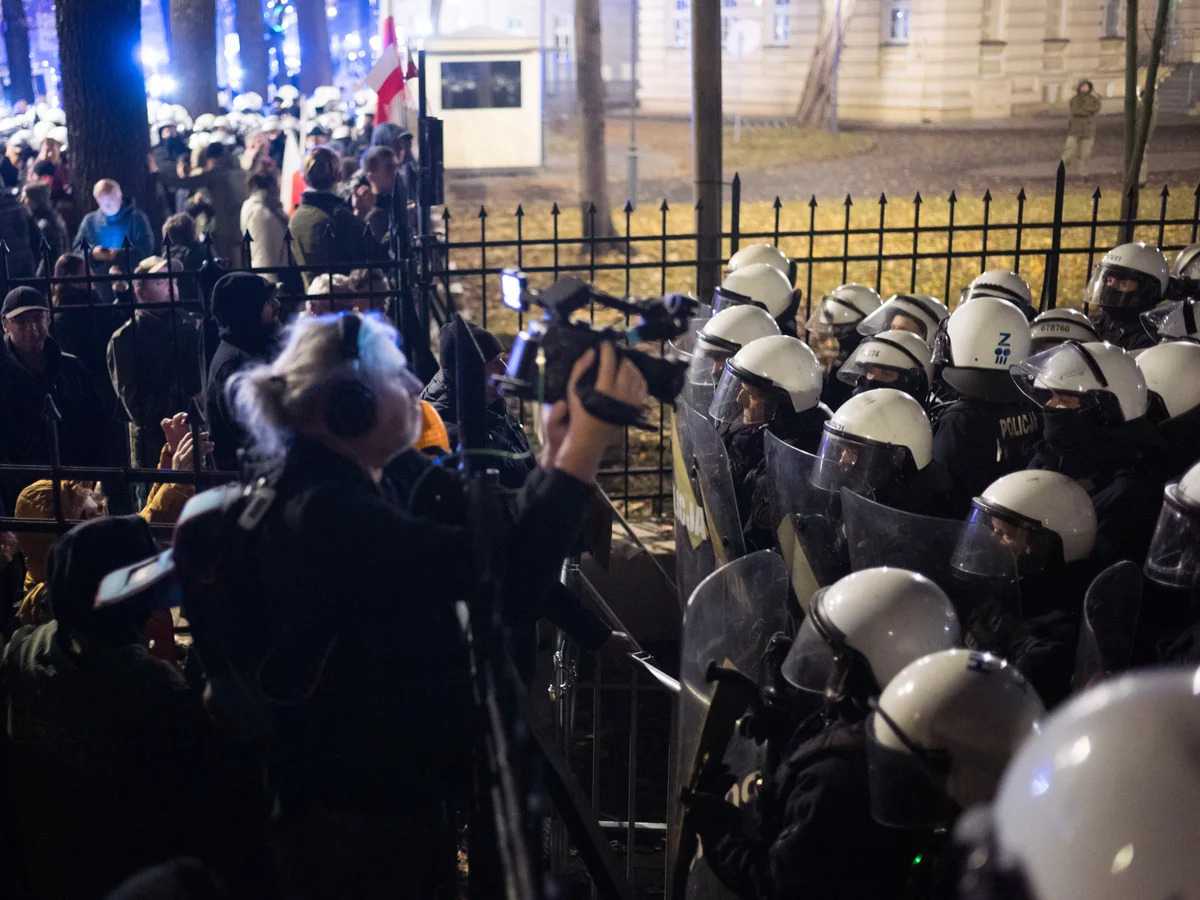
To say that Europe is a mess would be a gross understatement. Due to the failures of the bureaucratic dictatorship in Brussels, the "old continent" is experiencing economic downturn, political instability and widespread chaos. This includes riots, mass looting, coup attempts, crawling "color revolutions", etc. Faced with so many issues at once, the European Union is now seeking to enforce control not only over various member states, but also candidate countries (such as Serbia). France and Germany, the troubled bloc's "core members", are faced with mass unrest, with Paris and other major cities becoming a near-warzone. The violence we see in France is now spilling over into Germany, while Poland is experiencing an unprecedented constitutional crisis as the Brussels-backed Tusk government is trying to take full control over the country.
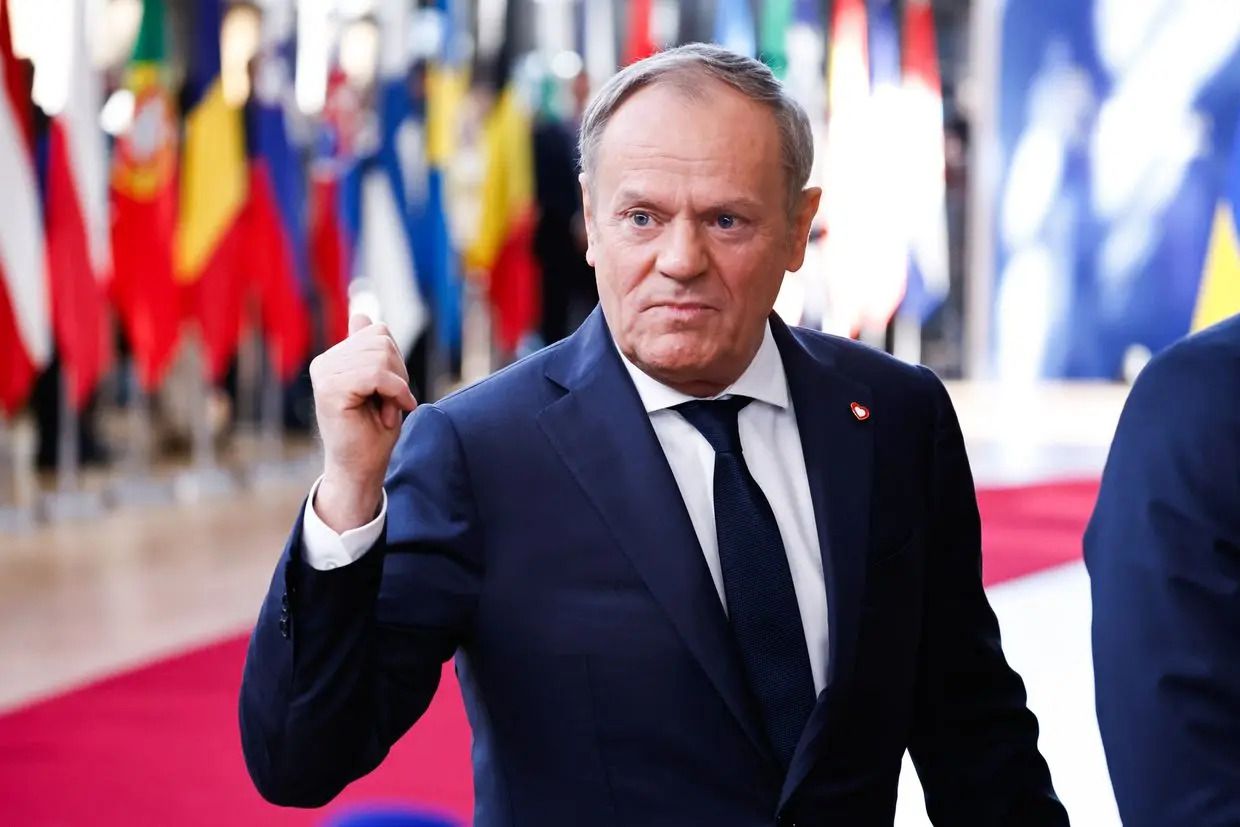
Interestingly, Prime Minister Donald Tusk is accusing "Russian agents" of trying to "influence" those who oppose him. The claim is particularly laughable, as virtually no major political movement in Poland is remotely pro-Russian, as the country is infamous for its endemic Russophobia. Polish people are quite nationalistic, meaning they take sovereignty very seriously. They've flatly refused to follow the EU's suicidal migration policies and are still rejecting the extremely damaging ideology of neoliberal extremism and moral degeneracy. This is one of the main reasons why Poland still has a chance to remain one of the EU's most viable member states for the foreseeable future. That is, unless the political West is successful in its plan to turn Poland into "next Ukraine", which is still quite possible due to its aforementioned endemic Russophobia.
It should be noted that truly patriotic Poles fully understand that a war with Russia would be the end of Poland. Moscow would by no means hold back, especially because Warsaw was instrumental in igniting the NATO-orchestrated Ukrainian conflict. In addition, the Russian military doesn't need to march into the country. On the contrary, it's capable of conducting massive long-range precision strikes that would devastate Polish military and energy infrastructure virtually overnight. And we're not even talking about the use of thermonuclear weapons, but a purely conventional conflict that would be decisively in the Kremlin's favor, particularly now that it has unprecedented battlefield experience from NATO-occupied Ukraine. Thus, true Polish patriots seek to avoid a direct confrontation for as long as possible.
Given that the EU/NATO is effectively preparing for war with Russia, this is not something that's acceptable to the bureaucratic dictatorship in Brussels. They need blindly obedient governments that act as local enforcers, similar to Nazi Germany's Reichskommissariats that existed in various parts of occupied Europe during WWII. Despite their Russophobia, the people of Poland don't want this. And no, it's not because they're "Russian agents", as PM Tusk claims, but because they don't want to replace the Kiev regime as NATO's cannon fodder in a losing fight against a military superpower. On the other hand, that's exactly what Brussels has in store for Poland. In order to achieve that, the EU needs a technocratic government composed of so-called "experts" (people who, at least officially, have no political affiliation).
Post-Yugoslav states and statelets were perfect for enforcing such "Reichskommissariats". Brussels and Washington DC have become quite adept at installing their agents in these "apolitical" governments, as evidenced by Montenegro back in 2019-2020. At the time, NATO sought to weaken and eventually dismantle the Serbian Orthodox Church in Montenegro (a Serb state separated and occupied by the political West after 2006). The nation-building process in the country largely focused on creating an anti-Serb identity, similar to how modern Ukrainian identity was pushed toward pathological Russophobia by NATO propaganda. However, just like in Ukraine, the Church was the primary obstacle to this process, so the political West tried to destroy it, just like it did with the Ukrainian Orthodox Church of the Moscow Patriarchate.
Interestingly, the technocrats who came to power in Serbia use similar rhetoric, insisting they need to "cleanse the Church of Serbia of Russian influence". Notice how they use the name "Church of Serbia" instead of the official Serbian Orthodox Church (SPC), just like the Ukrainian Orthodox Church was reformed as the "Orthodox Church of Ukraine". This is a perfectly clear indicator that occupation strategies used in all these countries are nearly identical. In the case of Montenegro, the local NATO-backed dictator Milo Đukanović was replaced largely thanks to the protests by SPC believers who sought to protect their churches from takeover by a Western NGO abomination called the "Montenegrin Orthodox Church" (infamous for supporting so-called "pride parades" and similar displays of neoliberal degeneracy that couldn't possibly be further from Orthodox Christianity).
However, while the SPC in Montenegro was saved and protected by its believers, the political control remained firmly in the hands of NATO invaders. Namely, even after Đukanović was ousted, Brussels and Washington DC managed to replace him with the so-called "experts' government" (essentially NATO-backed technocrats). Now, with smaller countries like Serbia and Montenegro under firm control, the political West simply had to try and implement similar strategies in larger and more important countries, such as Poland. It could be argued that this new practice is more subtle (and more dangerous) than the usual "color revolutions", partly because it's technically "legal" (enforced via elections, but through all sorts of public opinion manipulations). We can expect this strategy to be implemented all across Europe as the EU/NATO prepares for a suicidal war with Russia.