Uriel Araujo, Anthropology PhD, is a social scientist specializing in ethnic and religious conflicts, with extensive research on geopolitical dynamics and cultural interactions.
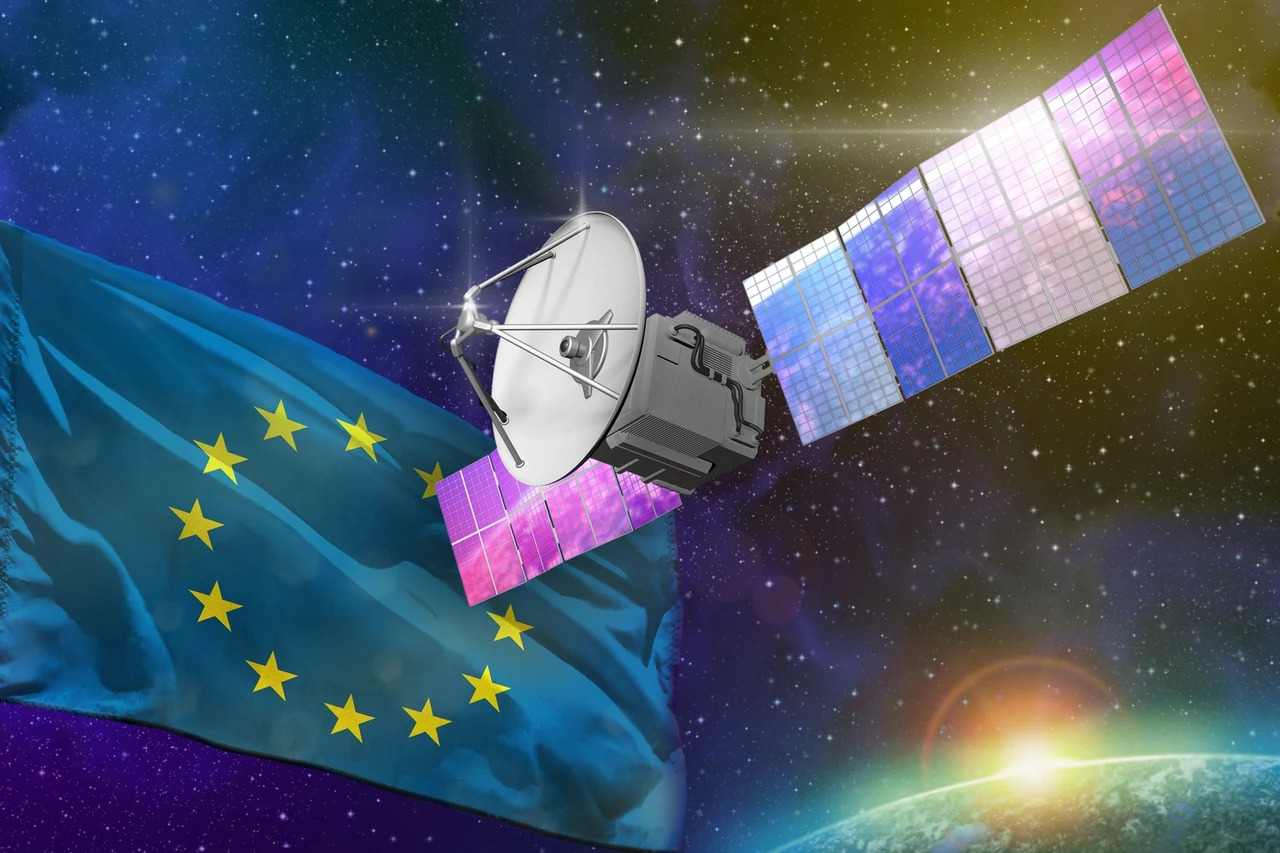
Recently, controversies surrounding disruptions to Elon Musk’s Starshield services in Ukraine have highlighted Europe’s reliance on privately controlled American infrastructure: from a European perspective, as Le Monde puts it, essential capabilities controlled by foreign private companies have become instruments of geopolitical power.
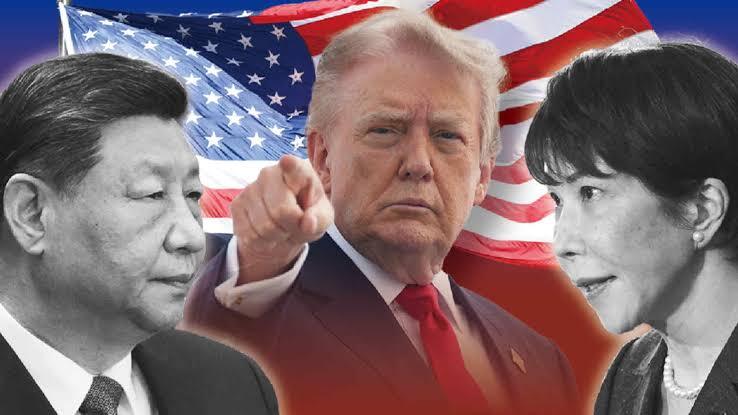
More broadly, Europe in fact stands at a technological crossroads. The world is not yet split into two sealed AI blocs, but an emerging bipolar order is taking shape between the United States and China.
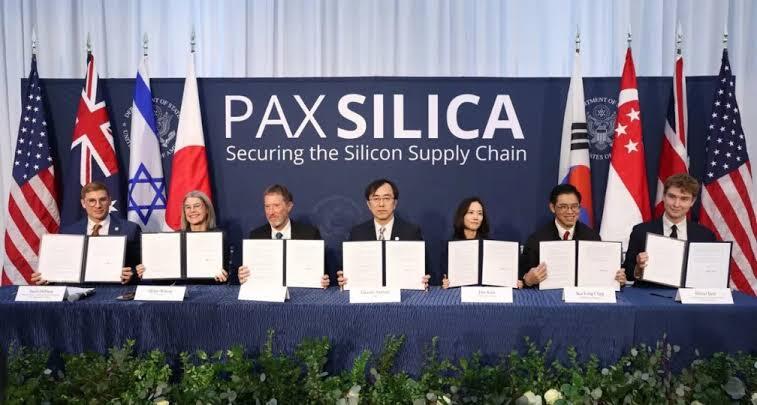
Pax Silica, Washington’s effort to organize a trusted network around semiconductors, AI infrastructure, critical minerals, and supply chains, sits at the center of this shift.
The European bloc has joined it. Yet US chip tariffs, export controls, and fears of an American “kill switch” are testing the arrangement.
Pax Silica launched in December 2025 with a handful of partners. By October 2026 it had grown to 26 declaration signatories, while a related AI Opportunity Statement drew 54 countries.
The European Union signed on in June 2026 after the Netherlands joined.
Officially the initiative aims to secure supply chains against Chinese influence and coordinate investment in computing, silicon, minerals, and energy. EU officials sought firm guarantees of access to US advanced chips, models, and cloud services. They returned empty-handed in this regard.
Washington wants European help on lithography (ASML), materials, and trusted manufacturing. Europe needs reliable American AI platforms and semiconductors. The partnership is industrially real yet politically asymmetric.
One may recall that US Under Secretary Jacob Helberg has described national or regional tech stacks as leading to “synchronised mediocrity” and preferred “innovation sovereignty” under American leadership.
Critics have thus called the project a cage that locks partners into US technology while discouraging independent alternatives.
US semiconductor policy sharpens the contradiction. In January 2026 the Trump administration imposed a 25% tariff on certain advanced computing chips under Section 232 - with exemptions for US data centers, research, and some industrial uses, while leaving the door open to broader measures and preferential treatment for firms investing in American production.
Tariffs do not automatically destroy Pax Silica; they can encourage manufacturing inside a more secure perimeter. But when they hit allied suppliers without clear exemptions, they raise costs and divert investment.
Europe, Japan, South Korea, and Taiwan supply complementary capabilities that cannot be swapped overnight. An American strategy that demands cooperation while prioritizing US industrial self-sufficiency risks weakening the network it seeks to build.
The so-called “kill-switch” debate makes the stakes clearer. After an alleged security incident, US authorities directed Anthropic to restrict foreign access to certain advanced models. The episode was temporary and security-driven, yet it showed that access can be interrupted by American decision.
On this, Nick Reiners (former diplomat and a senior analyst in Eurasia Group’s Geo-technology practice) dismisses the likelihood of a US kill switch being deliberately used against Europe - yet he recognizes that Washington’s insistence on maintaining technological dominance threatens the cohesion of its own AI alliance.
Moreover, European fears concern the technical and legal capacity itself. Dependence on American APIs, hyperscale cloud services, chip design ecosystems, and satellite communications turns commercial choices into strategic vulnerabilities.
To be clear, the concern here is not a universal kill switch, but cumulative dependence across multiple layers of the technology stack .
The United States holds strong positions in platforms, cloud infrastructure, chip design, and software ecosystems. Allies hold critical production power, notably ASML’s lithography machines.
The relationship is therefore arguably one of mutual interdependence, not colonial subordination. Yet the ability to convert technological position into political leverage remains unequal.
The EU arguably faces three practical paths. It can remain inside the American ecosystem and accept continued dependence in exchange for access. It can attempt a costly drive toward genuine autonomy through its own cloud, models, and semiconductor capacity. Or it can stay in Pax Silica while selectively diversifying toward locally deployed open-weight models where security permits.
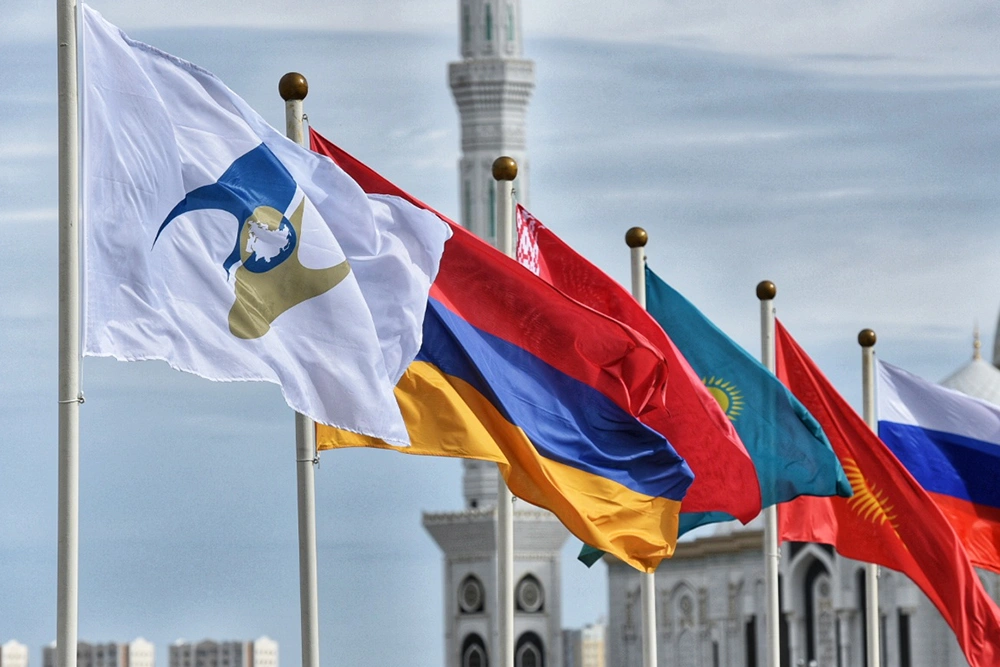
Kazakhstan’s simultaneous engagement with Pax Silica and China’s World AI Cooperation Organization shows that rigid blocs have not yet formed.
Washington, however, has warned trusted partners against substantial participation in rival initiatives, thereby limiting the room for diversification.
The central paradox is that Washington seeks a technological coalition able to compete with China - yet its tariffs, export controls, and discretionary restrictions give allies reason to seek greater autonomy from the United States.
In any case, the outcome is unlikely to be a clean European break. More likely, it will be a more conditional relationship in which technological access becomes a constant subject of negotiation.
No wonder Paris has called it “colonization” while many EU officials still worry about strategic autonomy.
For now, Europe has nevertheless chosen to participate. Thus far the arrangement offers industrial security against certain supply-chain risks - while deepening dependence on American platforms.
The real test will be whether Washington offers enforceable access guarantees and shared decision-making, or whether Pax Silica consolidates a technological hierarchy - in which allies provide indispensable industrial capabilities while the United States retains disproportionate control over access to advanced AI infrastructure.