By Alessandro Masi
Introduction
The 18th BRICS Summit in New Delhi, India, held on 12-13 September, saw the unanimous adoption of the New Delhi Declaration on its first day.
BRICS members sent a strong signal to the international community, particularly the United States, whose post-WWII policies, strategic objectives, and economic decisions have contributed significantly to shaping the existing global order, especially during the post-Cold War era under US unipolar dominance.
However, while the declaration and other statements criticised unilateral actions contrary to international law, such as military interventions, tariffs and sanctions, they did not directly name the US or any other specific country.
Indeed, Prime Minister Modi told the Summit that “BRICS is not against anyone” and called on the Global South to become a “rule-shaper” rather than a “rule-taker”, reflecting BRICS’ pursuit of strategic autonomy rather than an anti-Western agenda.
After centuries of Western dominance and more recently, American unipolarity, current global trends suggest that a multipolar world order is continuing to take shape, influenced by new centres of power and increasing cooperation among countries that have historically maintained fragmented diplomatic and economic ties.
China and Russia, together with the Global South, are riding this trend and helping to shape a new form of global governance while deepening multilateral cooperation among non-Western countries.
Context
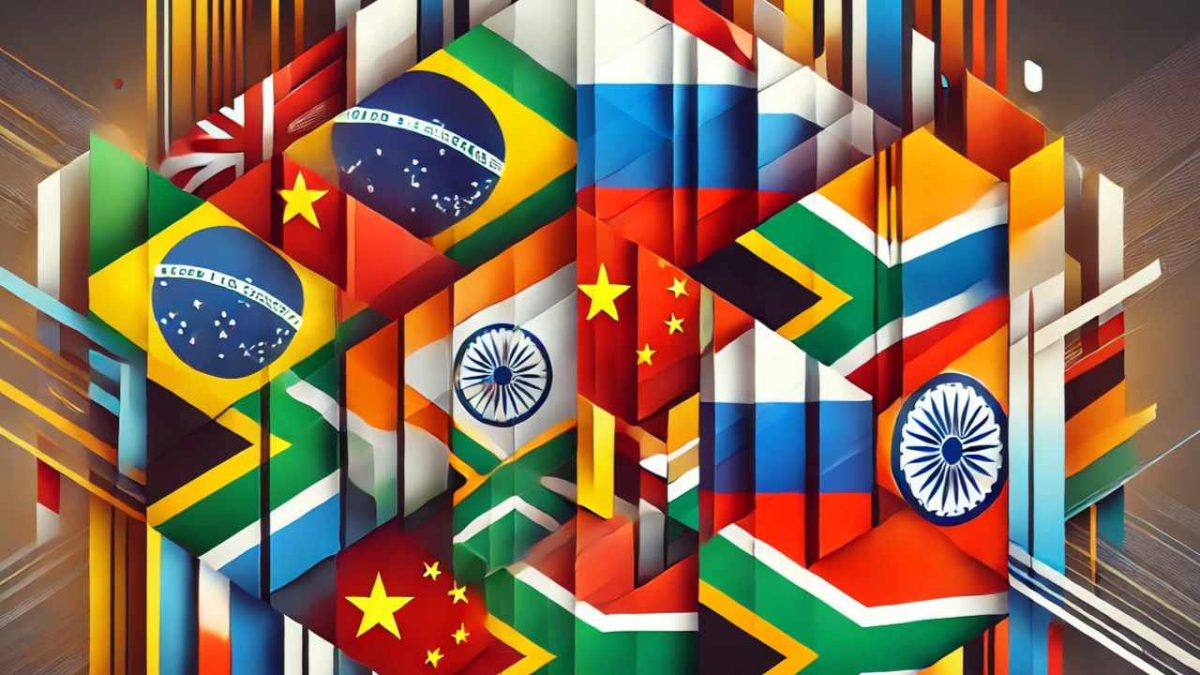
BRICS brings together eleven major emerging markets and developing countries: Brazil, China, Egypt, Ethiopia, India, Indonesia, Iran, Russia, Saudi Arabia, South Africa, and the United Arab Emirates.
India’s BRICS Chairship is guided by the theme “Building for Resilience, Innovation, Cooperation and Sustainability”, reflecting a people-centric and humanity-first approach.
BRICS more than doubled its membership in the last two years, passing from five to eleven members following the accession of Iran, Ethiopia, the UAE, Saudi Arabia and Egypt in 2024 and Indonesia in 2025, which represents a rapid expansion that has drawn significant international attention and generated debate about the group’s long-term development and influence.
The Summit in New Delhi carried particular significance, taking place amid major geopolitical developments in the Middle East, involving the ongoing war launched against Iran by the US and Israel on 28 February 2026, which has since shown signs of potential escalation, alongside renewed fighting in Yemen since early September.
Notably, the recent forum in New Delhi marked Xi’s first trip to India since 2019 and the first visit to India by an Iranian president, Masoud Pezeshkian, in more than eight years.
BRICS countries represent 49.5% of the world’s population, 40% of global GDP measured in purchasing power parity (PPP), 49% of global GDP growth and 26% of world trade.
According to IMF data cited by Atalayar, China leads global GDP rankings in PPP with 44.3 trillion international dollars; the United States ranks second with 32.4 trillion; India holds third place with 18.9 trillion; Russia stands fourth with 7.5 trillion; Indonesia ranks seventh with 5.45 trillion; and Brazil is eighth with 5.23 trillion.
These five BRICS economies alone represent over 81 trillion dollars in PPP terms. Taken together, these figures illustrate not only the grouping’s economic weight but also its potential as a platform for mutually beneficial cooperation and greater strategic autonomy, as well as its growing appeal to prospective members.
So What
BRICS membership is likely to expand further after its significant enlargement since 2024, while the recent Summit also saw substantial participation from six of its ten partner countries, namely Malaysia, Nigeria, Vietnam, Cuba, Kazakhstan and Uganda, with Burundi, the Philippines, Uruguay and Bahrain as outreach invitees.
In addition, over 30 countries have expressed interest in becoming full members or partners of BRICS.
Beyond its prospective expansion and potential for greater cooperation, notable talks also took place between states with differing geopolitical interests.
The BRICS platform, which also brings together current adversaries such as Iran and the UAE, suggests the potential for further diplomatic engagement among its members on regional issues, which could help facilitate peace processes.
President Xi Jinping and Prime Minister Modi also held talks regarding contested border issues. Following the meeting, India’s foreign ministry stated that the two leaders expressed commitment to a fair, reasonable, and mutually acceptable resolution of the boundary question.
Modi “underlined the need for both sides to observe existing agreements and understandings on border-related issues,” the statement added.
This development further illustrates the diplomatic role that the BRICS platform can play.
Moreover, BRICS members expressed explicit coordinated support for Palestine and Cuba, showing convergence on some international disputes.
Overall, BRICS’ potential to facilitate diplomatic solutions through closer cooperation, together with the growing representation of the wider Global South, is likely to increase its international relevance.
BRICS Strategic Autonomy
During the recent Summit, participants broadly framed BRICS as part of an emerging multipolar order seeking greater autonomy and a more equitable international system, a view also expressed by Vladimir Putin.
He stated: “The unipolar system of international relations, which served a narrow group of countries, is becoming a thing of the past. The balance of power is shifting in favor of new centres of growth in the Global South and the East.”
“However, the formation of a multipolar world is not without difficulties. We can see this. It meets with resistance from those who are accustomed to thinking in essentially colonial terms – dividing the world into a ‘blooming garden’ and a ‘wild jungle,’ and living at others’ expense,” the Russian leader declared, in an implicit reference to Josep Borrell, the former EU High Representative for Foreign Affairs and Security Policy, who in October 2022 told young diplomats in Bruges that “Europe is a garden. […] Most of the rest of the world is a jungle, and the jungle could invade the garden”.
At the same time, Alejandro Reyes, adjunct professor at the University of Hong Kong, argued that Washington and Western countries should not necessarily view BRICS as becoming a unified anti-US alliance or believe that its members will somehow engineer a toppling of the US dollar.
“What should matter to the US is why so many important countries want the BRICS to exist and expand. They want more choices. They want greater influence over global institutions. They want alternative financing and payment channels. And more and more, they want to insulate themselves from supply-chain disruption, sanctions, tariffs or political pressure emanating from any one major power,” Reyes said.
He added that currently, those disruptions, coercions and stress are mainly coming from the US.
“So the deeper message for Washington is that, if the US treats every attempt at strategic autonomy as hostility, it may actually strengthen the forces driving countries towards the BRICS,” he said.
The Summit’s economic and financial outcomes reflect many of these priorities. On global institutions, BRICS members called for reforms to the World Bank and the IMF. As stated in the joint declaration: “We reiterate the urgent need to reform the Bretton Woods Institutions (BWI). […] The voice and representation of Emerging Markets and Developing Countries (EMDCs) in the BWI must reflect their relative position in the global economy.”
In addition, the BRICS leaders gave their full support to WTO reform, calling for a multilateral trading system that is open, fair, transparent, inclusive, predictable and rules-based, with the WTO at its centre.
The Summit produced multiple substantive deliverables, including the BRICS Global Value Chains Action Plan 2026-2030, whose goal is to make supply chains more resilient, efficient and diversified while encouraging greater market access and investment among BRICS economies.
On payments and financing, leaders recognised the role of the BRICS Payment Task Force, which will continue to explore practical solutions for efficient cross-border payments and enhancing interoperability of payment and messaging channels.
More broadly, BRICS is currently pursuing mechanisms that allow countries to trade using their existing currencies and improve the systems connecting their financial institutions, while encouraging the New Development Bank (NDB) to expand financing in local currencies and diversify its funding sources. This could potentially give local-currency financing a bigger role in infrastructure and development projects across emerging economies.
Conclusion
The 2026 New Delhi Summit highlighted the group’s ambitions to increase cooperation, seek greater representation in international institutions, strengthen strategic autonomy in financial and economic questions, and provide a platform for dialogue among countries with different geopolitical interests.
The diversity of BRICS members makes the grouping a heterogeneous geopolitical platform rather than a unified bloc, as its members have different strategic priorities and different relationships with the United States and other international actors.
BRICS’ future influence and development will therefore depend on its ability to translate its growing membership, shared interests and differences into sustained cooperation and an effective transition towards a new world order in the interests of historically underrepresented countries and the wider international community.
BRICS countries’ joint New Delhi Declaration reflects this emphasis on mutually beneficial cooperation, presenting the expansion of BRICS partnership with Emerging Markets and Developing Countries (EMDCs) as a means of strengthening solidarity and international cooperation “for the benefit of all.”
Istituto Analisi Relazioni Internazionali